Late-season whitetail hunting: tactics, layering and gear
Outlast the cold.
Outsmart the nose.
After the rut, whitetails live on food, cold fronts and caution. Here's how to hunt them, and how to build a ScentLok® system that keeps you warm, quiet and dry on stand, with Carbon Alloy® working against their nose the whole sit.
Late season, explained
What is late-season whitetail hunting?
Late-season whitetail hunting is the stretch after the rut and the main firearms seasons, usually December into January, and later in parts of the South. Deer focus on high-energy food, bed in thermal cover and move less in daylight. Success comes from hunting food on cold afternoons and outlasting the cold on stand.
Season dates and legal methods vary by state and zone. Check your state's regulations before you hunt.
Key takeaways
Hunt the food. Bucks come out of the rut worn down and need calories.
Watch the thermometer. A sharp temperature drop is the late-season trigger most hunters wait for.
Sit afternoons. Set up between bedding and food, and plan for evening thermals.
Dress to stay put. Warm, quiet, windproof and dry, with scent control at every layer.

Carbon Alloy®
Treated carbon adsorbs up to 3X more hydrogen sulfide than activated carbon alone.

Built for the cold
Primaloft®, Thinsulate™ and Sorona® Aura insulation, plus heat on demand.

Since 1992
Three decades of engineering for one animal: the whitetail.
Part 1 · Know the late season
What changes
after the rut
The leaves are down, the woods are quiet and the deer still standing have been hunted for months. They haven't stopped moving. They've changed why they move. Here's what drives a whitetail from December on.
Swipe for more →
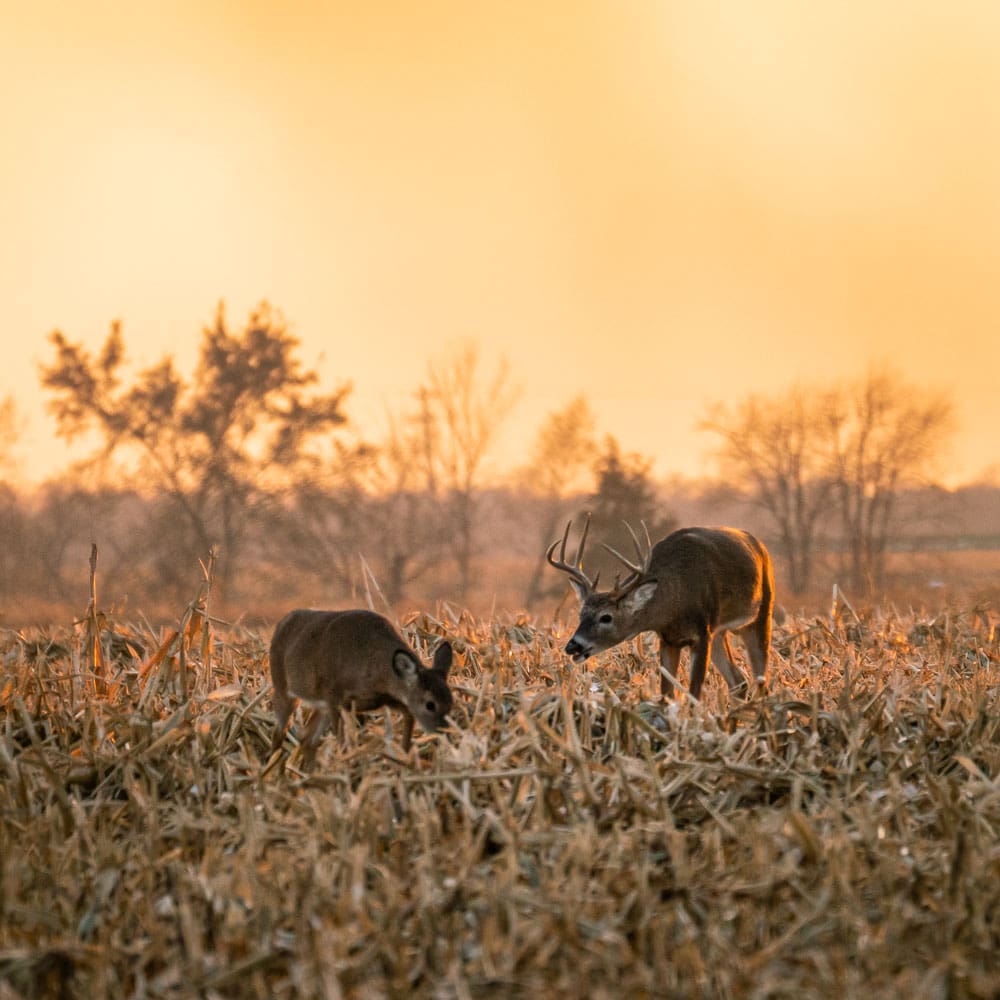
Why do deer key on food in the late season?
Up to 25 to 30%
of body weight a mature buck can lose during the rut.¹
A buck that spent November chasing does comes out of the rut run down, with winter on the way. Recovery comes first, and that means calories: standing corn and soybeans, waste grain, brassicas like turnips and radishes, winter wheat and woody browse. Find the best food still standing and you've found the deer.
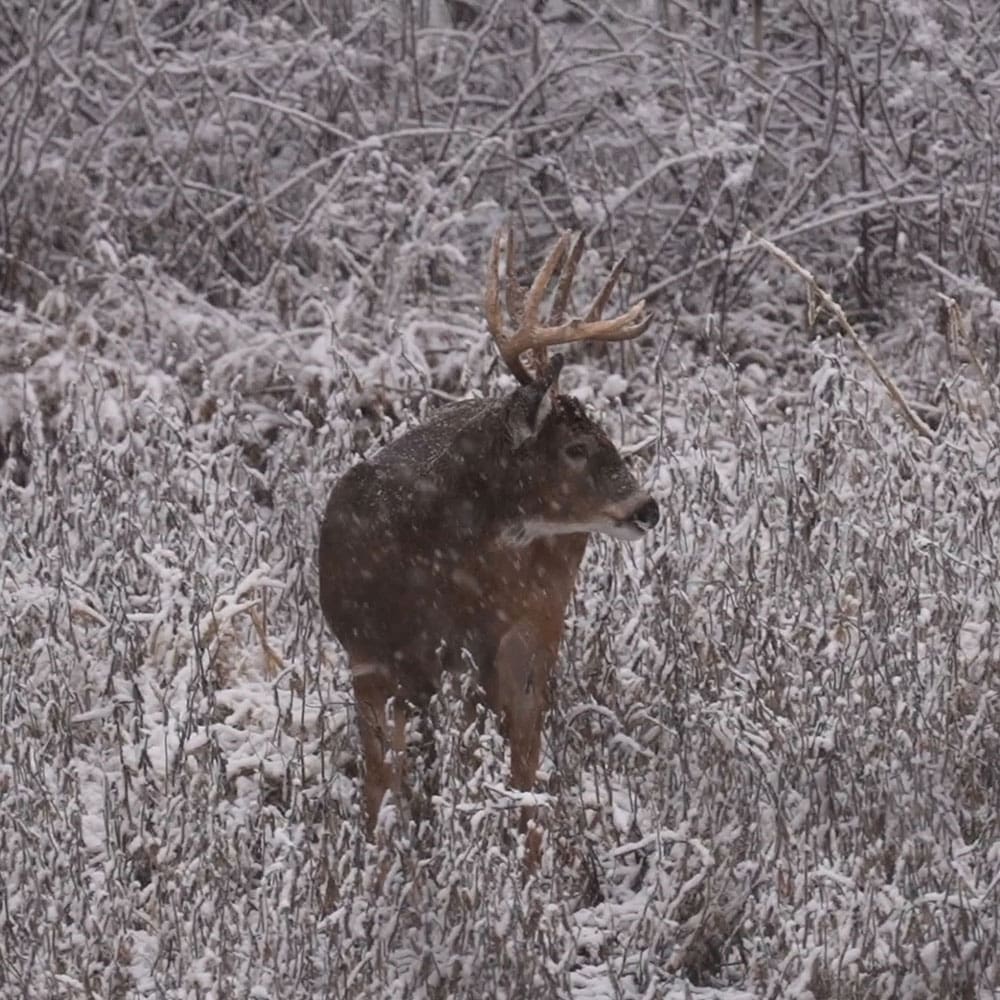
Do cold fronts make deer move?
Temperature
the weather factor with the closest link to deer movement in research.²
The science on weather and deer movement is still mixed, but temperature shows up more than anything else. Hunters watch for a sharp drop, often 10 degrees or more in the daytime high. A hard cold snap can push deer to food earlier in the afternoon. Be in the tree before it does.
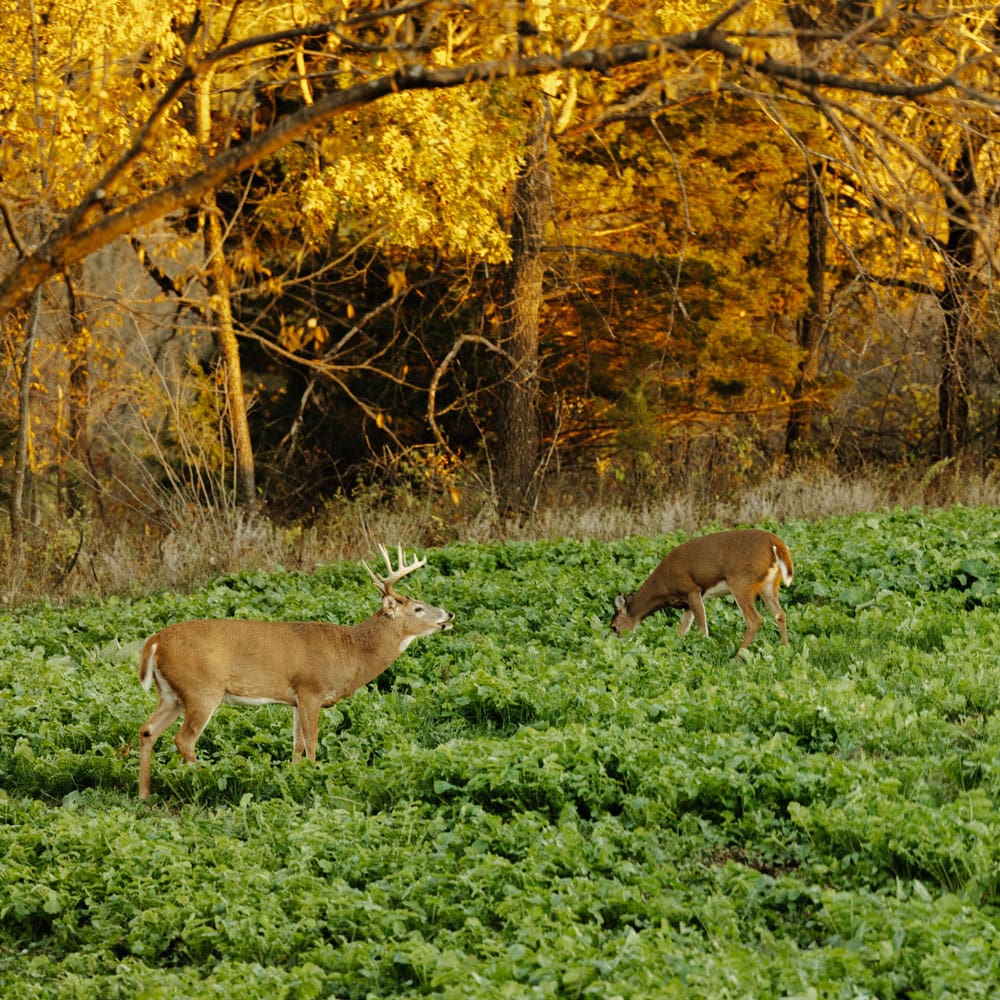
Is the second rut real?
About 28 days
after peak breeding, does that weren't bred cycle back into estrus.³
Most late breeding comes from doe fawns hitting their first estrus, plus a few adult does missed in November. It's smaller than the main rut, often around mid-December, but it can put a mature buck back on his feet in daylight. Hunt the food where those does feed and let them bring him to you.
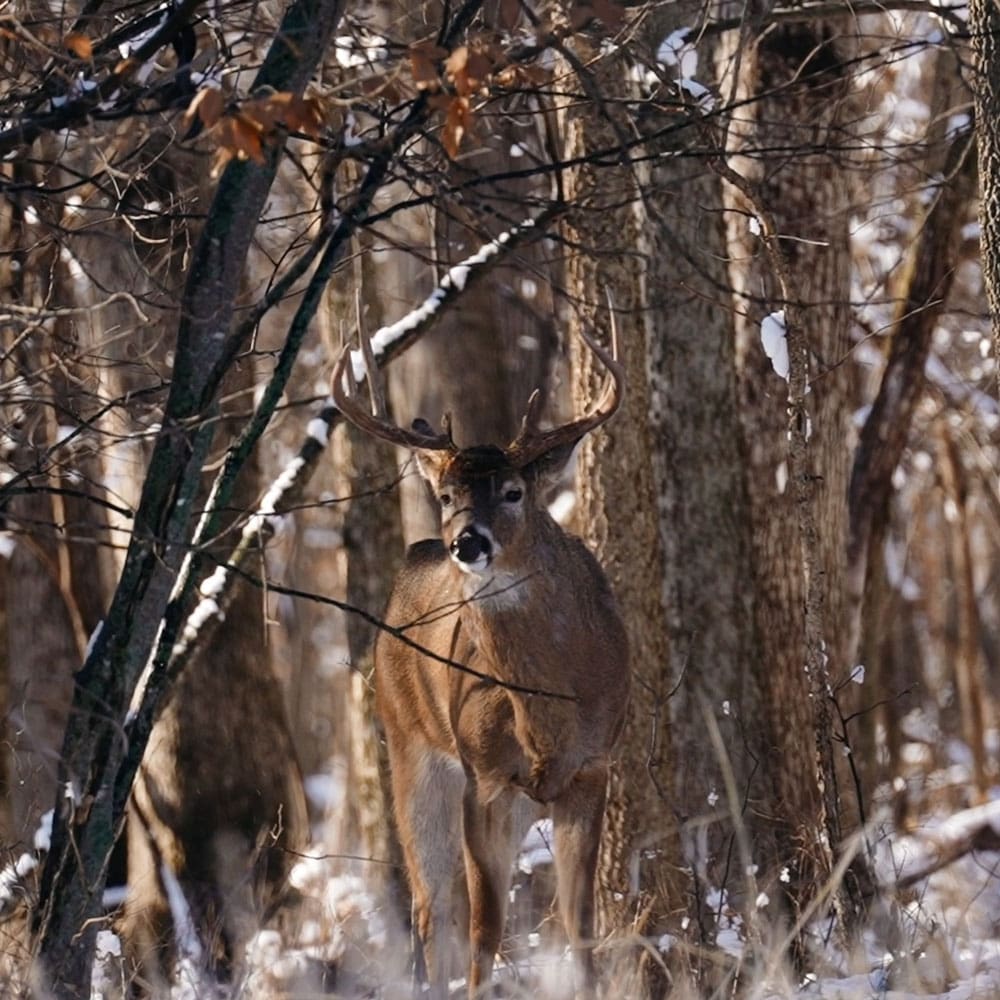
Why are late-season deer so hard to hunt?
Months
of hunting pressure behind every late-season deer.⁴
By December, older bucks have dodged bowhunters, gun hunters and every truck door on the property. They move less in daylight and bust you faster. Fewer, smarter sits beat more sits: go in only when the wind is right, keep your access quiet and don't burn a good stand on a bad forecast.
Where do deer bed in the late season?
Out of the wind
conifers, thick brush and south-facing slopes.⁵
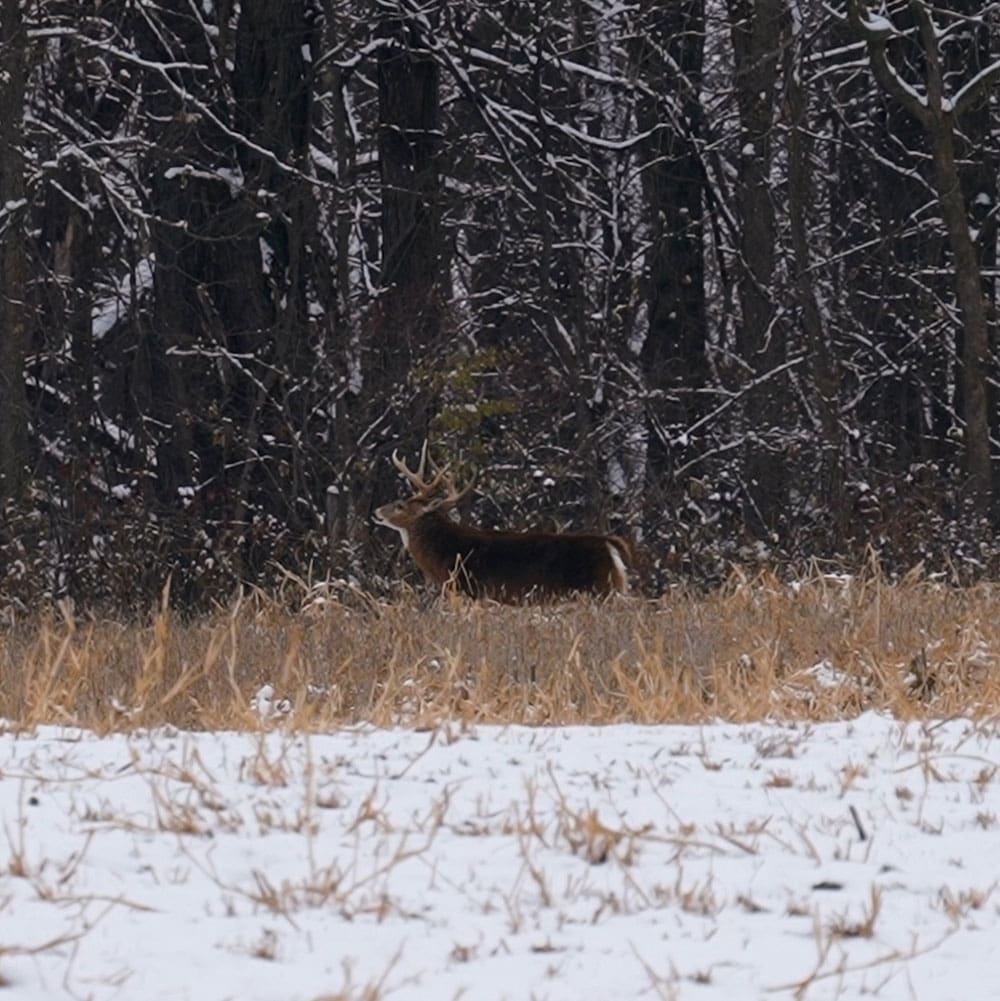
Deer bed where they lose the least heat: conifer thickets and brushy cover that break the wind, and south-facing slopes that soak up the sun. As it gets colder, many bed closer to food so they burn less getting there.⁶ That shrinks the gap between bed and food, and that gap is where you want to be.
When is the late season for whitetail deer?
In most of whitetail country, the late season runs from early December through January, after the peak rut and the main gun seasons. Late archery and muzzleloader seasons fill much of it, and some southern states run later because their rut runs later. Dates and legal methods vary by state and zone, so check your regulations.
Where should you set up for late-season deer?
ScentLok gear is built to work with good woodsmanship, not replace it.
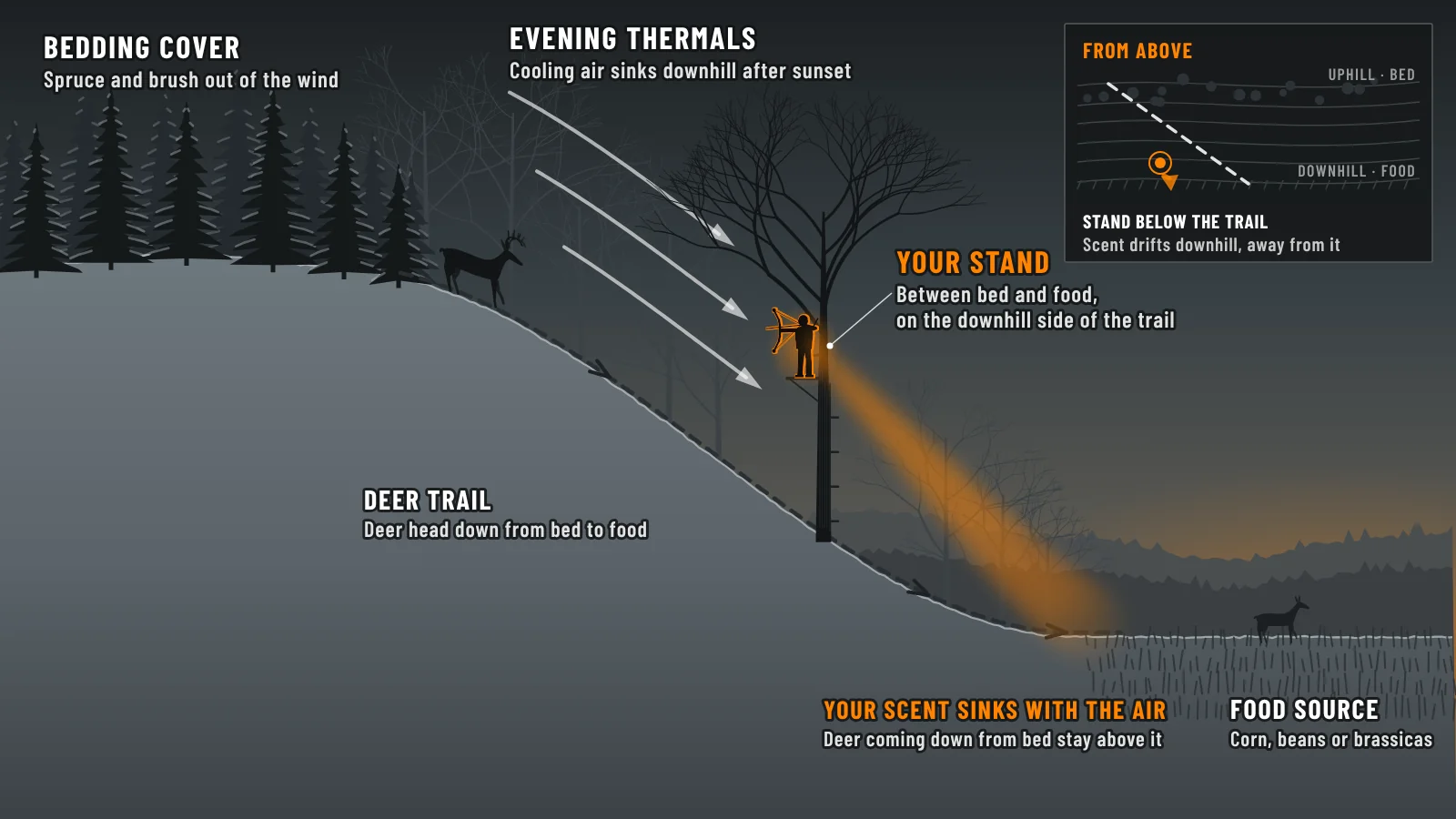
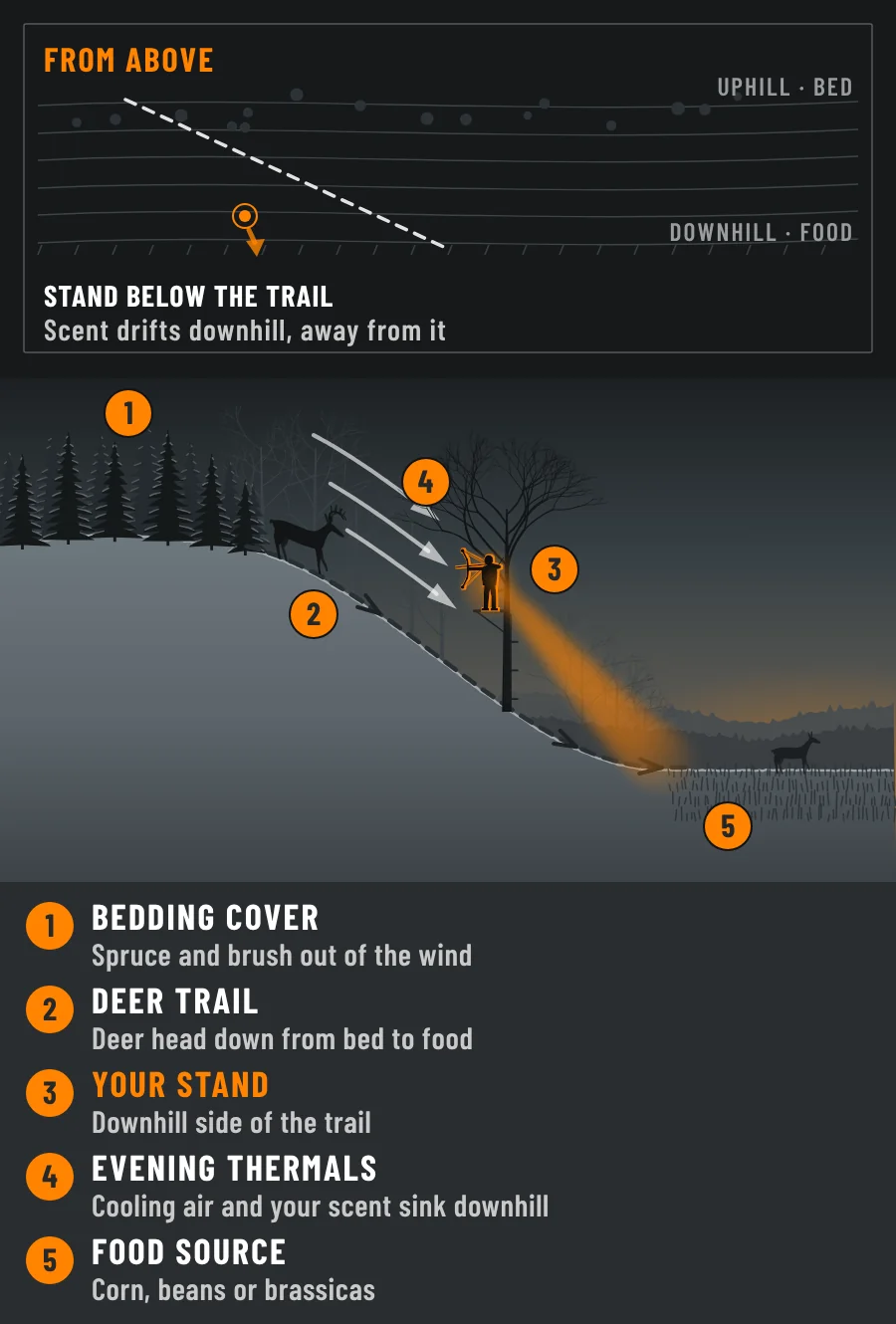
Between bed and food. Set up on the trails leading from thermal cover to food, not out in the open field where deer already feeding can pick you off.
Hunt afternoons. Late-season deer feed hardest late in the day. Morning sits near food risk bumping deer off it on your way in.
Mind the evening thermals. As the sun drops, cooling air sinks and pulls your scent downhill into the bottoms and field edges.⁷ Set up on the downhill side of trails coming off bedding, so deer walking down to you stay above your scent.¹¹ Plan your exit too.
Read the snow. Fresh tracks show which trails and food deer are using right now.
Part 2 · What keeps you on stand
Four things end a late-season sit.
We built gear for all four.
Cold, noise, wind and wet send more hunters home early than deer do. Every late-season ScentLok piece is built to handle at least one of them. The best systems handle all four.

How do you stay warm in a treestand?
Sitting still for hours, your body makes very little heat, so your gear has to hold it.
Primaloft® Gold: thermal-mapped warmth for extreme cold, with Cross Core™ in the Divergent.
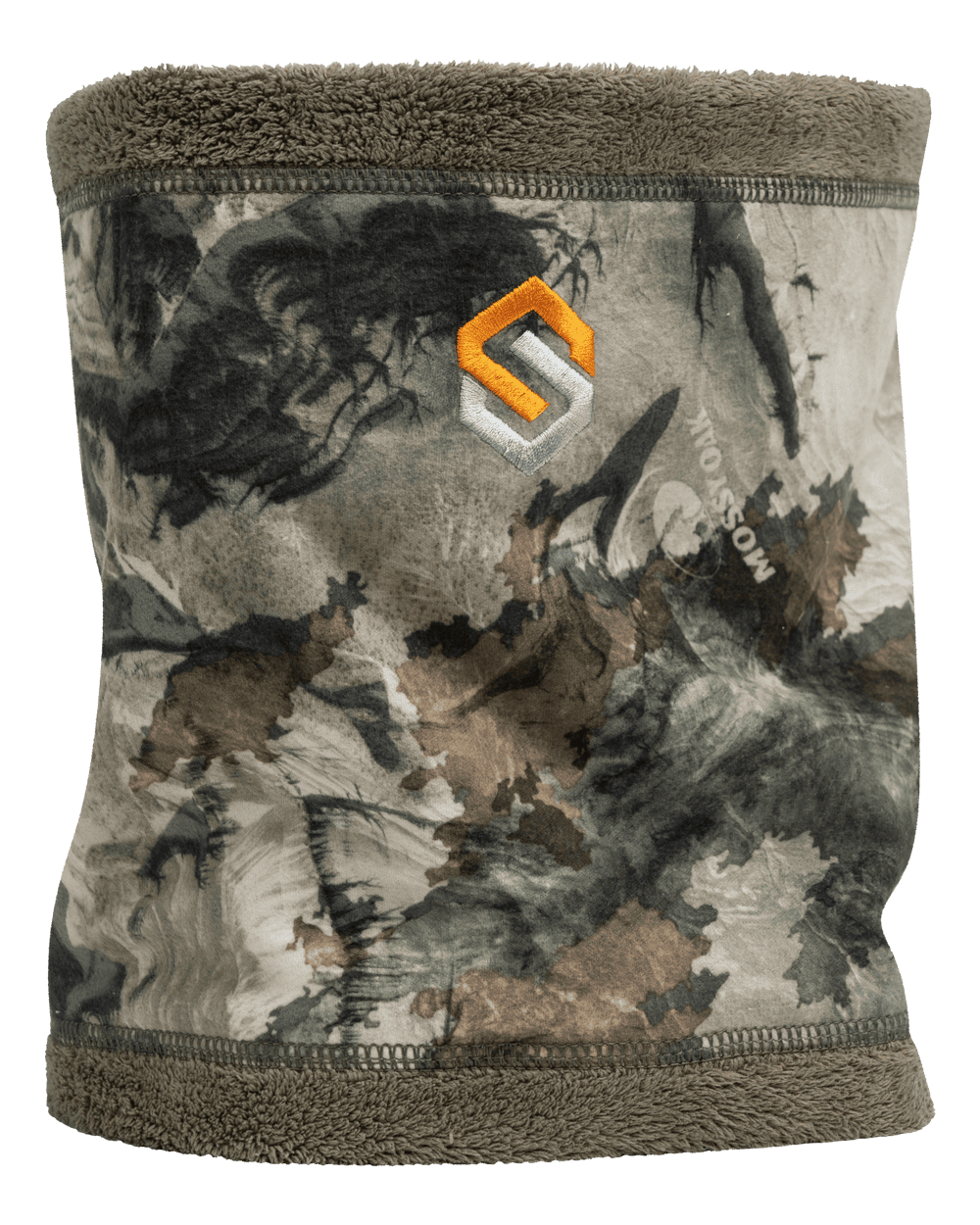
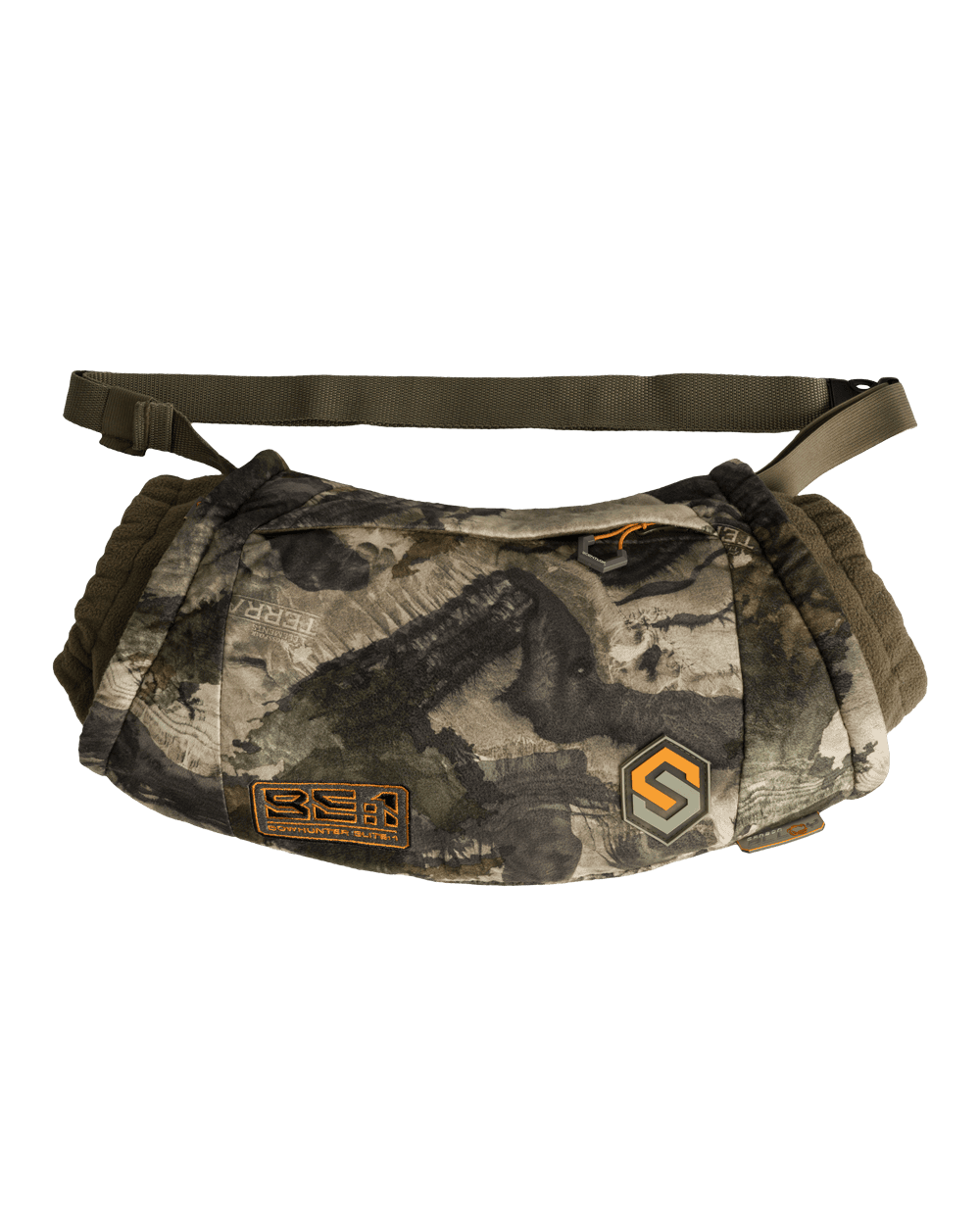
Found in: BE:1 Divergent, Handwarmer Muff, Divergent Neck Gaiter
Primaloft® Silver: thermal-mapped, packable warmth.
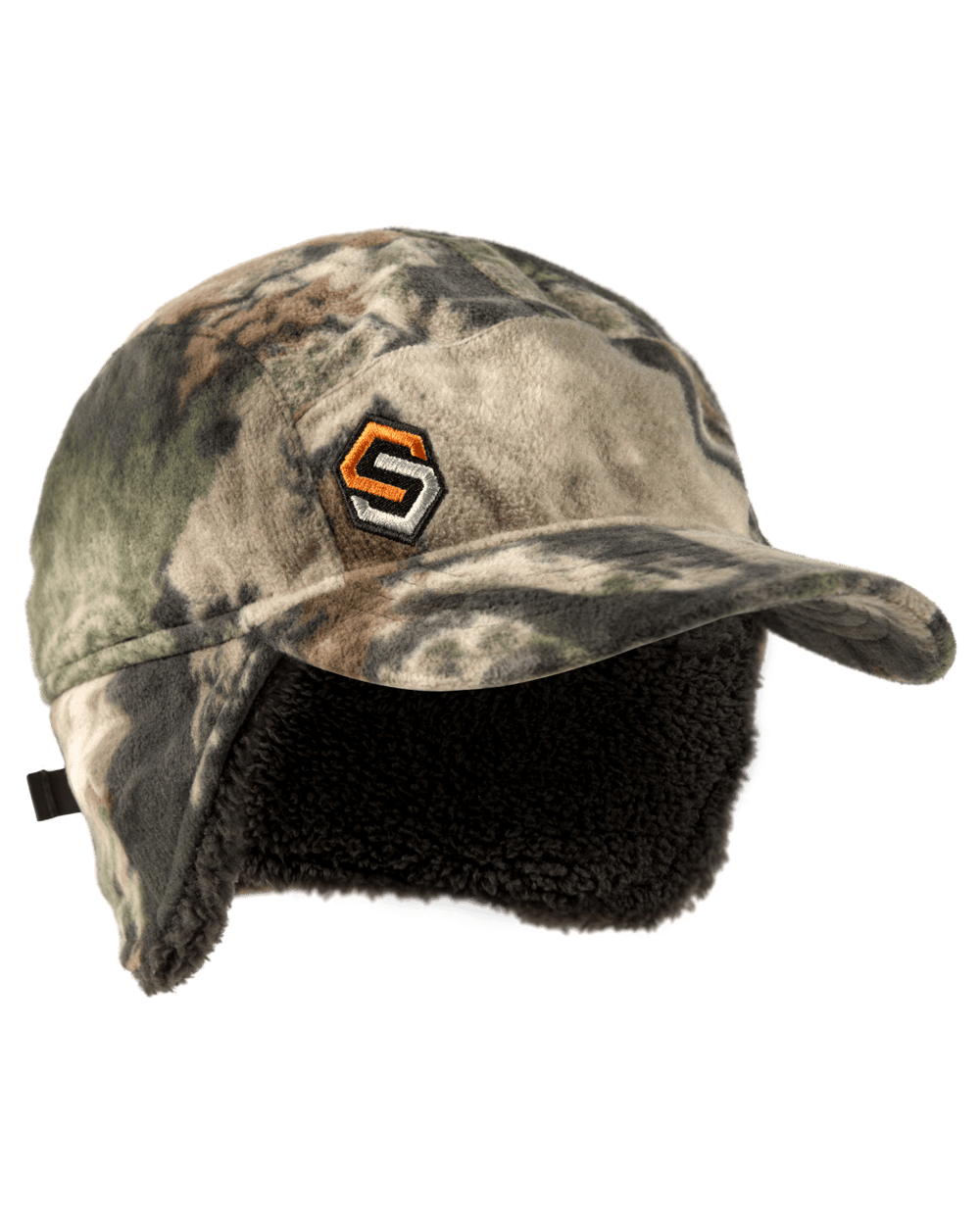
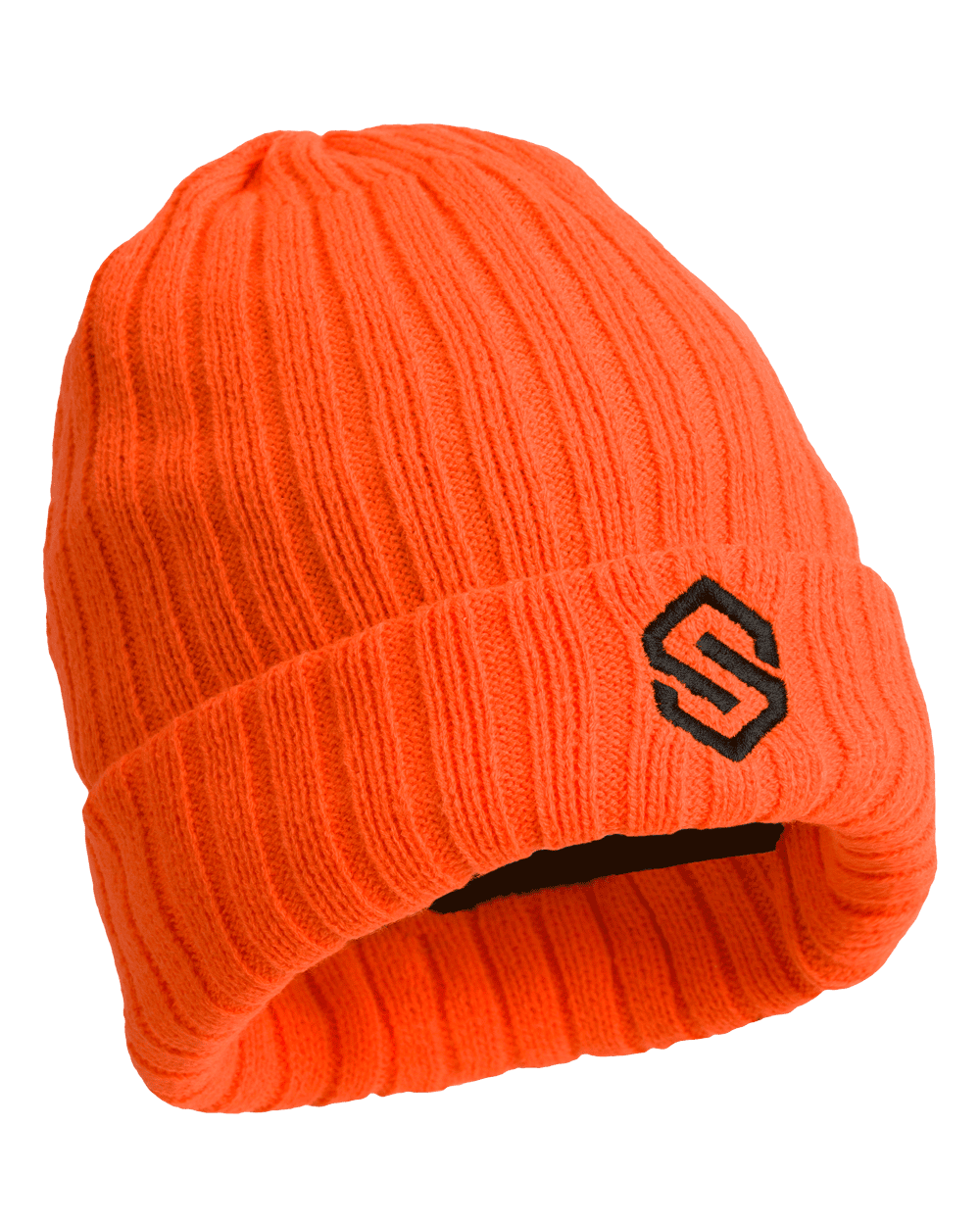
Found in: BE:1 Fortress, Revenant, Insulated Hat
Thinsulate™: warmth without bulk.
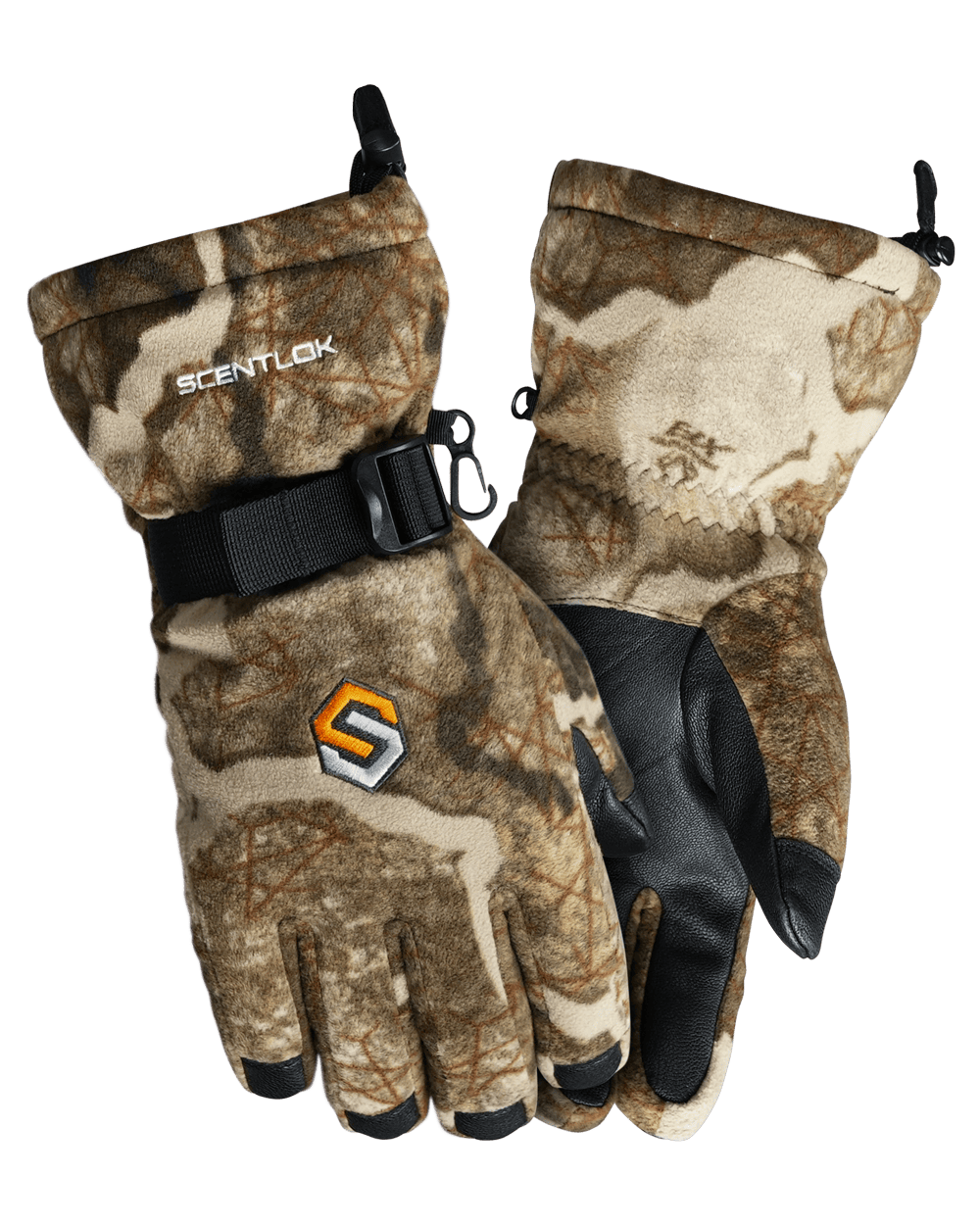
Found in: Alpha Elite, Wind Brace Pro, BE:1 Fortress Glove
Sorona® Aura: higher fill power than similar weight polyester, so it packs down small.
Found in: BE:1 Reactor Puffy
Heat on demand: built-in heating pads.
Found in: Reactor Puffy Heated Vest, Trek Heated Base Shirt
BE:1 Fortress
Built to keep you warm as the thermometer dips into the single digits.

Why does quiet clothing matter more in the late season?
Cold, calm mornings often trap cold air near the ground, which bends sound back down so it carries farther.⁸ Frozen leaves and crusted snow don't help. Your clothes can't add to the noise.
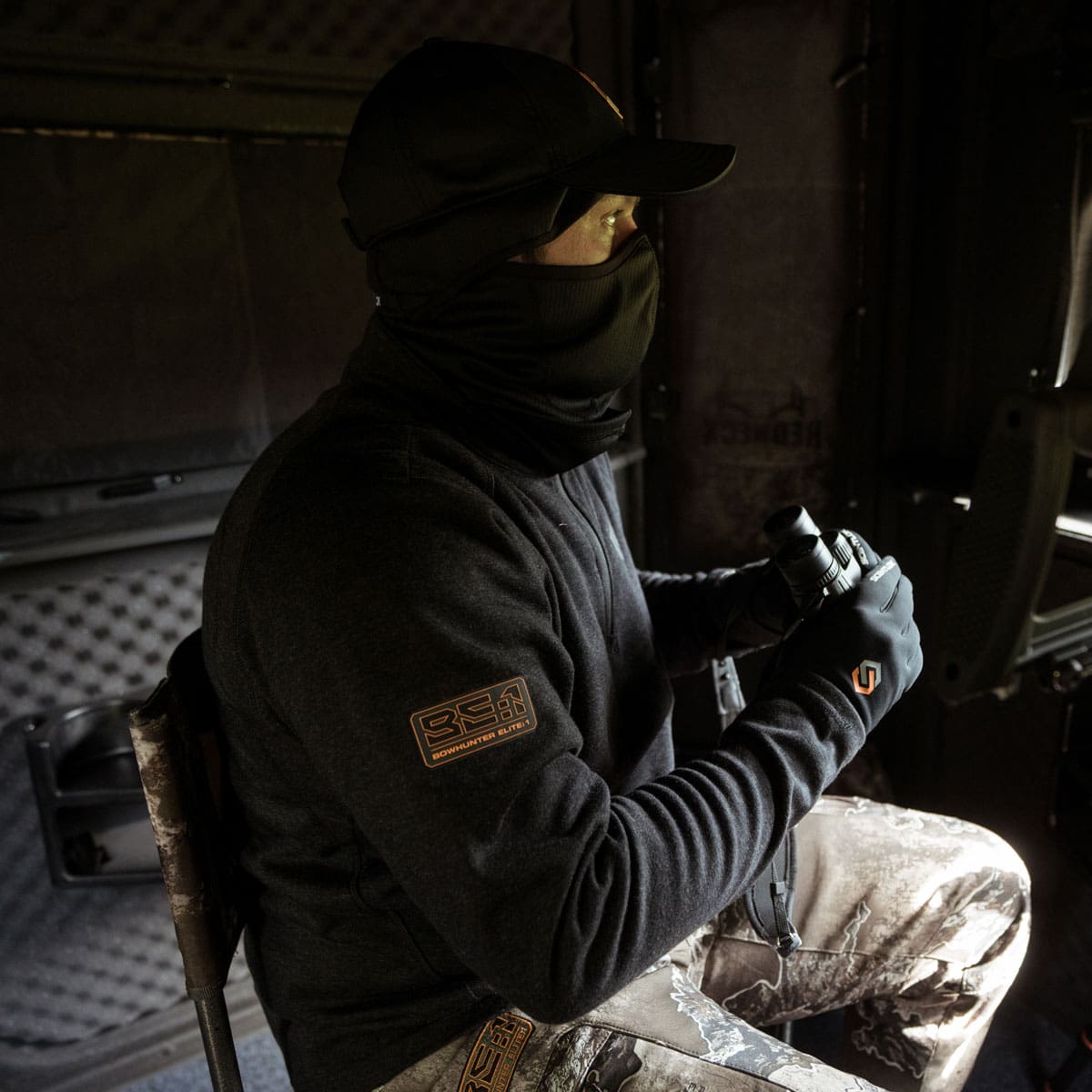
Deadly quiet fleece faces, built so drawing your bow doesn't announce you.
Found in: BE:1 Fortress (soft, quiet fleece shell), Divergent (deadly quiet shell bonded to micro fleece), Revenant (Berber and ultra quiet fleece), Paradigm (premium quiet micro tricot shell), Wind Brace Pro (deadly quiet 166g fleece)

What blocks wind in hunting clothes?
Wind pulls heat out through your layers. Block it and your insulation holds the warmth it was built for.
WindBrake®: windproof construction that still breathes.
Found in: BE:1 Revenant, Paradigm
DryLok®: waterproof and windproof membrane.
Found in: BE:1 Fortress, Wind Brace Pro, Alpha Elite
Highly wind-resistant fleece.
Found in: BE:1 Divergent

Do you need waterproof gear for late-season hunting?
Wet gear pulls heat from your body fast, and a December drizzle or sleet storm can end a sit before the deer move.
DryLok®: breathable waterproof membrane that repels rain and snow.
Found in: BE:1 Fortress, Wind Brace Pro, Alpha Elite, Insulated Hat, Fortress Glove
Precip-X™: dramatically repels water, mud and ice.
Found in: BE:1 Divergent, Divergent Neck Gaiter
DWR finish that sheds light moisture.
Found in: BE:1 Reactor Puffy, Paradigm
The edge
Warmth keeps you in the tree.
Carbon Alloy® gets you the shot.
Does scent control matter in the late season?
Yes, and arguably more than any other time of year. You're asking a deer that's been hunted for months to walk within range while you sit for hours in heavy layers. That's more time for odor to build, aimed at a nose with about 297 million olfactory receptors.⁹ Carbon Alloy® is how ScentLok® helps tilt those odds.
Why it matters more late
Longer sits
All-day and dark-to-dark sits give odor more time to build.
Sinking thermals
Cold evening air carries scent toward the bottoms and field edges where deer feed.
Wary deer
A pressured buck rarely gives you a second chance.
The science
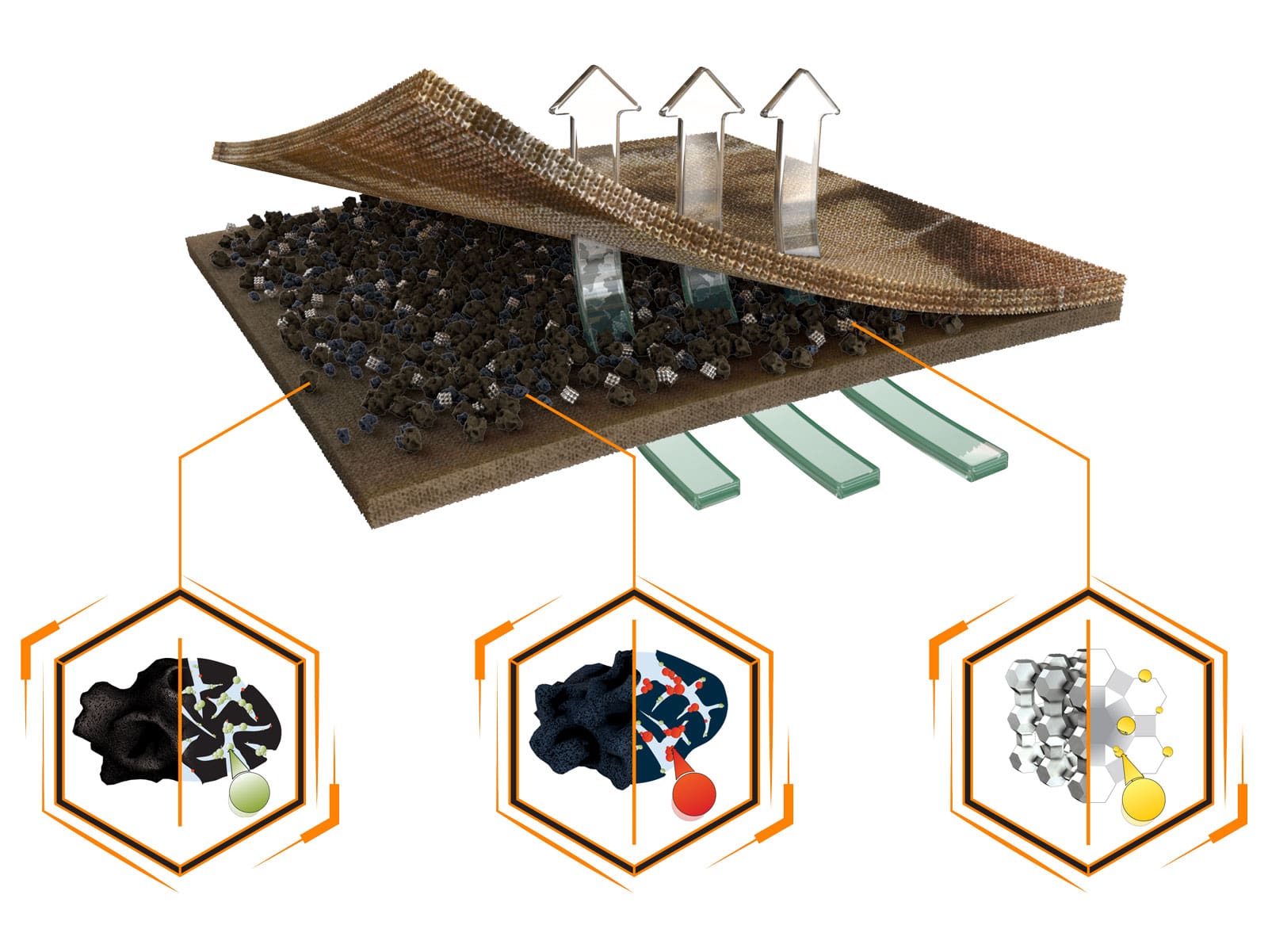
Activated carbon is universally recognized by scientists as the single most effective odor adsorbent. We built on it. Carbon Alloy® combines activated carbon with treated carbon and zeolite. The massive surface area of these natural particles pulls odors in and holds them until you reactivate your gear in the dryer.
Activated carbon
The proven foundation. Broad-spectrum odor adsorption.
Treated carbon
Adsorbs up to 3X more hydrogen sulfide, a strong breath odor, than activated carbon alone.
Zeolite
Pulls in smaller molecules than carbon can handle on its own.
Every piece in the kits below carries Carbon Alloy®, from base layer to headcover, except the Merino 250 base layers, which rely on merino's natural antimicrobial properties. Many pieces also add Silver Alloy™, a silver salt treatment that helps inhibit bacteria growth.
No gear makes you scent-free, and we won't tell you otherwise. Carbon Alloy® is built to adsorb and reduce the odor you carry in. Hunt the wind first.
Learn the scienceBuild your system
Layer for the sit,
not the walk.
What should you wear for late-season deer hunting?
Dress in layers you can add at the stand: a scent-control base layer, a heat or insulation layer, and a windproof or waterproof outer, plus a warm headcover, gloves and a muff. Walk in light so you don't sweat, then layer up at the tree.
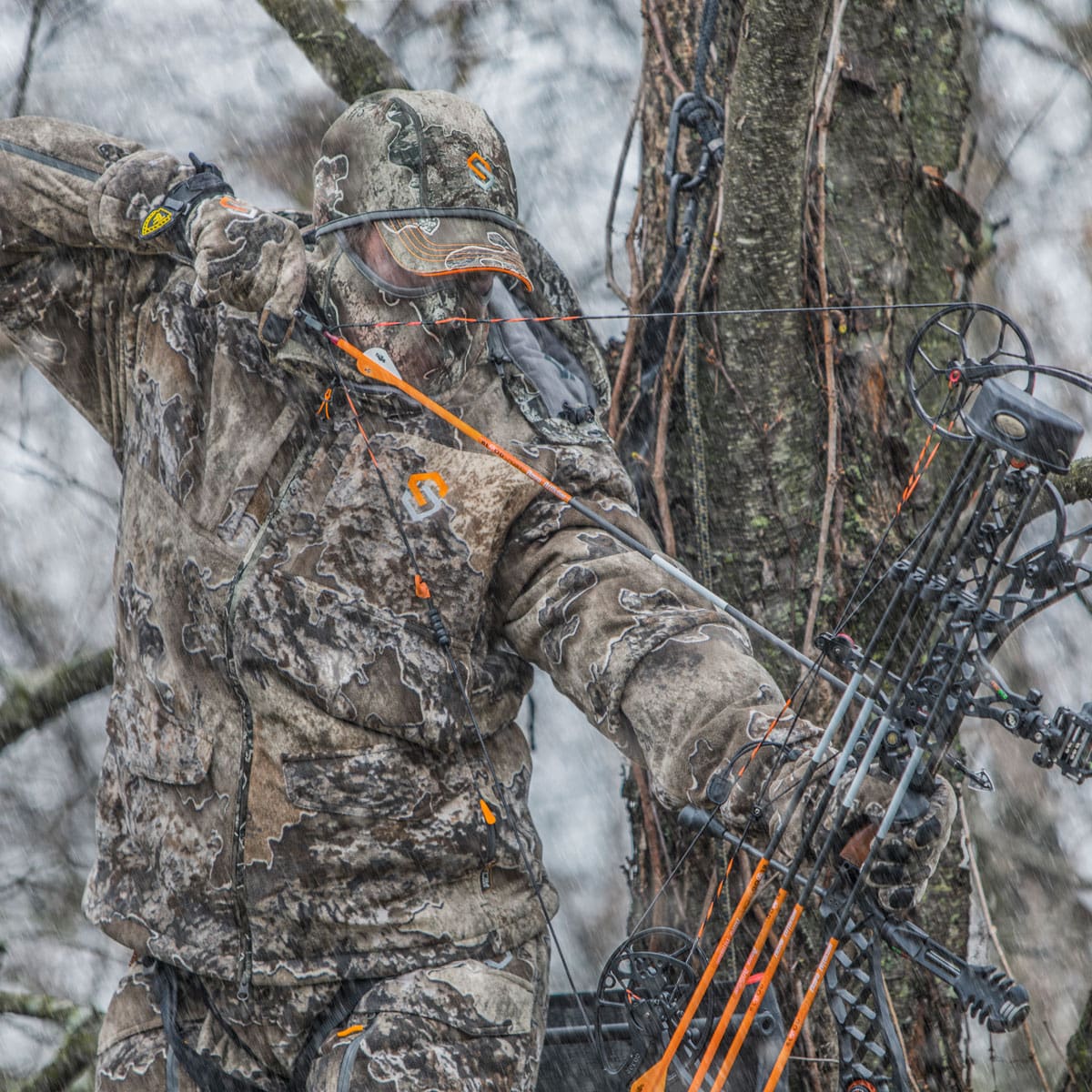
Long sits. No movement.
Hours of sitting still in the wind with a bow in your hand. You need serious warmth that doesn't fight your draw, a quiet face fabric and a harness port that keeps you safe without breaking your system.
Base
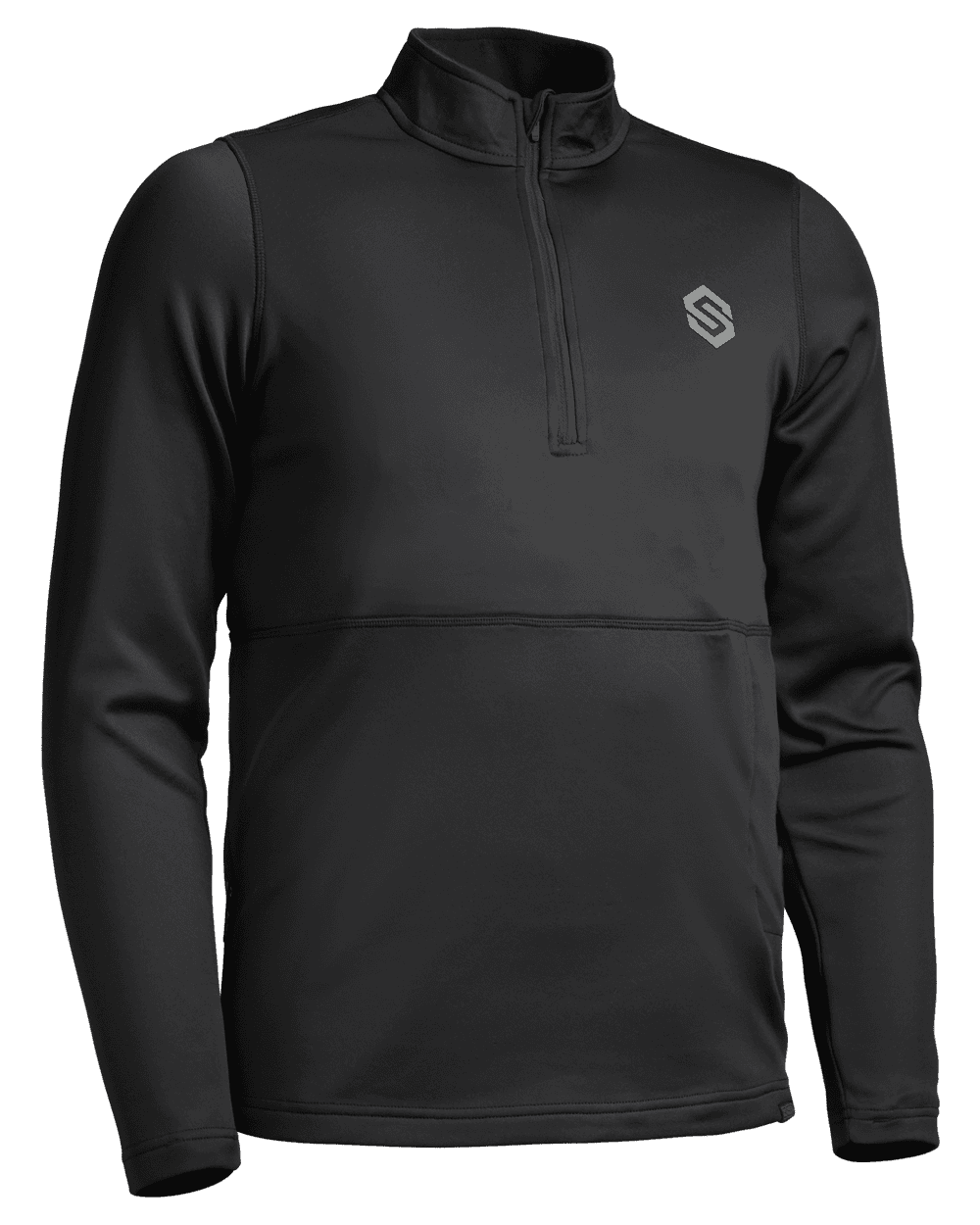
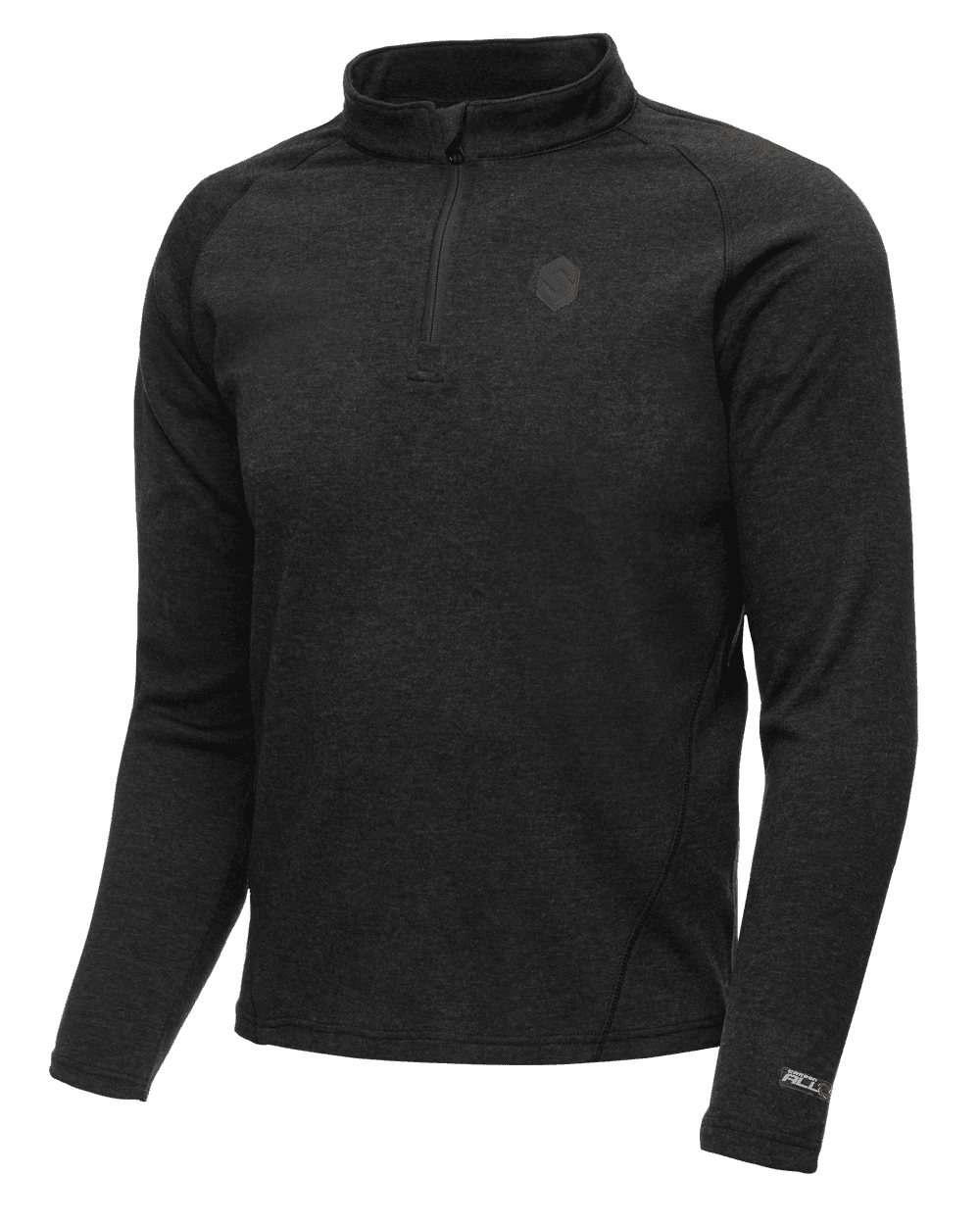
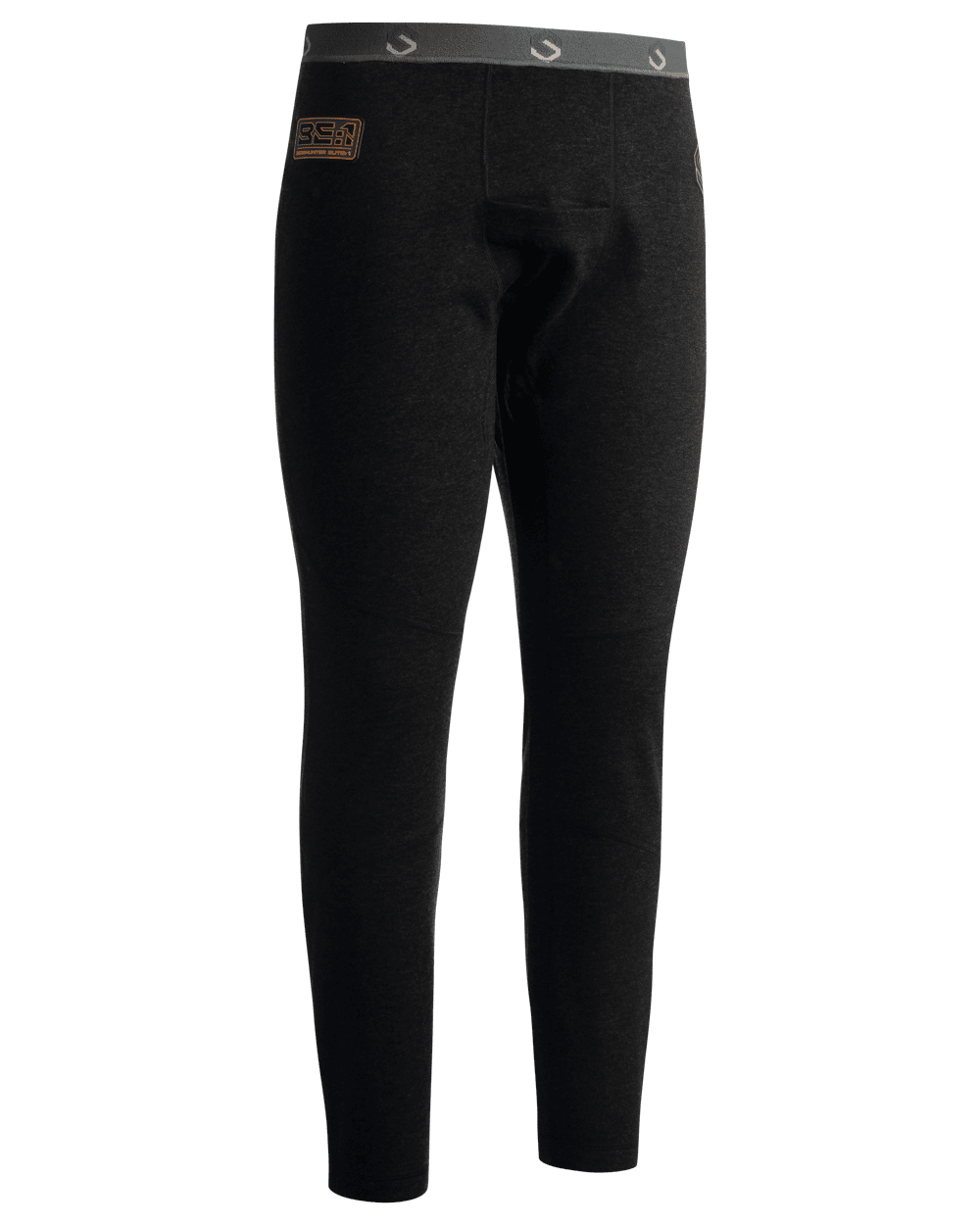
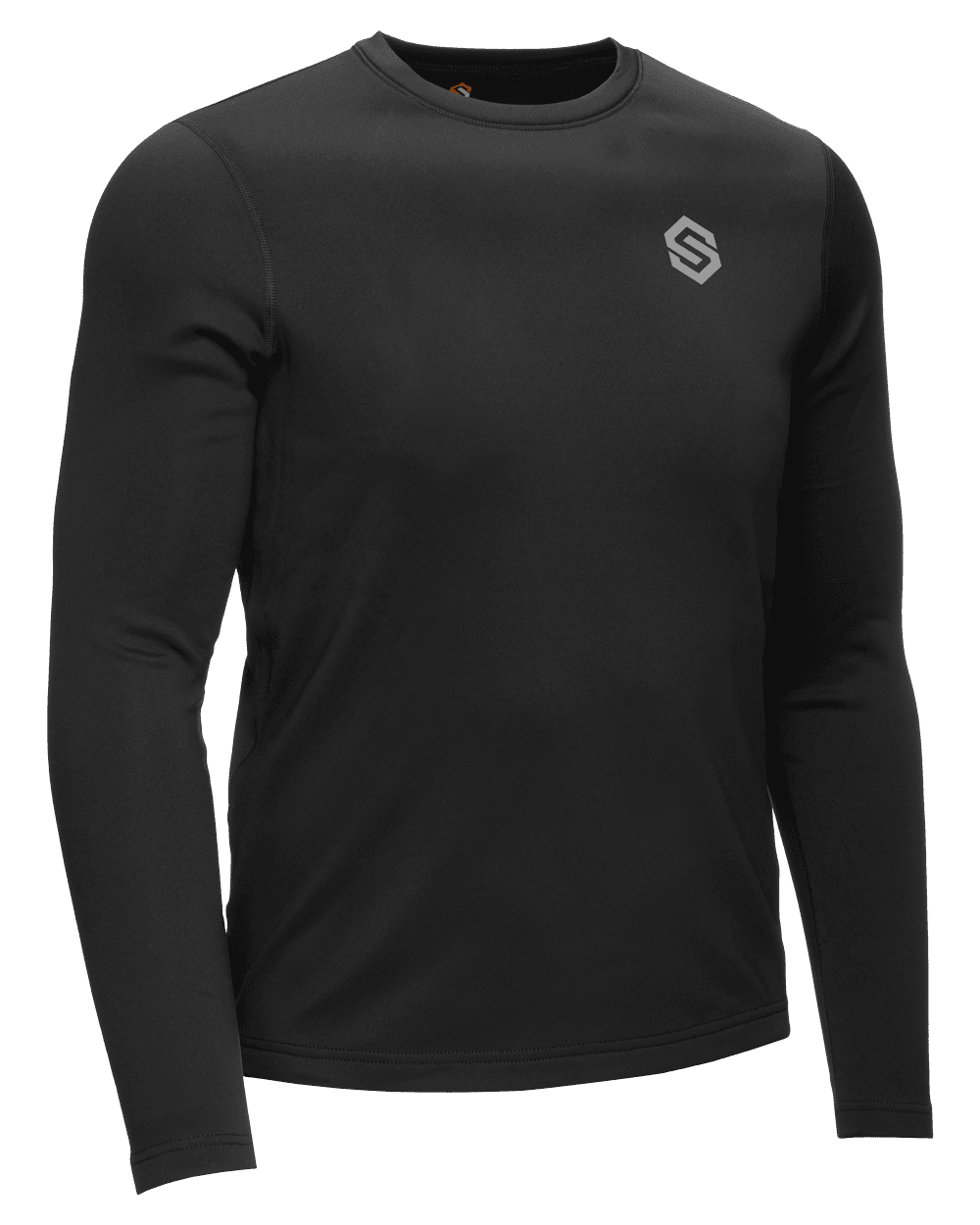
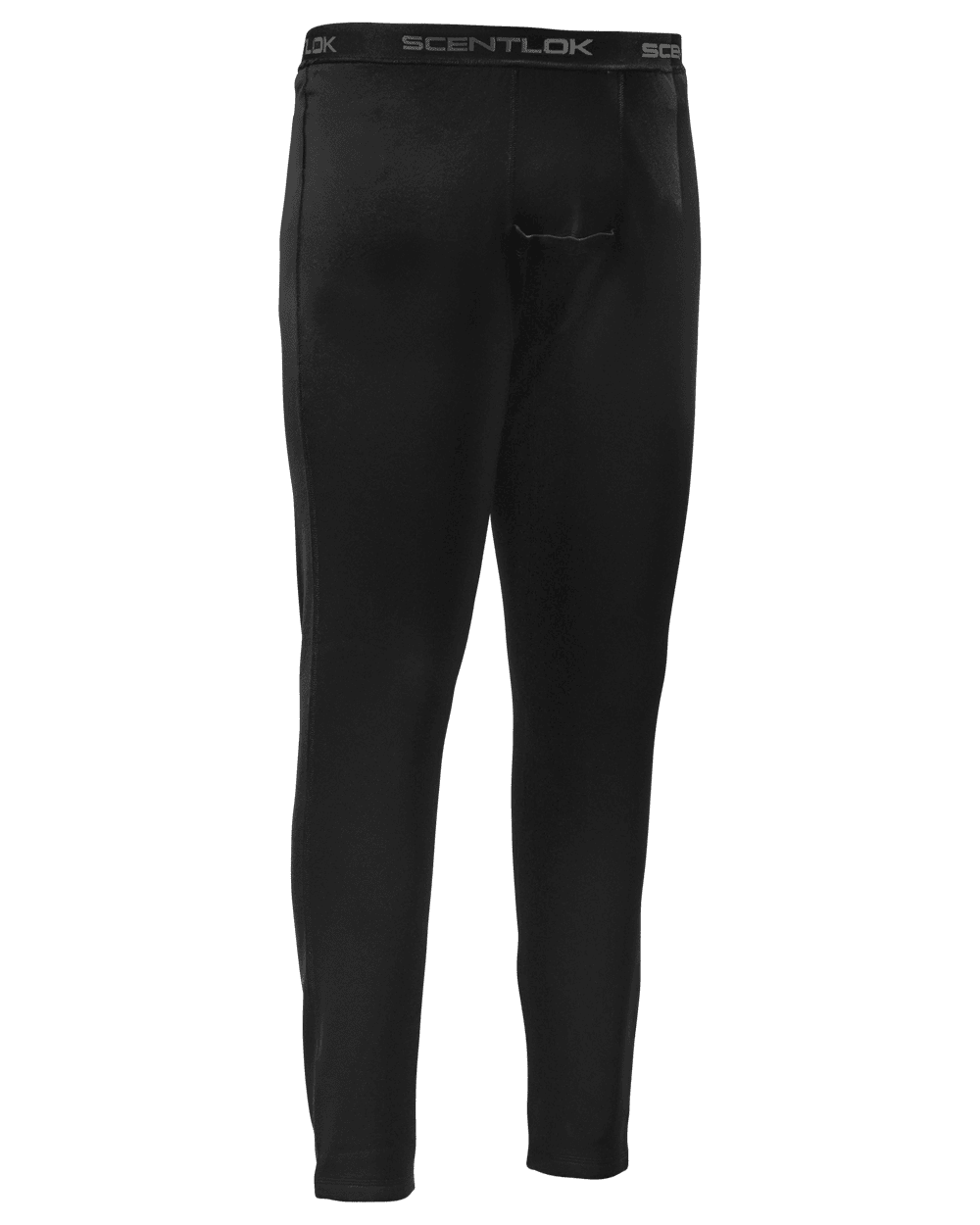
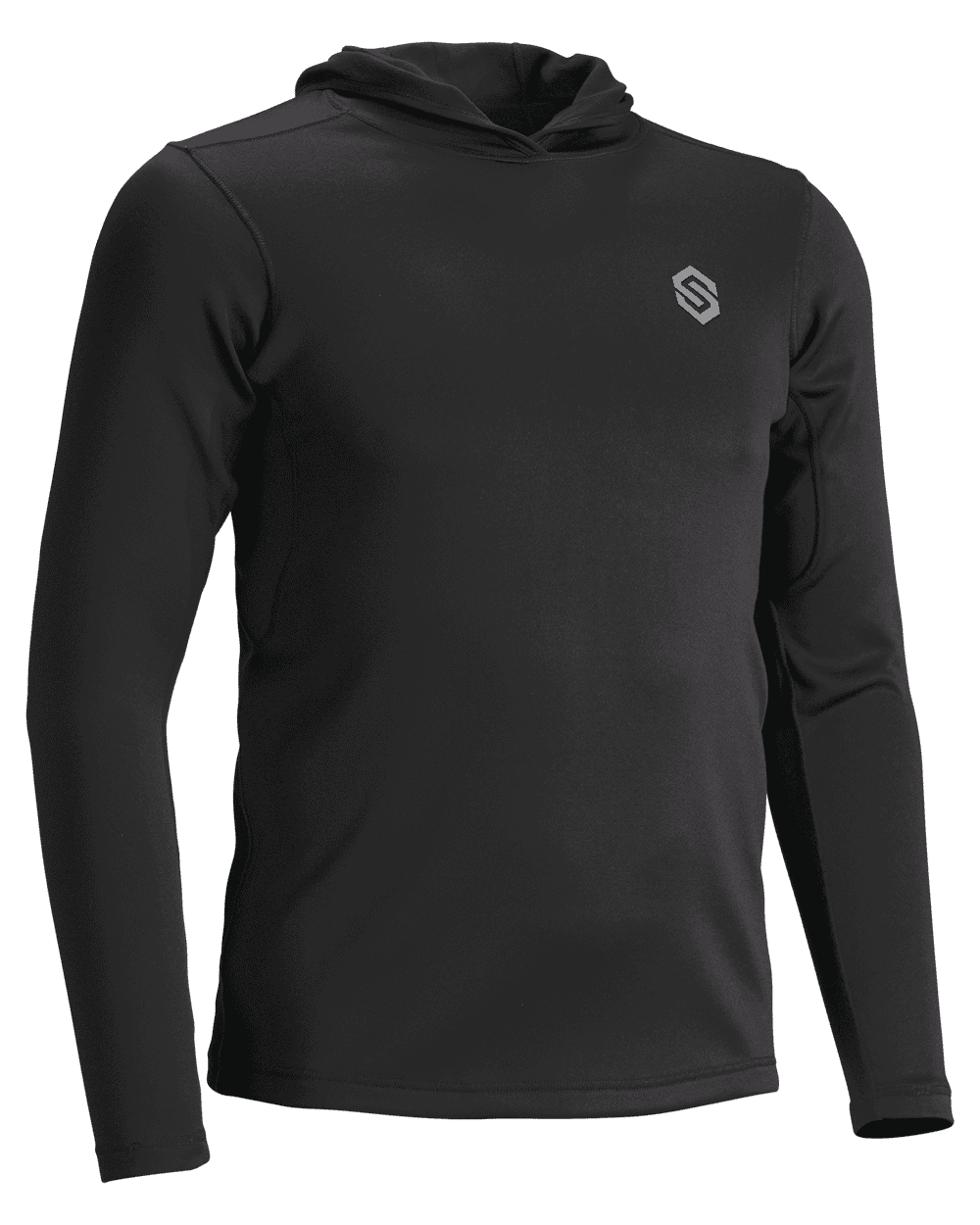
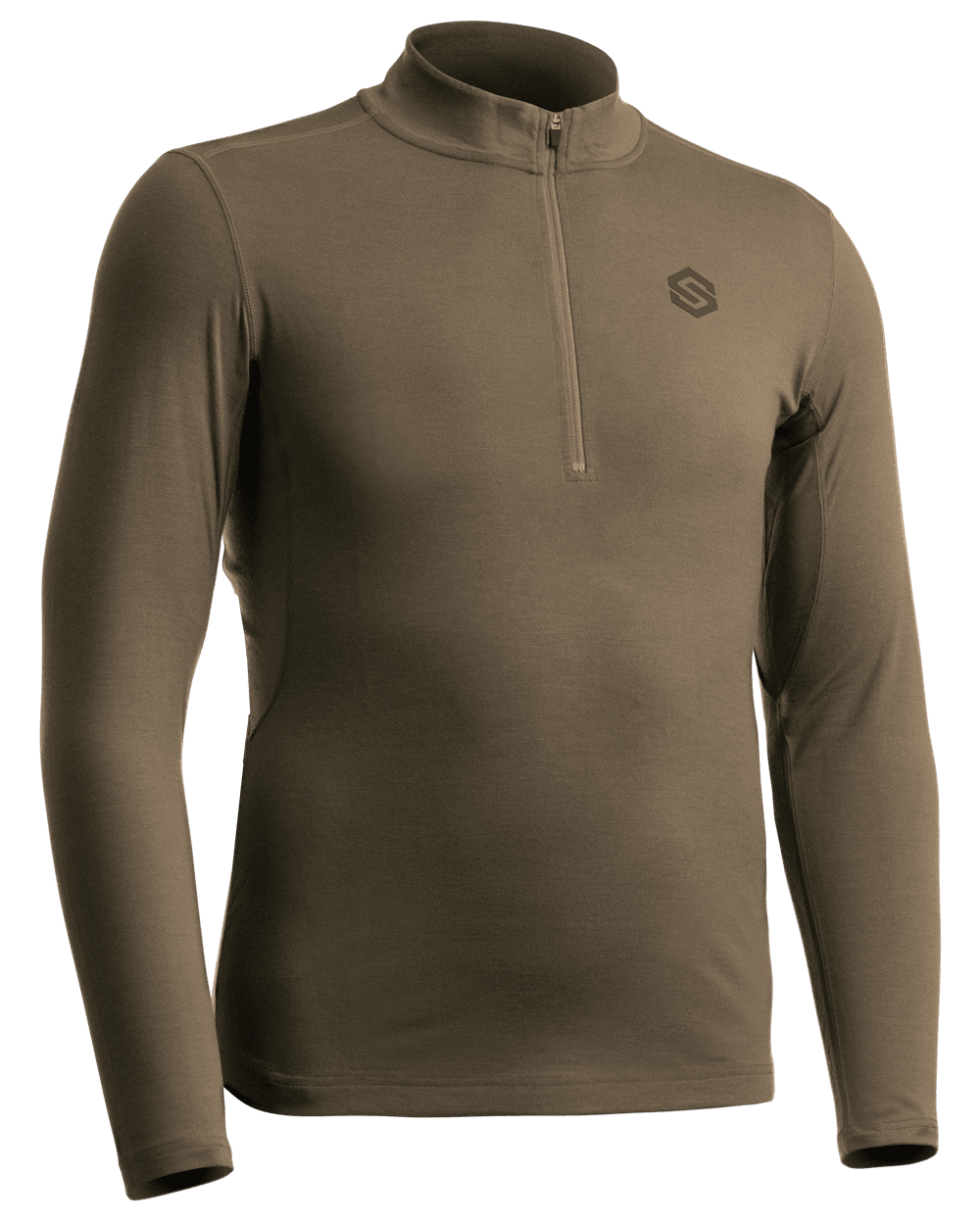
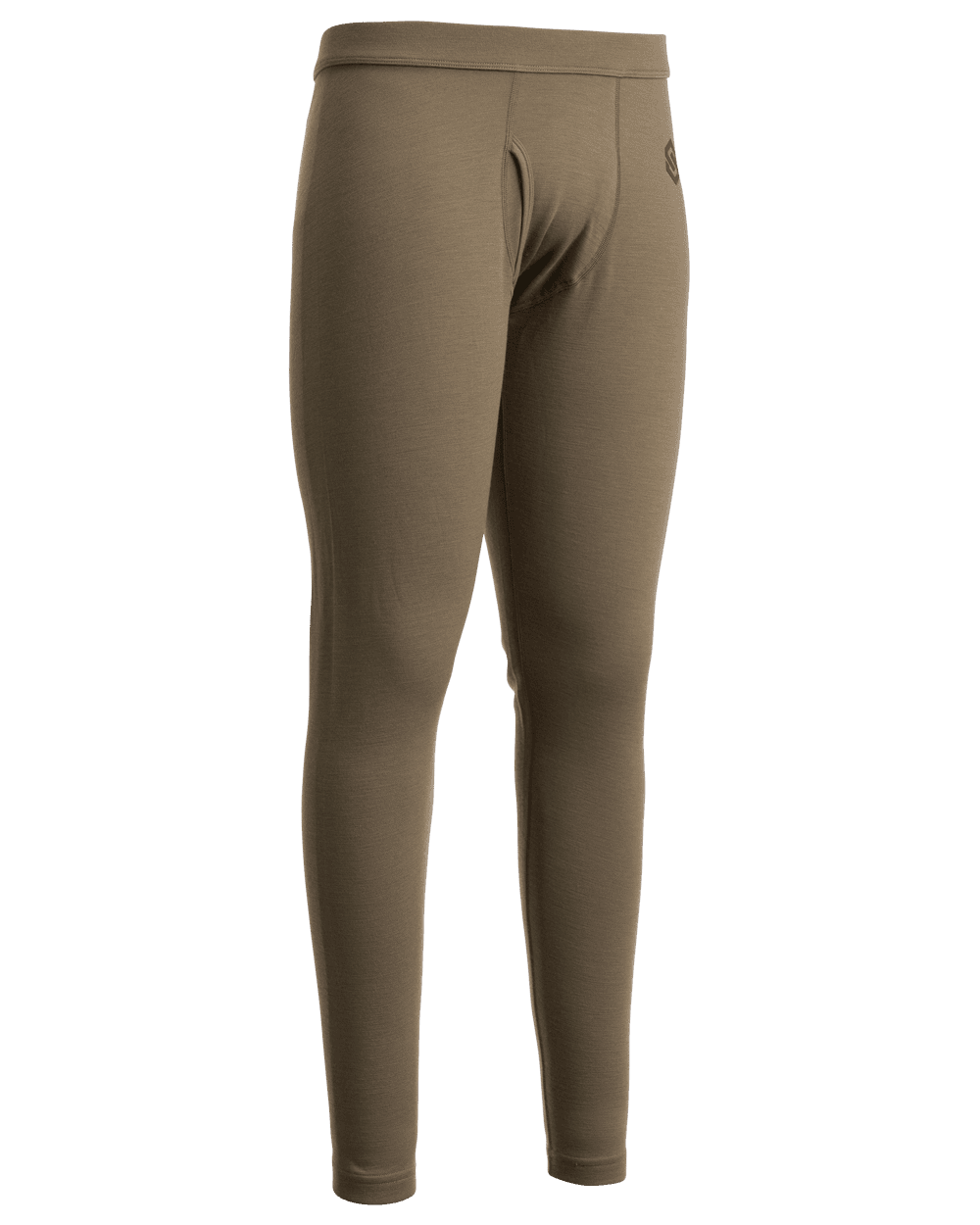
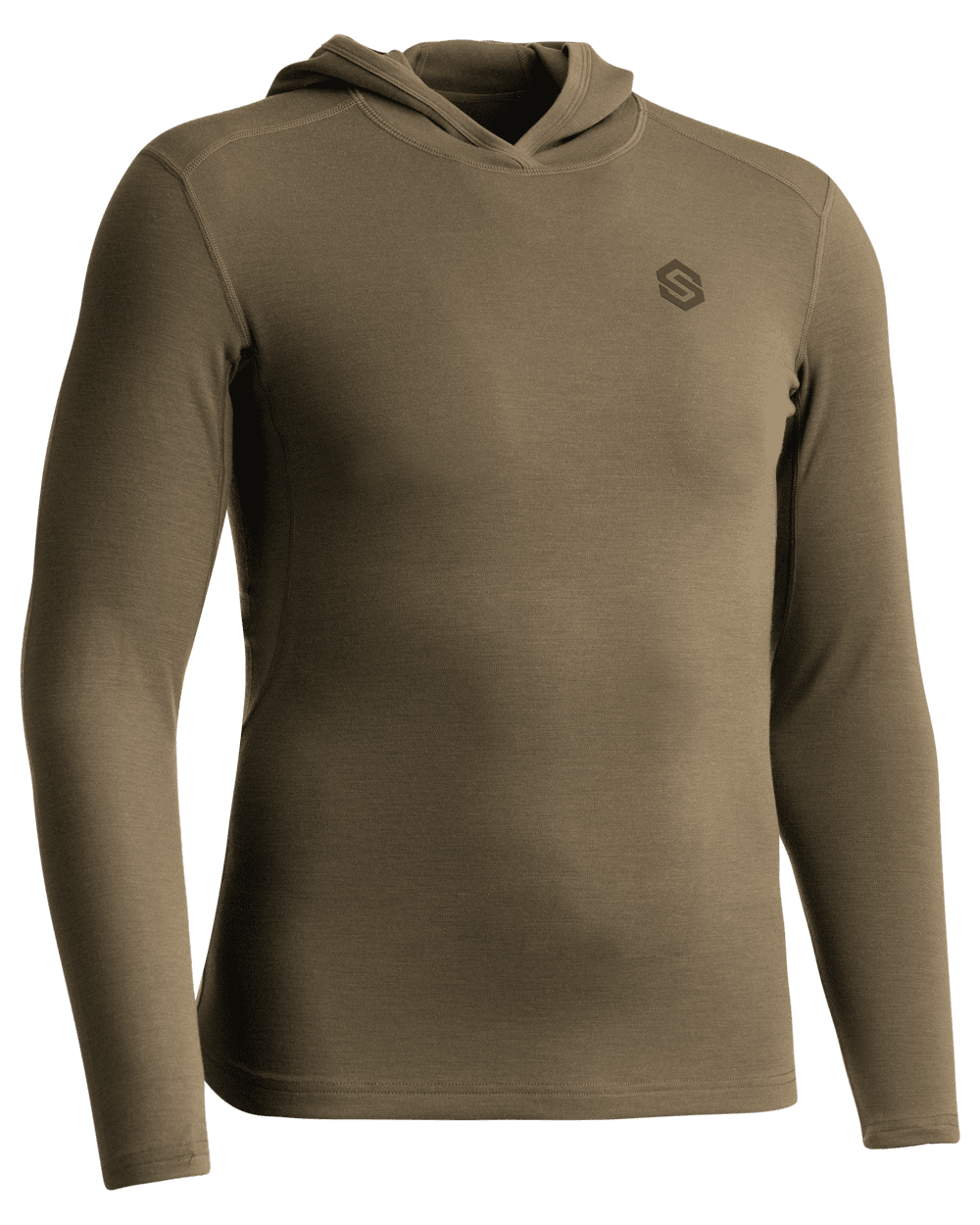
BE:1 Trek Base Shirt + Pant (merino blend with Carbon Alloy®), Merino 250 1/4 Zip + Bottom, or the BE:1 Trek Heated Base Shirt
Heat
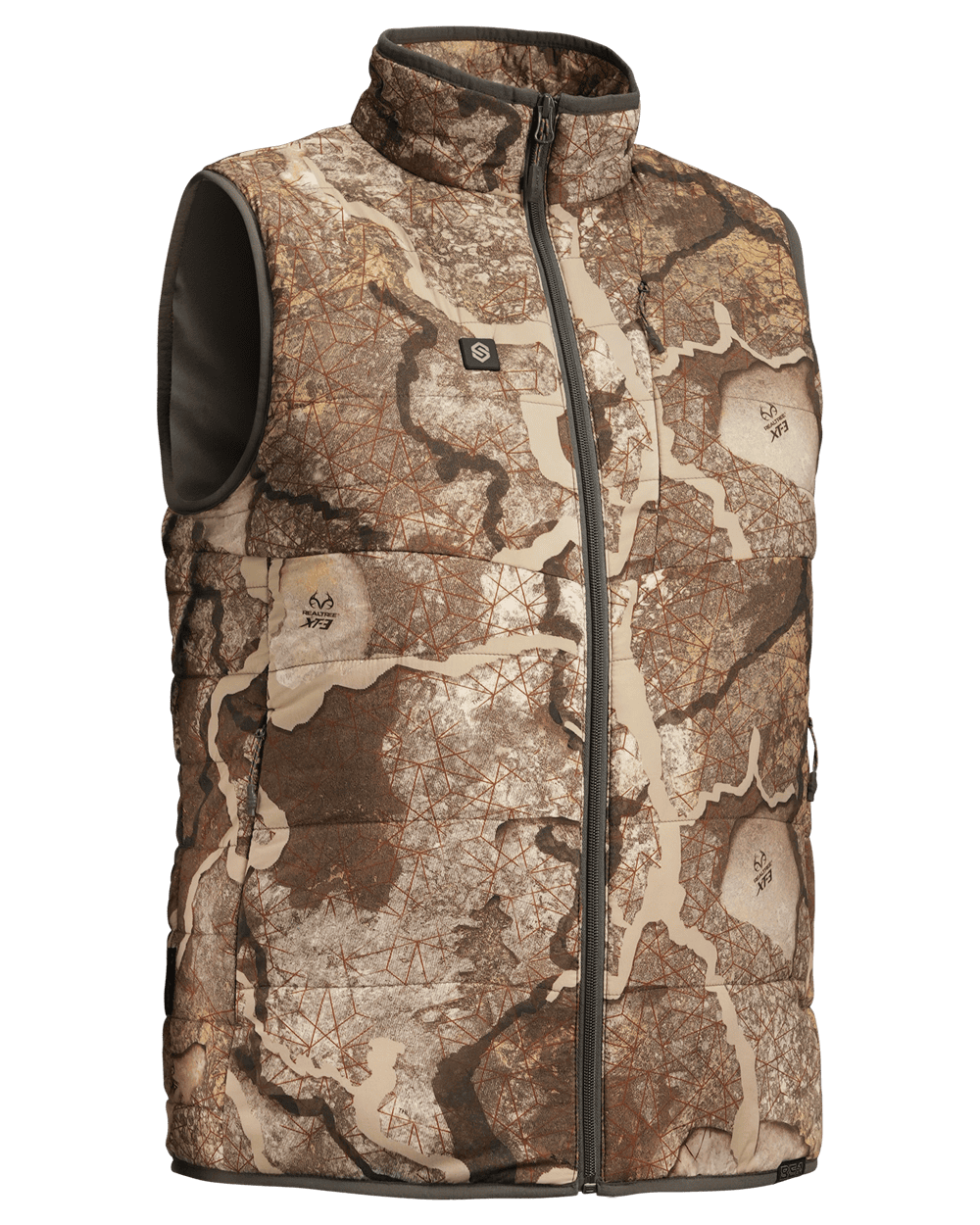
BE:1 Reactor Puffy Heated Vest
Insulation midlayers
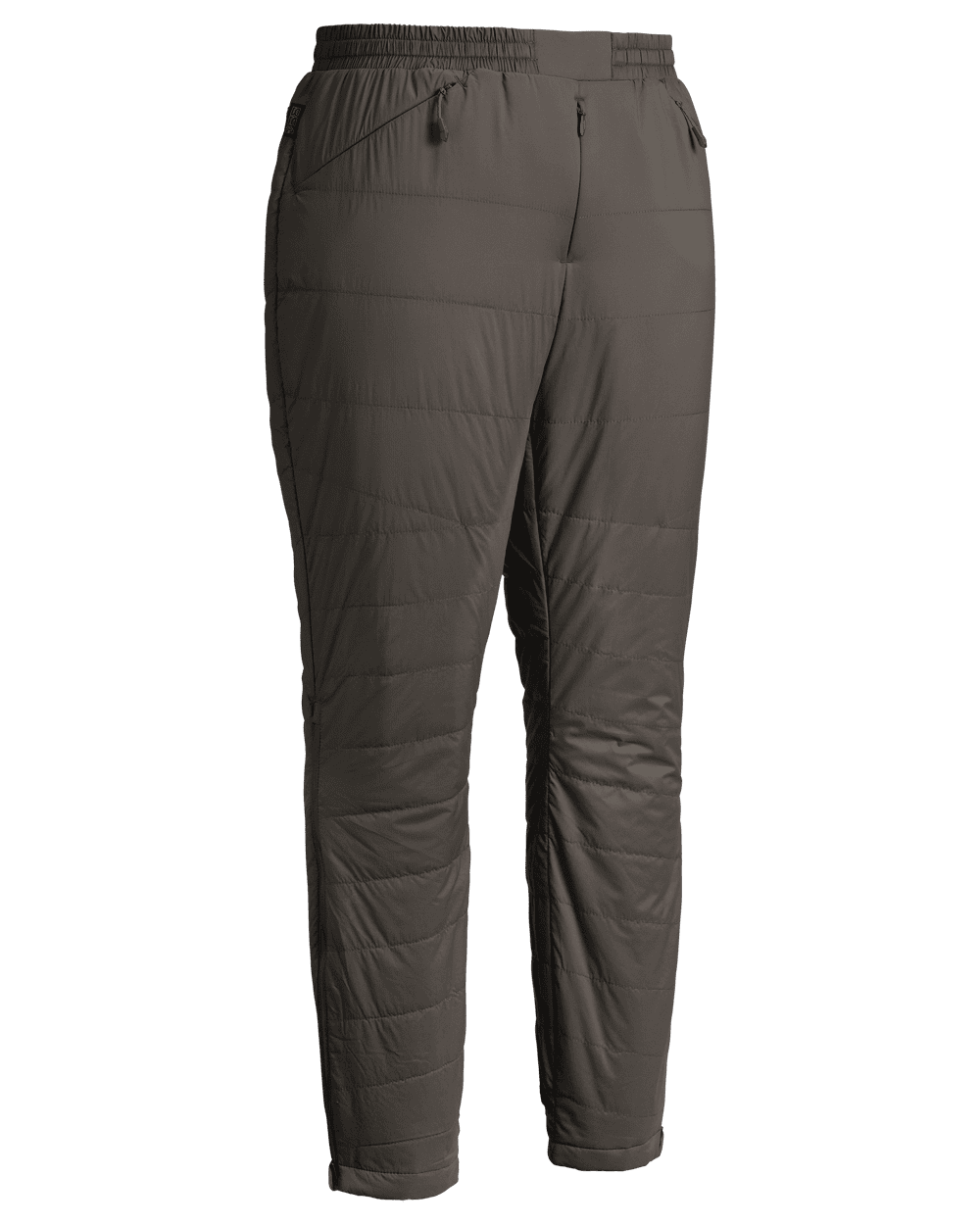
BE:1 Reactor Puffy Jacket + Pant. Pack them in, put them on at the tree.
For insulation and heat in one piece, go with the BE:1 Reactor Puffy Heated Vest.
Outer shell · pick one
BE:1 Fortress Parka + Bib: waterproof, for bitter, wet sits
BE:1 Revenant Jacket + Bib: windproof and packable, a strong fit for saddle and mobile setups
BE:1 Divergent Jacket + Pant: built for extreme cold
BE:1 Paradigm Jacket + Pant: windproof, water resistant and quiet, when layered over the insulation midlayers
Hands + head
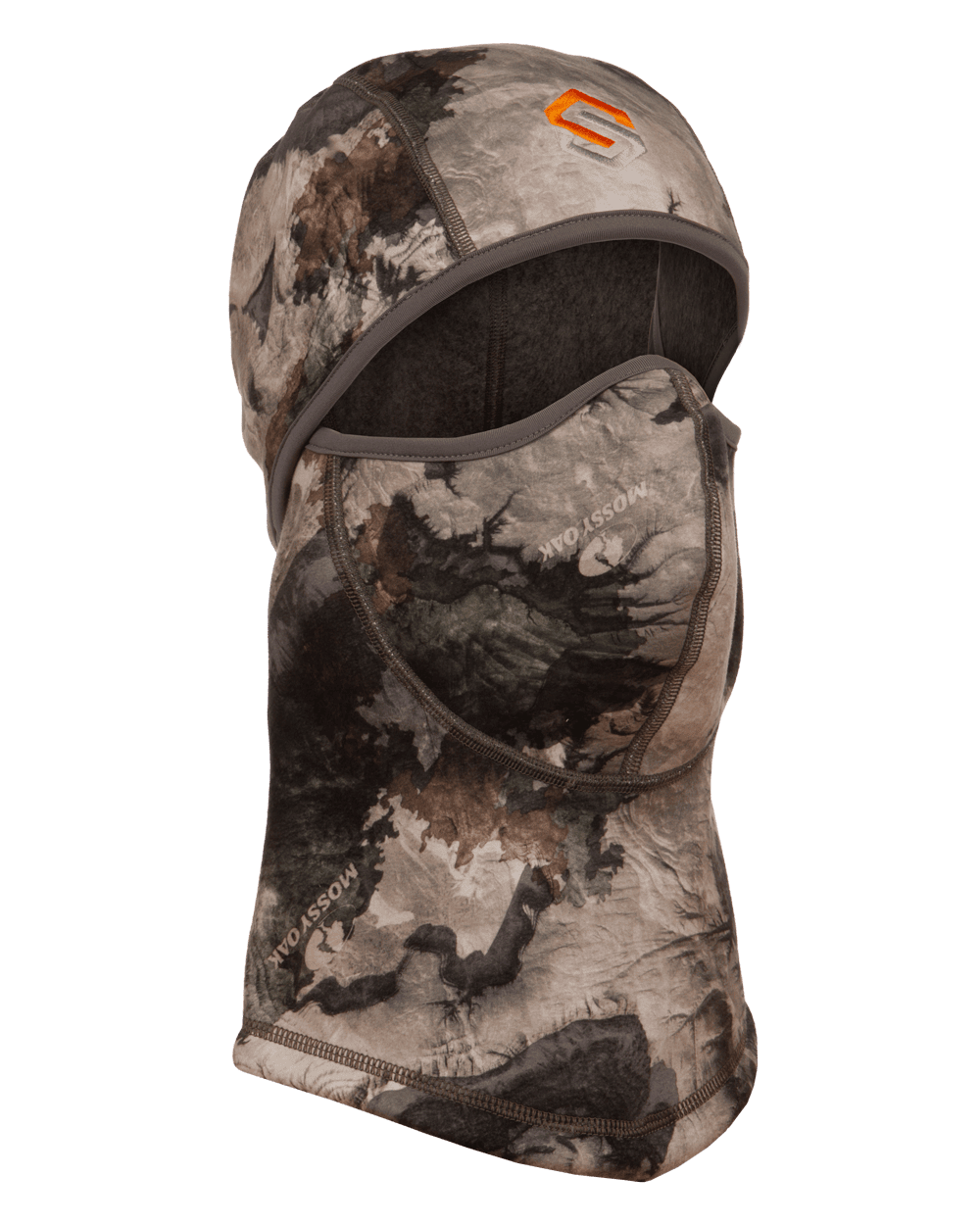
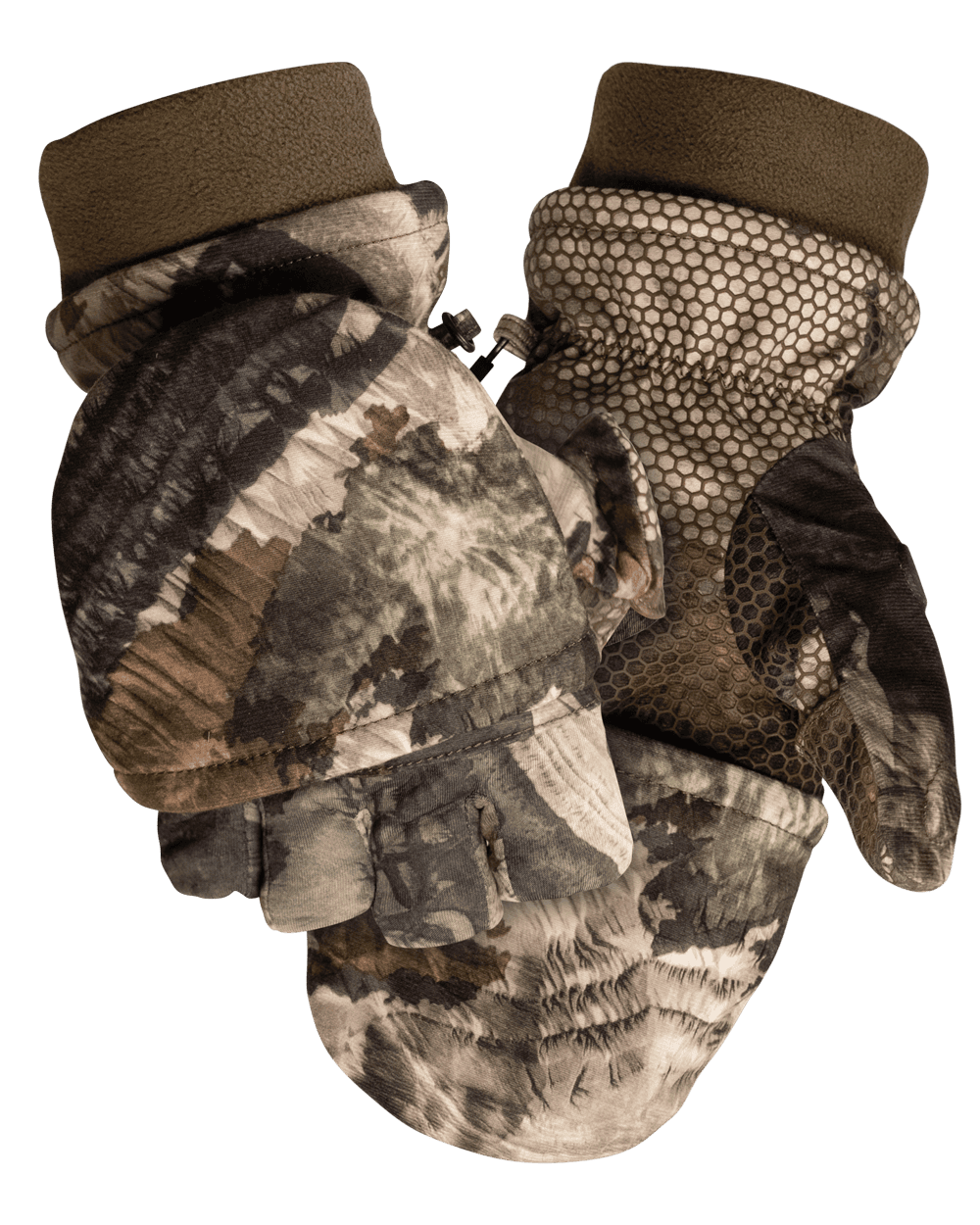
BE:1 Insulated Hat or Headcover, Fortress Glove, Handwarmer Muff, Divergent Neck Gaiter
Field tip
The Fortress Parka, Revenant Jacket and Divergent Jacket all have a safety harness port, so your tether runs through your outer layer instead of over it.
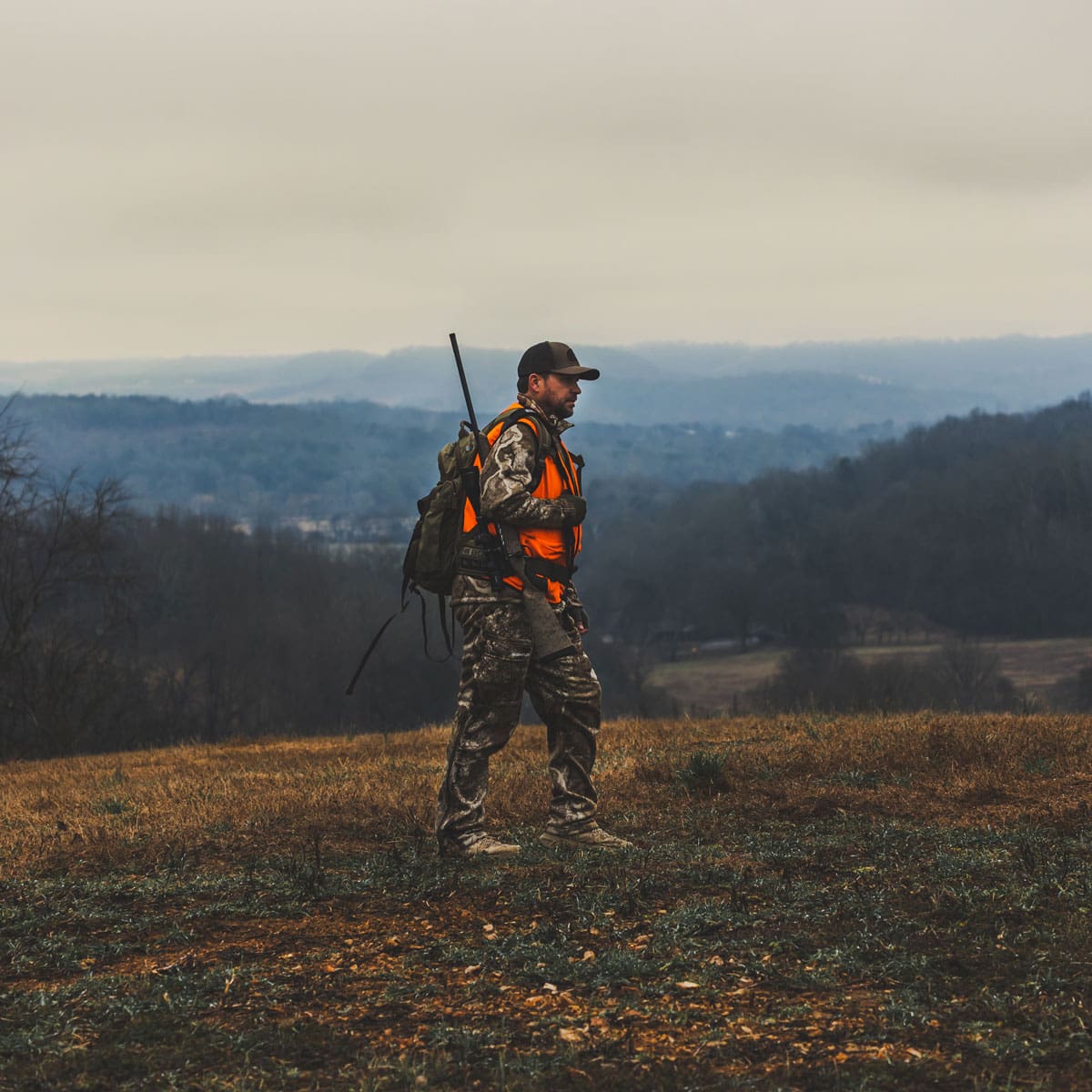

Which outer layer for which conditions?
Conditions
Pick
Why
Frigid and wet
BE:1 Fortress Parka + Bib
DryLok® waterproof membrane and thermal-mapped Primaloft® Silver, built to keep you warm into the single digits
Cold and windy
BE:1 Revenant Jacket + Bib
WindBrake® windproof build that breathes, with packable Primaloft® Silver
Extreme cold, long still sits
BE:1 Divergent Jacket + Pant
Thermal-mapped Primaloft® Gold with Cross Core™, highly wind resistant, Precip-X™
Wind, wet and cold with a fleece feel
Wind Brace Pro Jacket + Pant
Deadly quiet fleece with a DryLok® membrane and 80g Thinsulate™
All-around cold, wet sits
Alpha Elite Jacket + Bib (men's and Women's)
DryLok®, zoned Thinsulate™ and plenty of pockets
Shop the late season
Everything you need
to stay put
Current price, patterns and sizes are on each product page. Or browse all our late-season hunting clothing.
Shop all late-season gear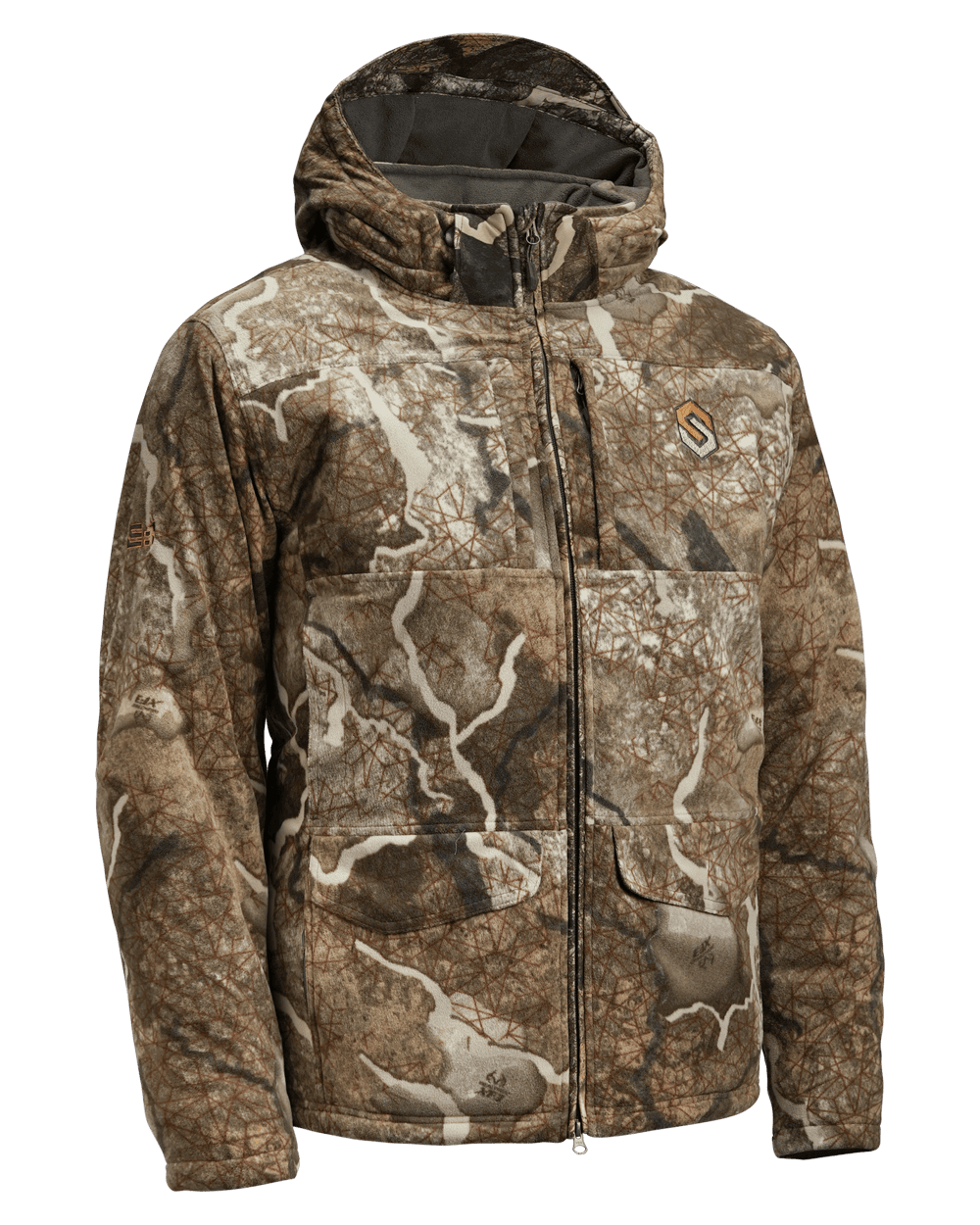
Outer shell
BE:1 Fortress Parka
DryLok® waterproof, thermal-mapped Primaloft® Silver, ten pockets.
Shop now
Outer shell
BE:1 Fortress Bib
Waterproof, insulated and quiet, with leg zippers and storm flaps.
Shop now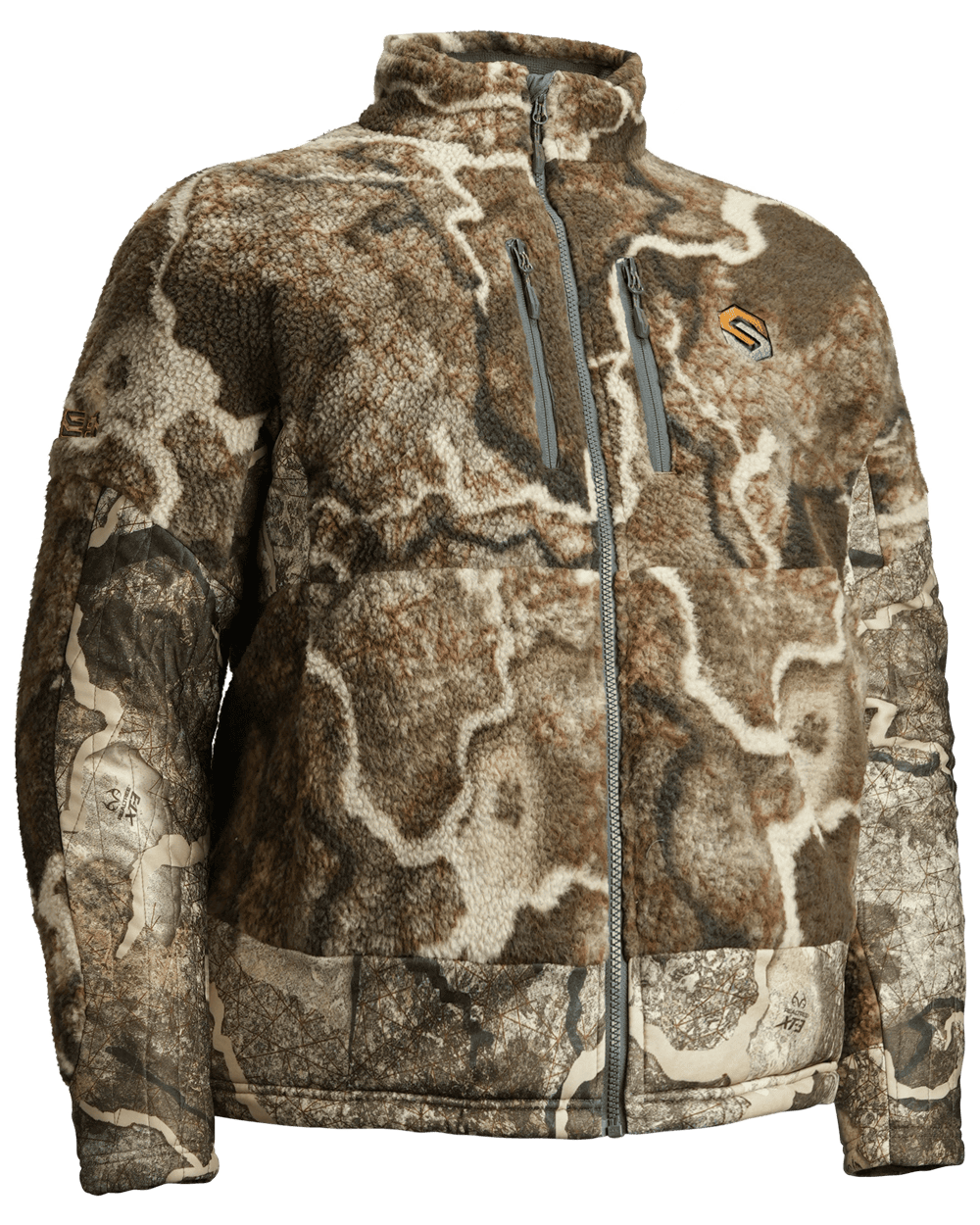
Outer shell
BE:1 Revenant Jacket
WindBrake® windproof with thermal-mapped Primaloft® Silver.
Shop now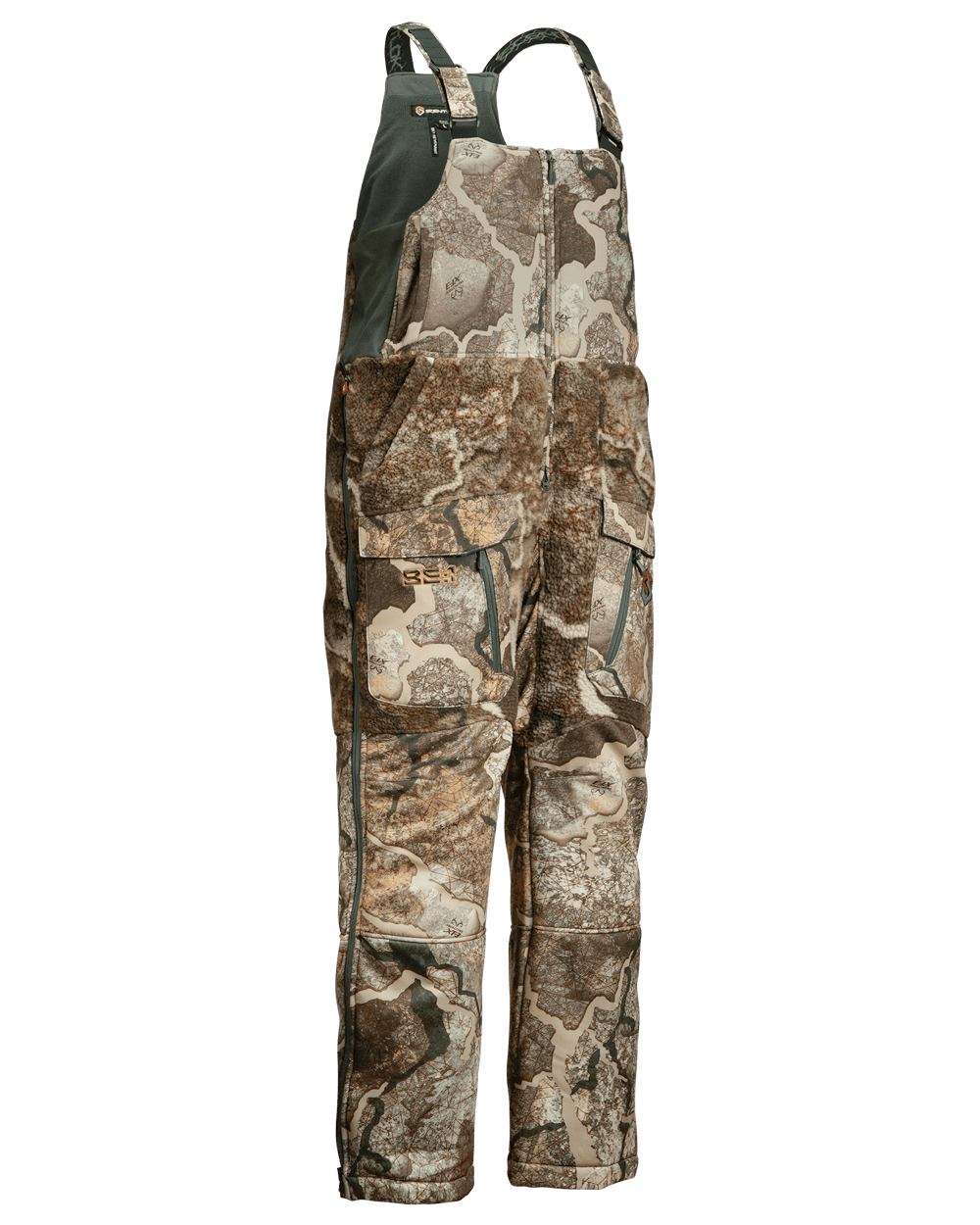
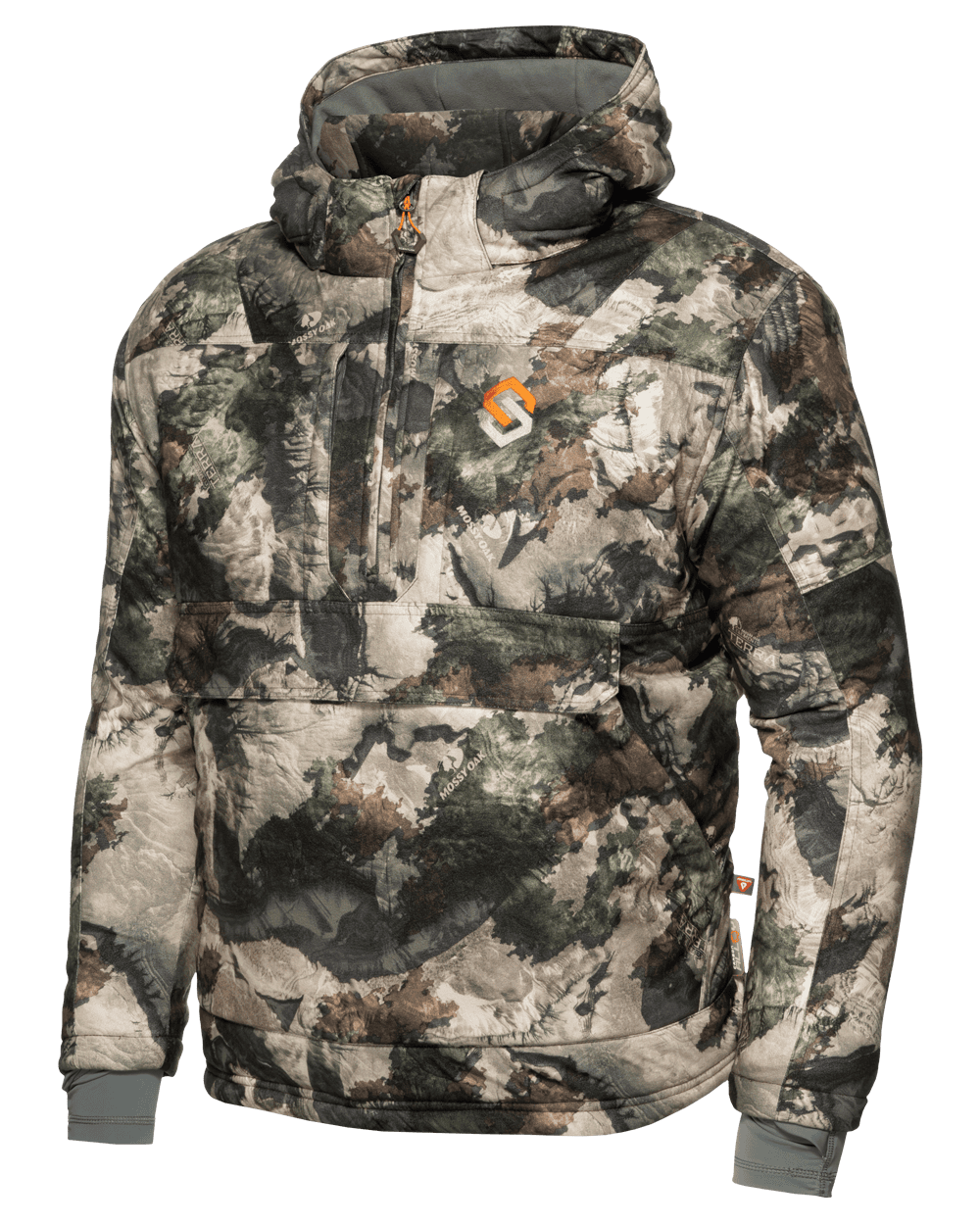
Outer shell
BE:1 Divergent Jacket
Primaloft® Gold with Cross Core™ and an Aerogel electronics pocket.
Shop now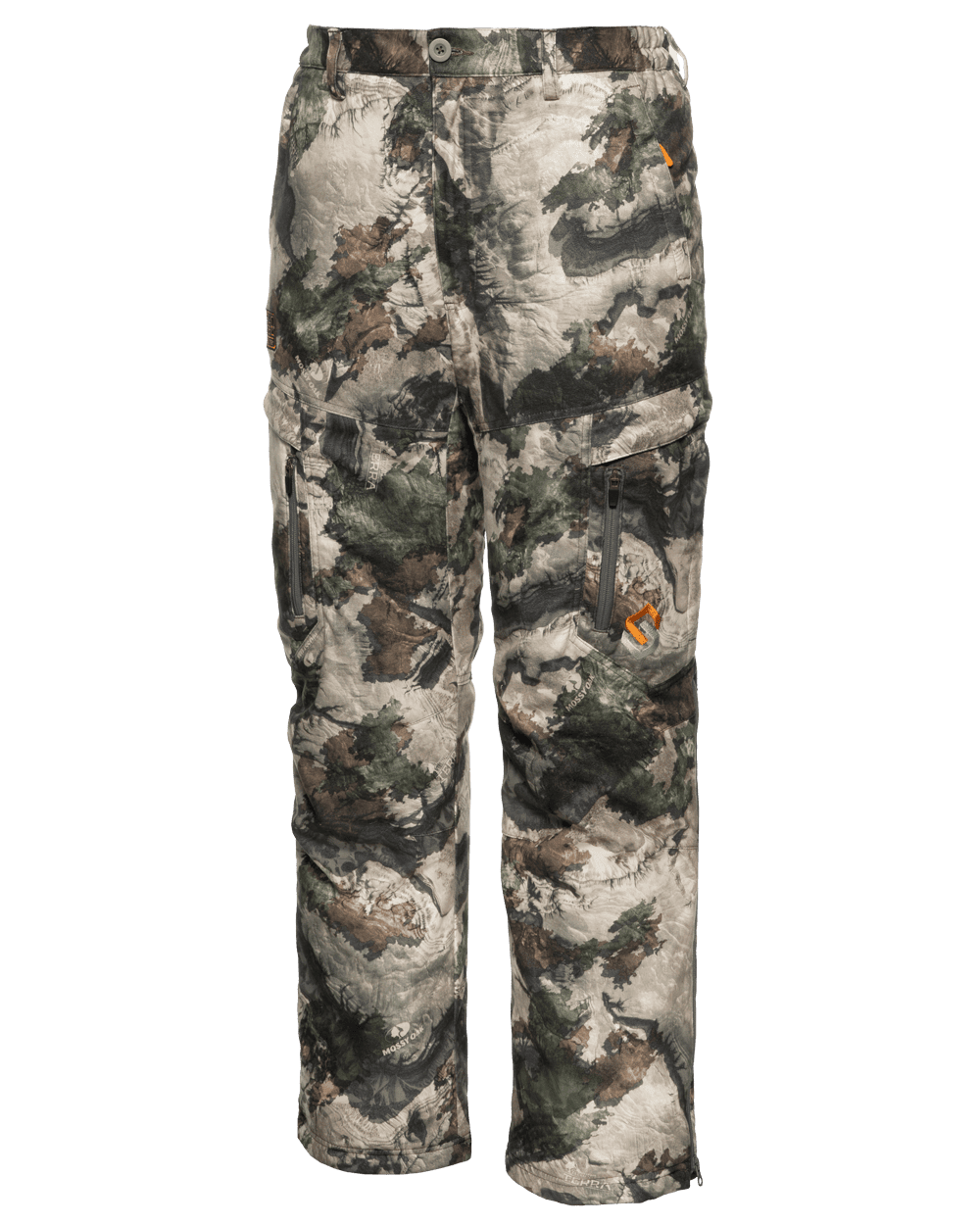
Outer shell
BE:1 Divergent Pant
Built for extreme cold, with Precip-X™ and nine covered pockets.
Shop now
Outer shell
BE:1 Paradigm Jacket
WindBrake® windproof and water resistant, with a quiet micro tricot shell.
Shop now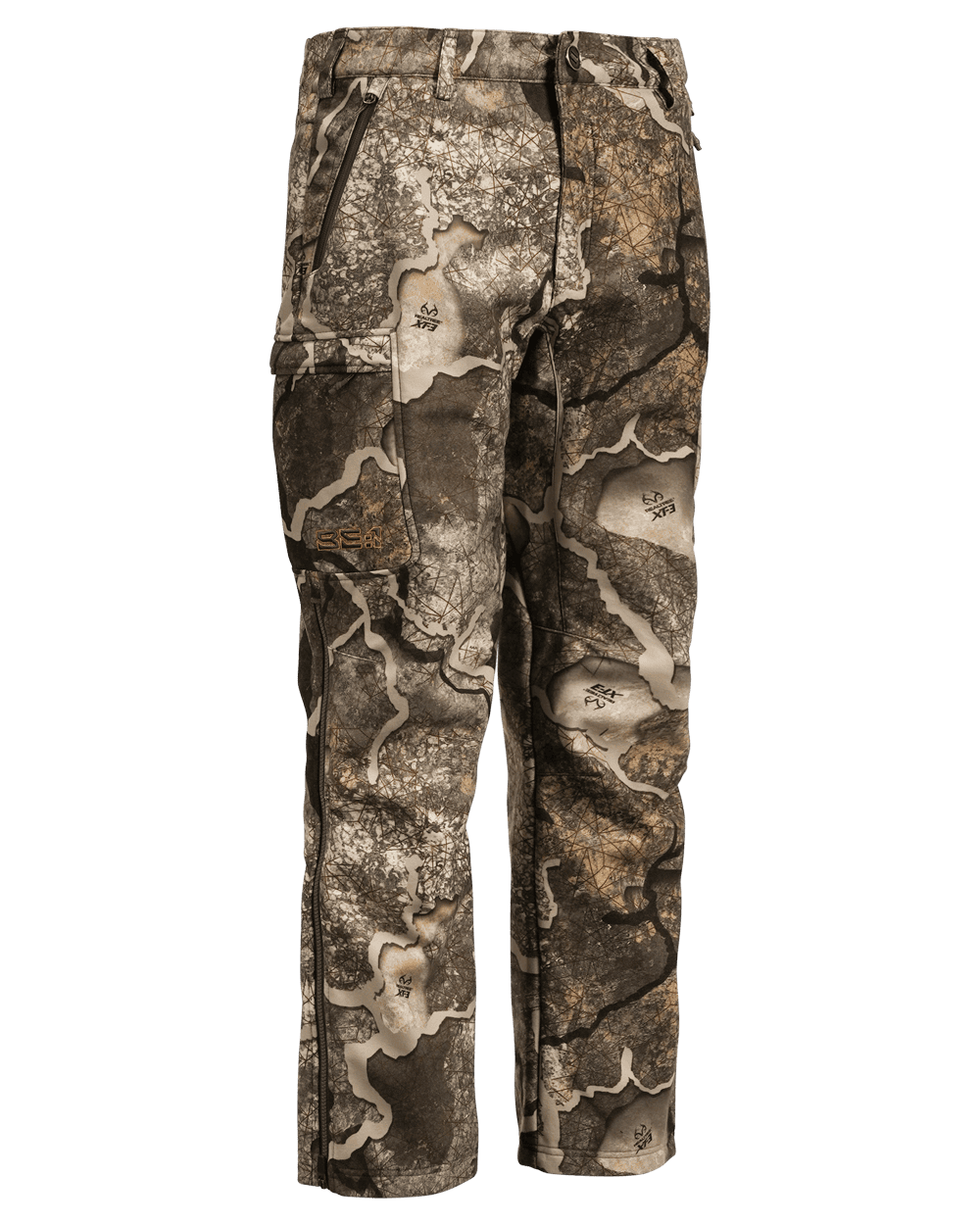
Outer shell
BE:1 Paradigm Pant
Wind and water resistant, with leg zippers for on and off over boots.
Shop now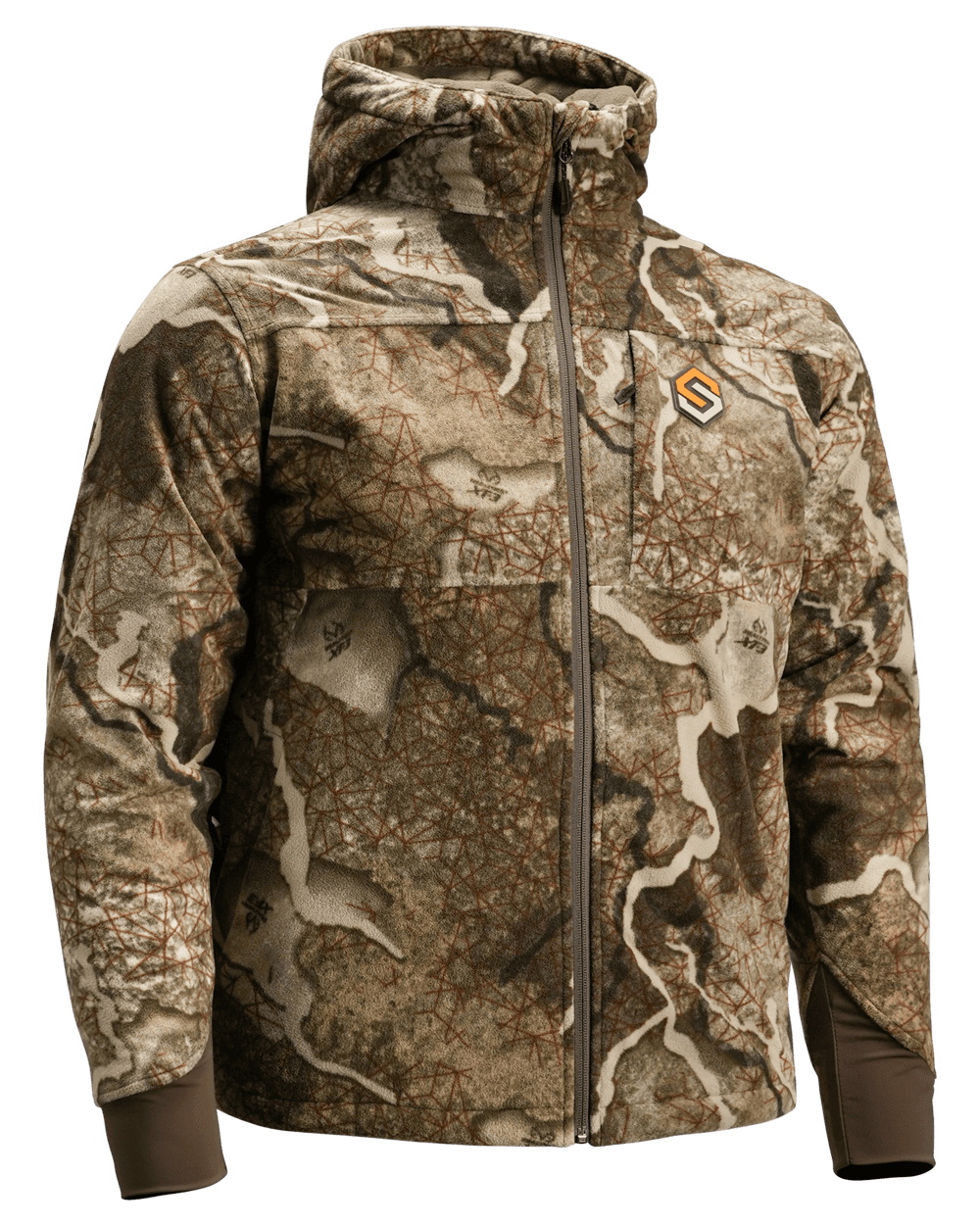
Outer shell
Wind Brace Pro Jacket
Deadly quiet fleece with a DryLok® membrane and 80g Thinsulate™.
Shop now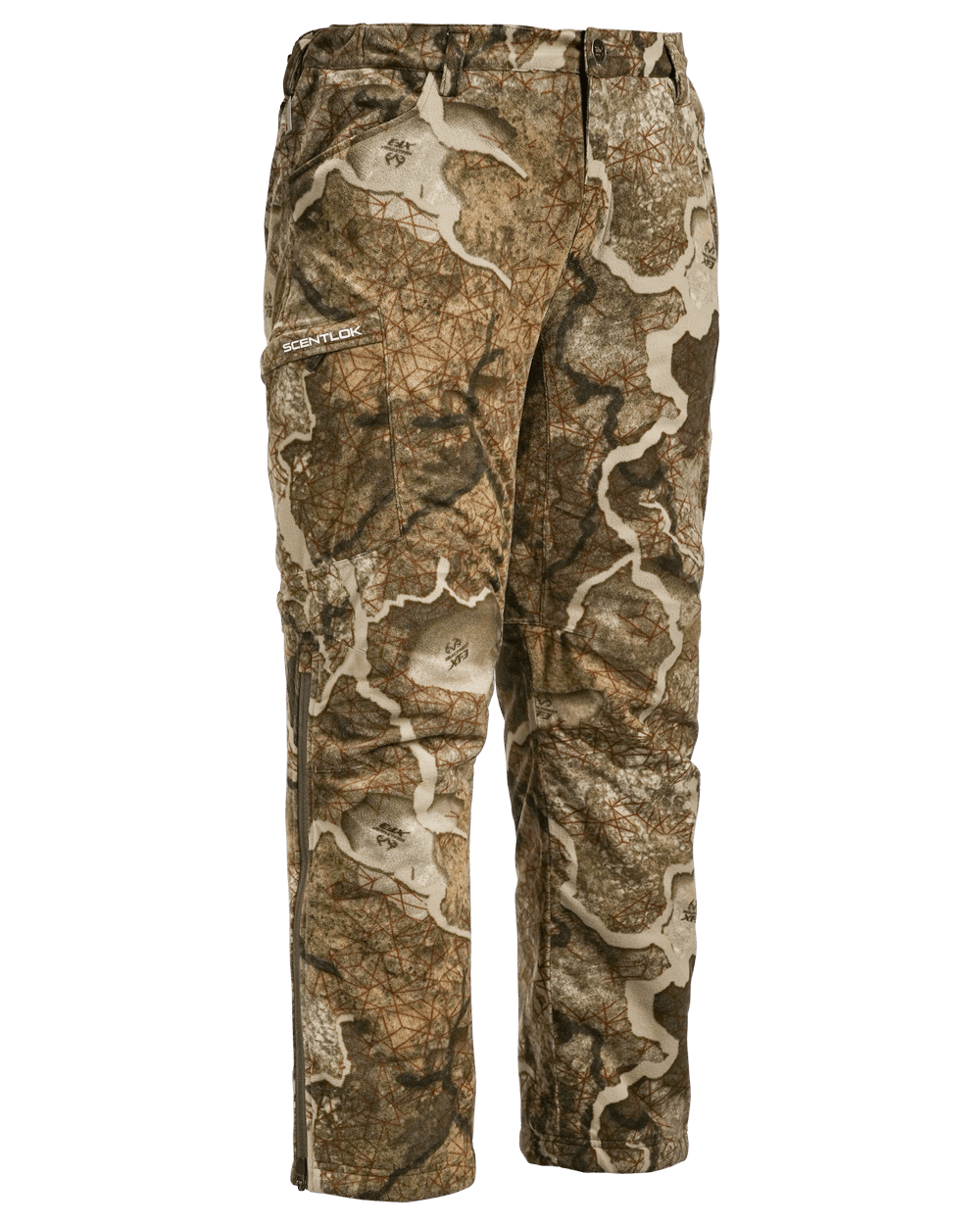
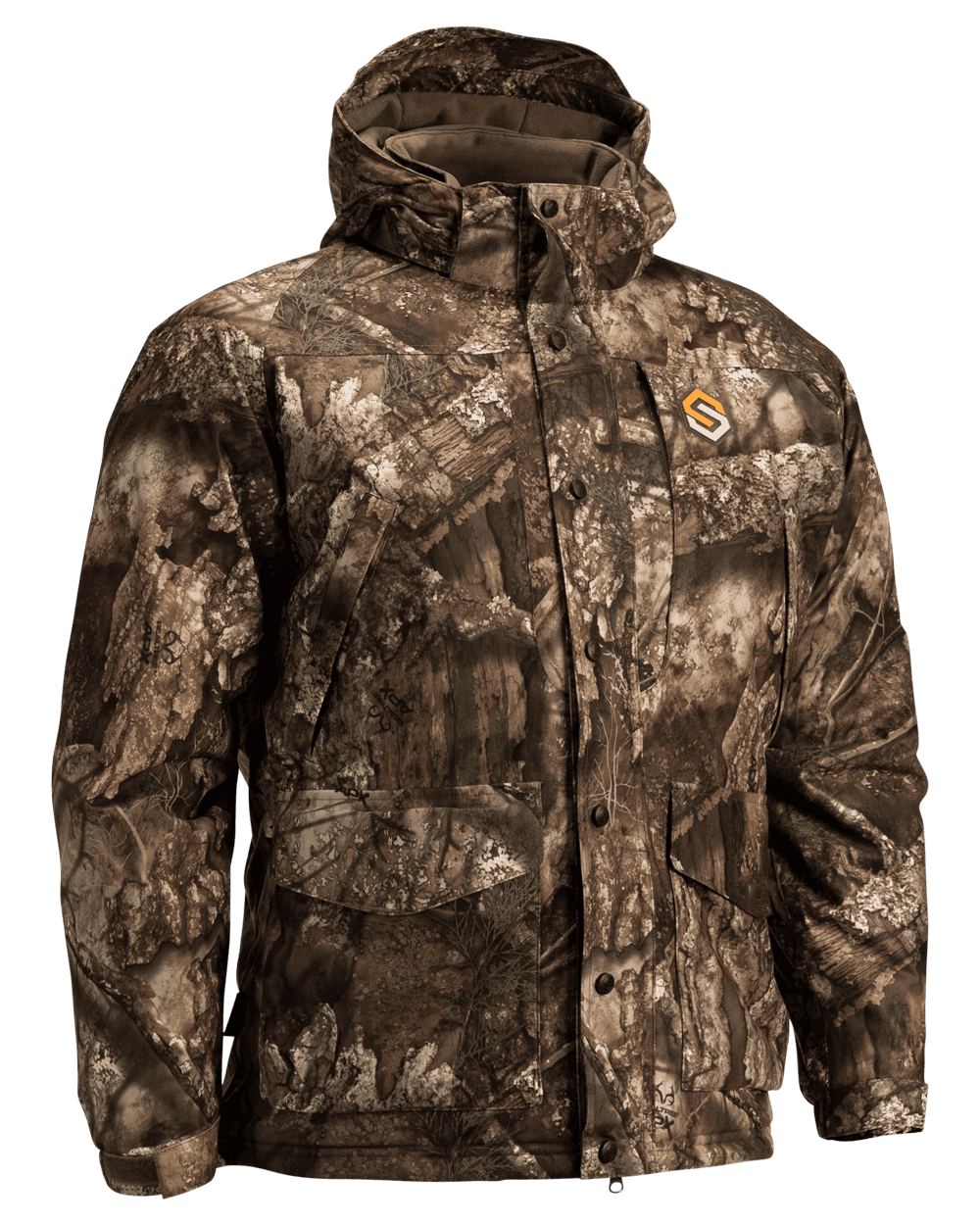
Outer shell
Alpha Elite Jacket
DryLok®, zoned Thinsulate™, 12 pockets and a safety harness opening.
Shop now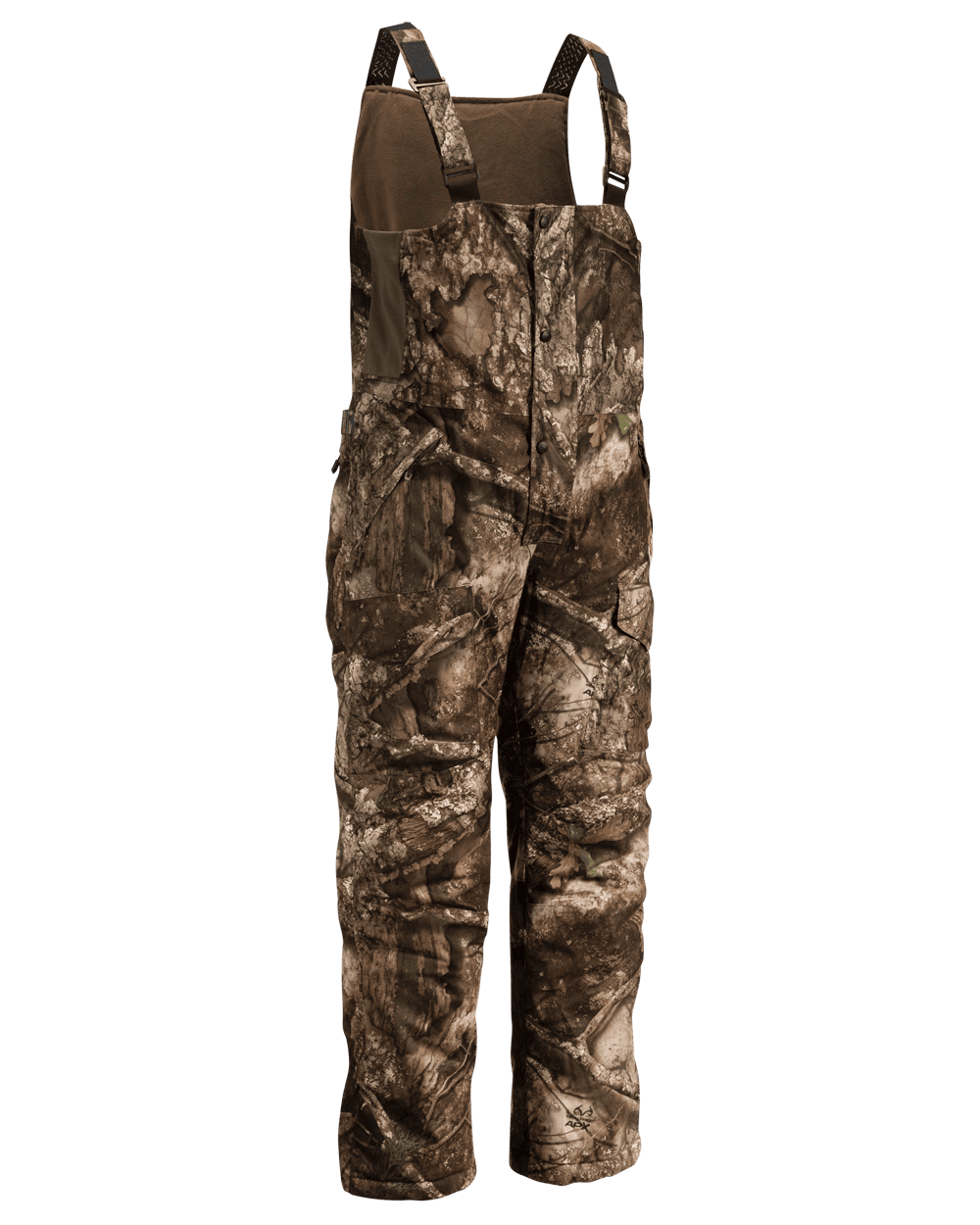
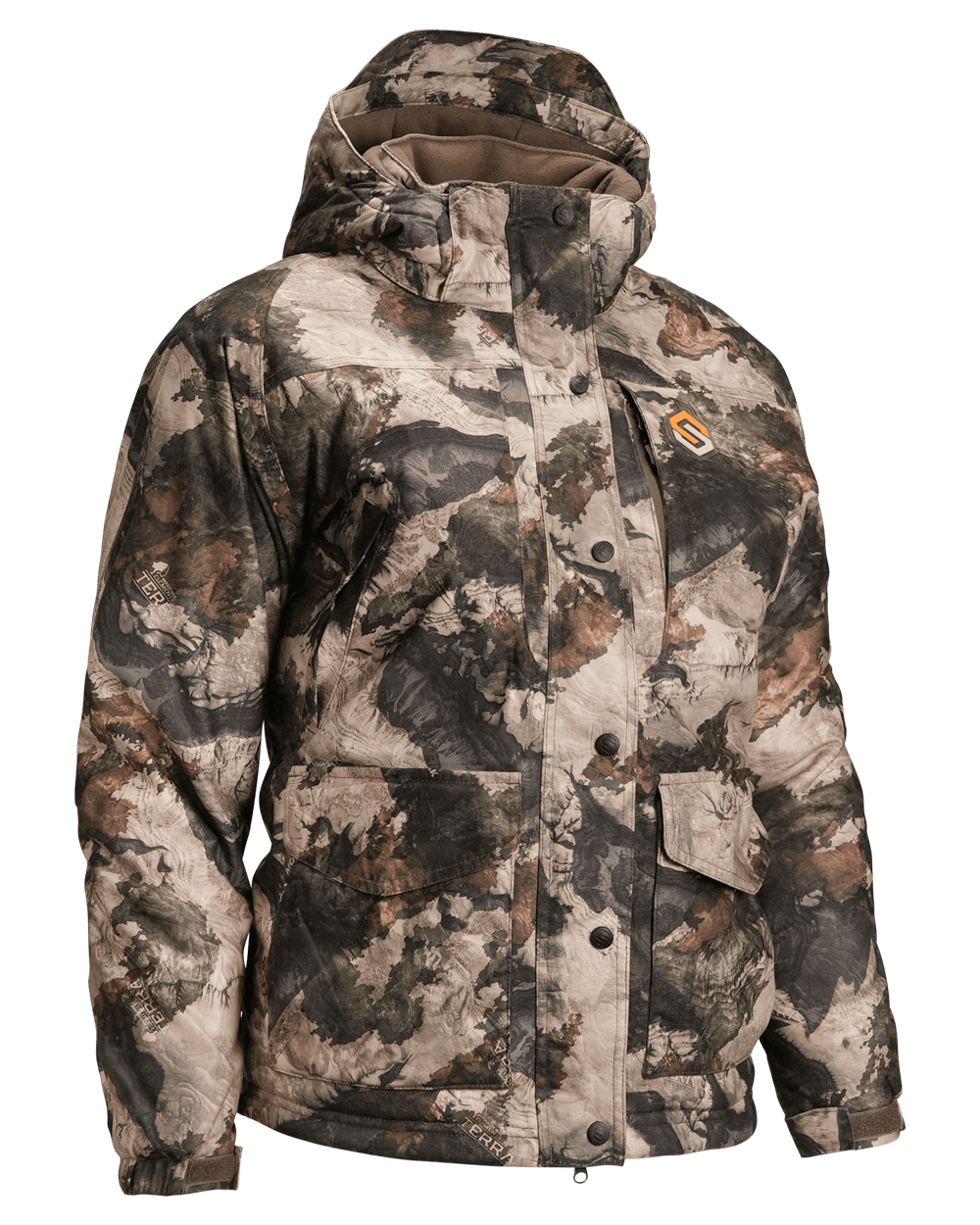
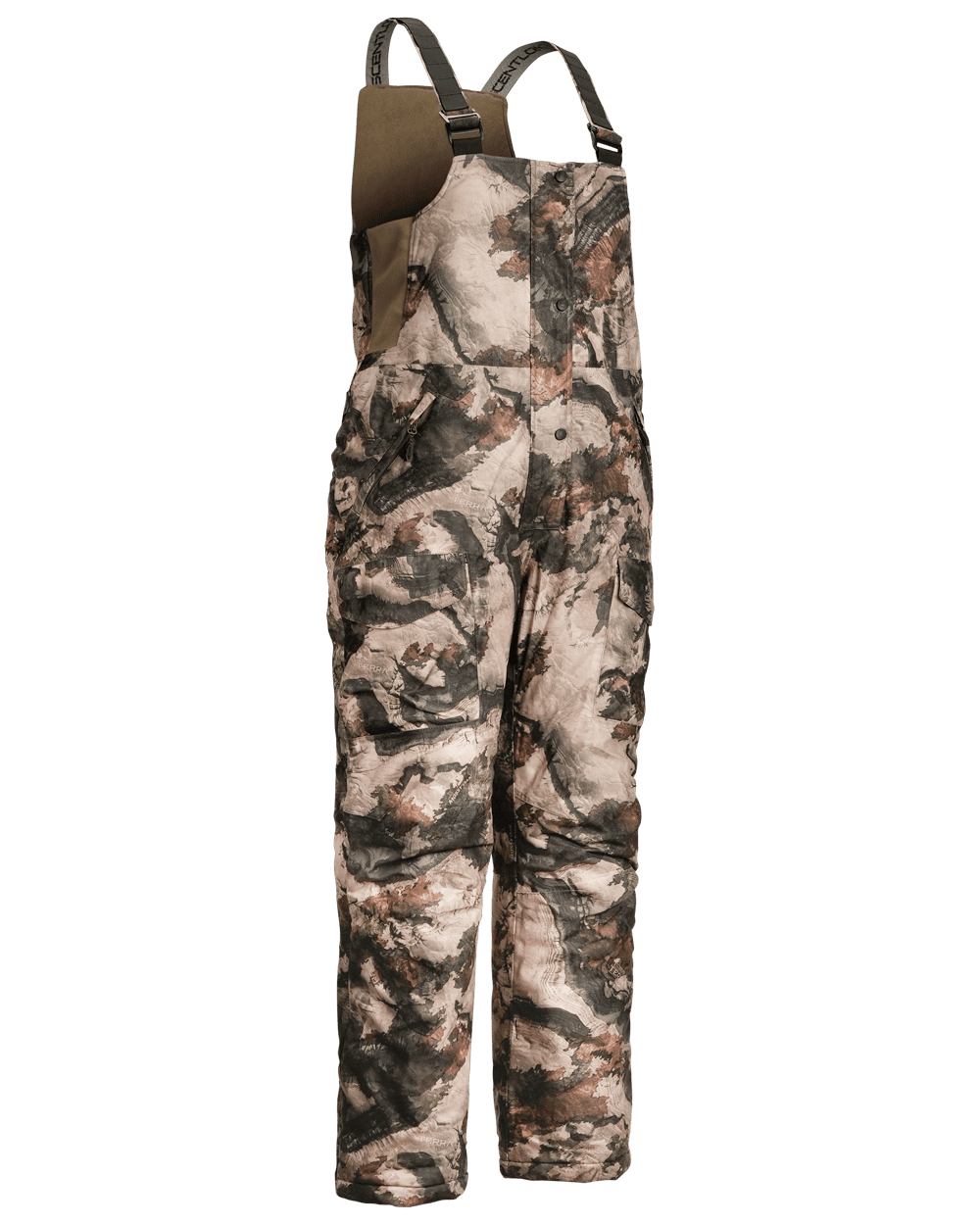
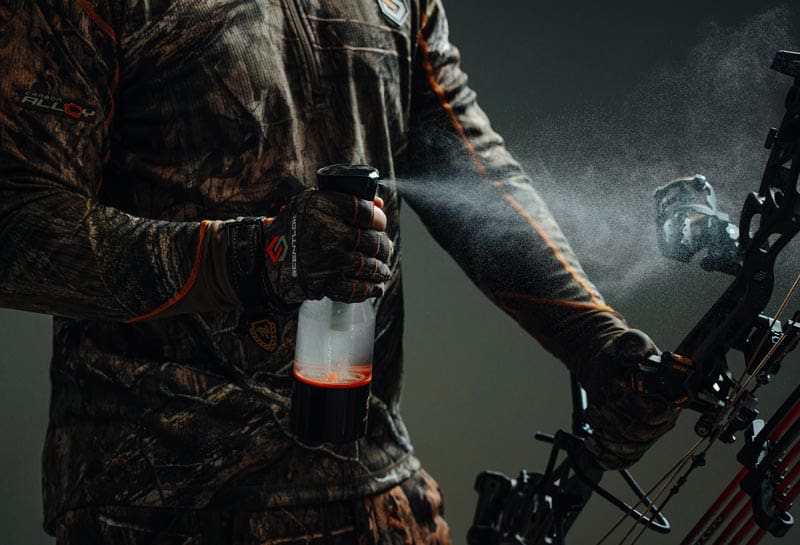
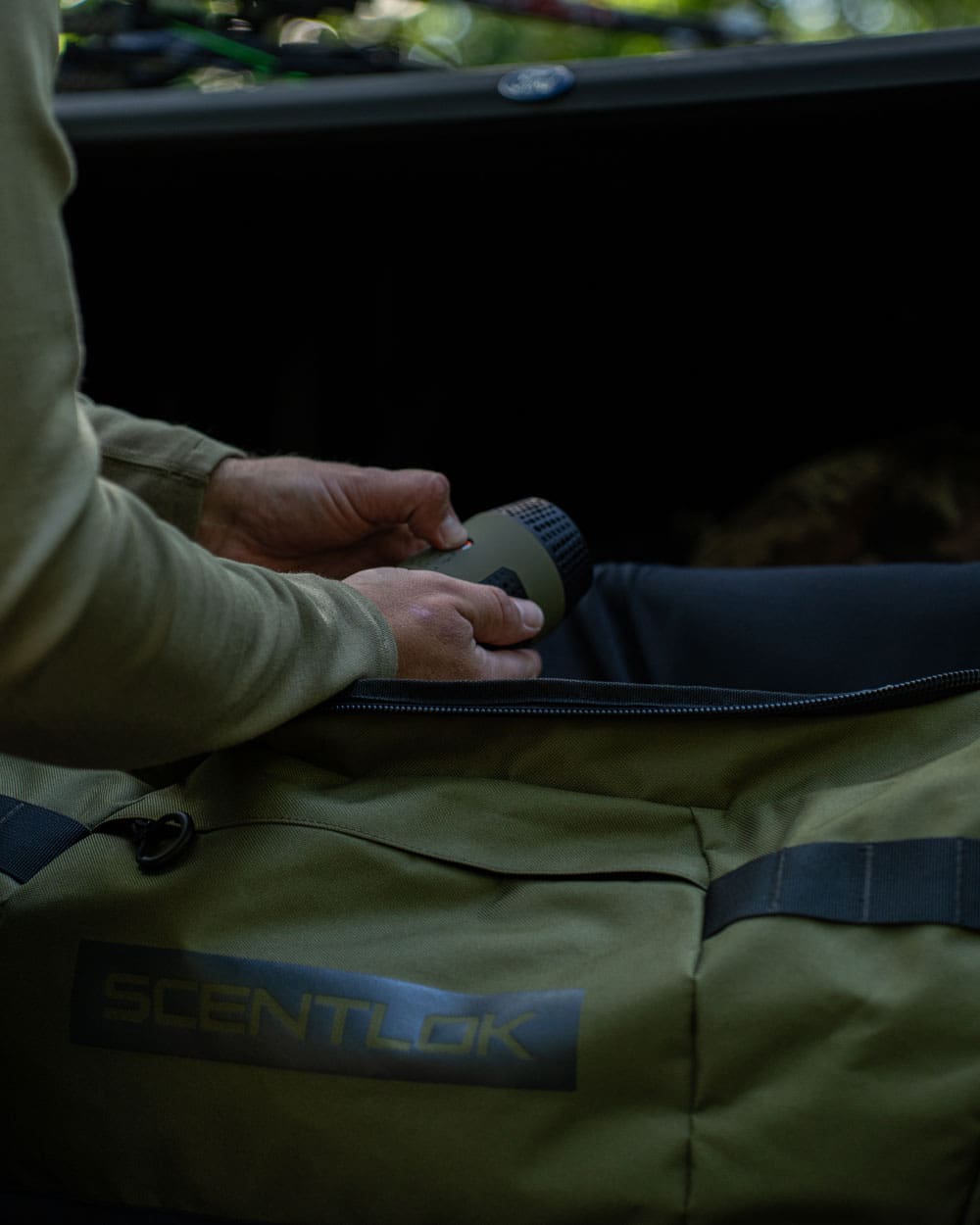

Patterns
The leaves are down.
Your outline isn't.
What camo works best for late-season hunting?
With the leaves down, deer can see deeper into the timber, so breaking up your outline matters more than ever. Match the trees at your stand height, go dark in a ground blind and keep your movement slow. Deer key on outline and motion more than color.¹⁰
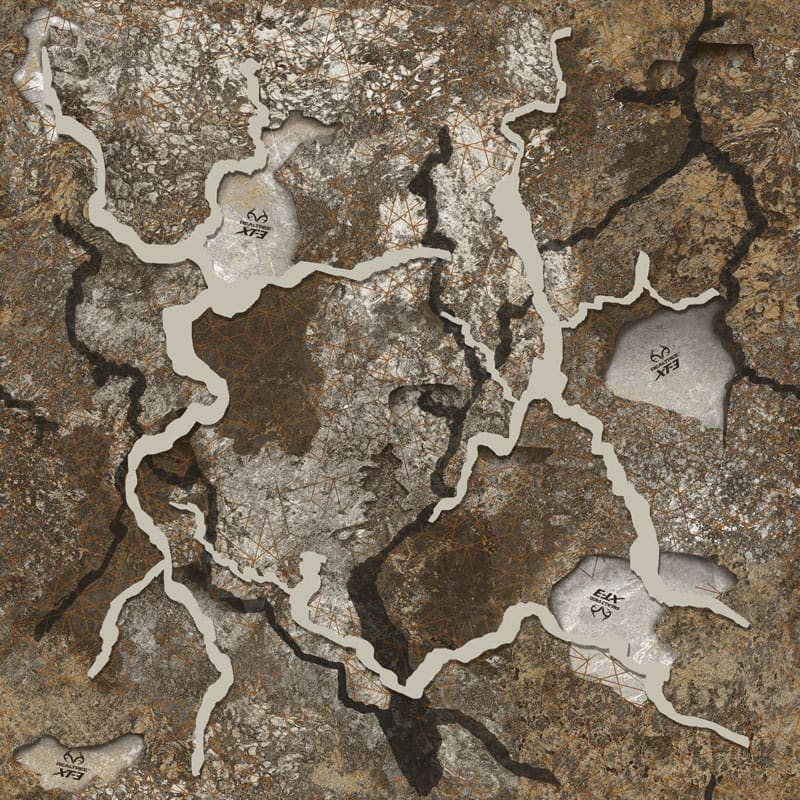
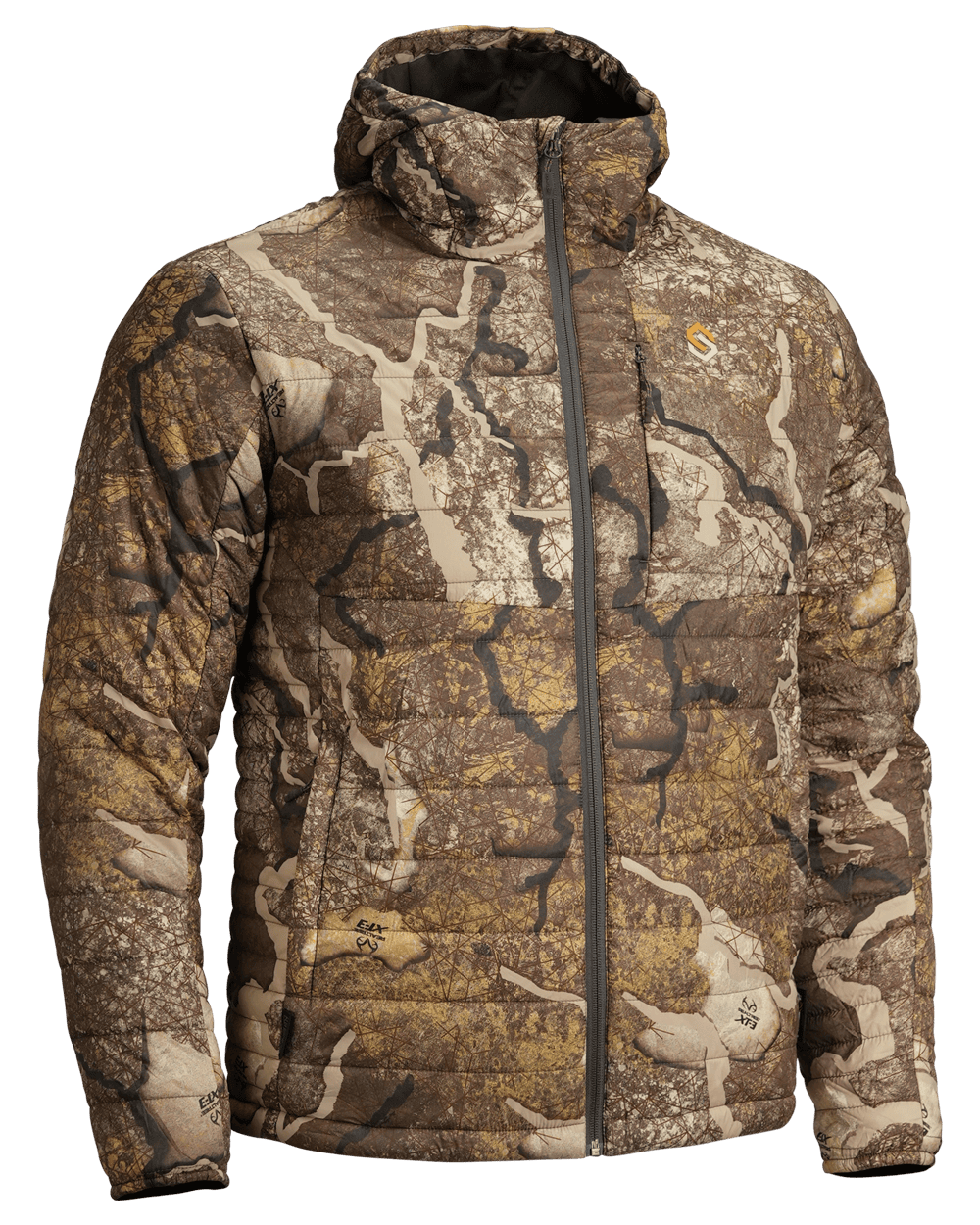
Realtree XT-3
New for 2026 on Revenant, Fortress, Reactor Puffy, the Heated Vest, Wind Brace Pro and more.
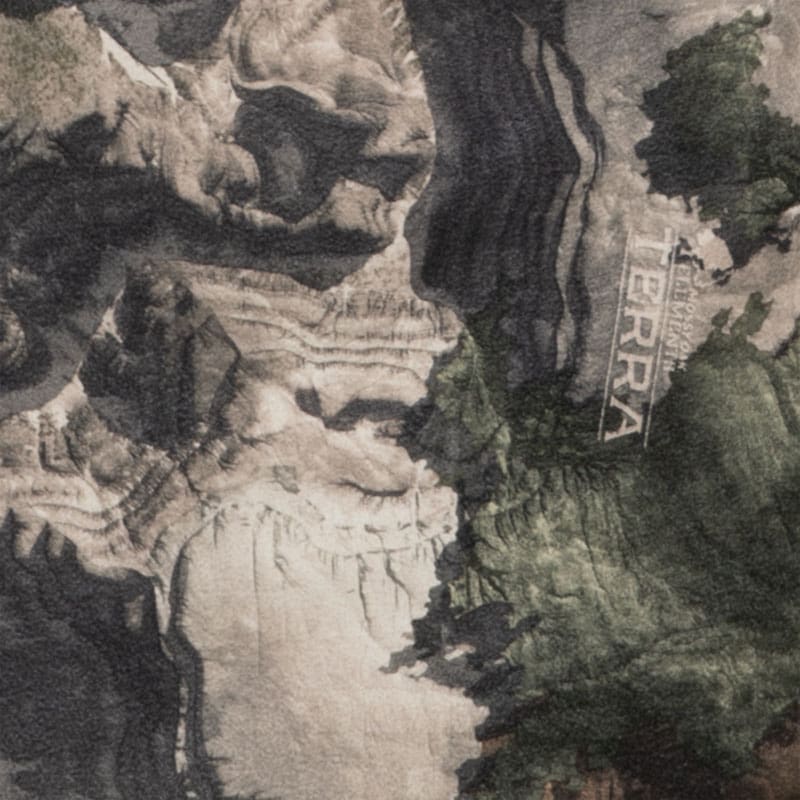
Mossy Oak Terra Gila
The BE:1 standard, from Fortress to Divergent, plus Women's Alpha Elite.
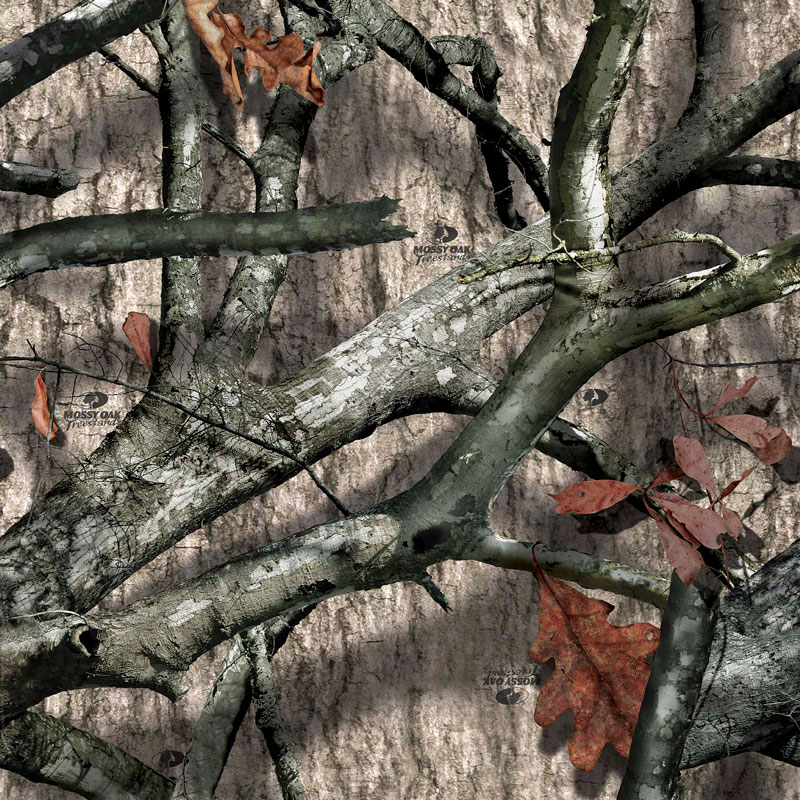
Mossy Oak Treestand
On Wind Brace Pro and Alpha Elite.
Blackout
Built for ground blinds and box blinds.
Solids
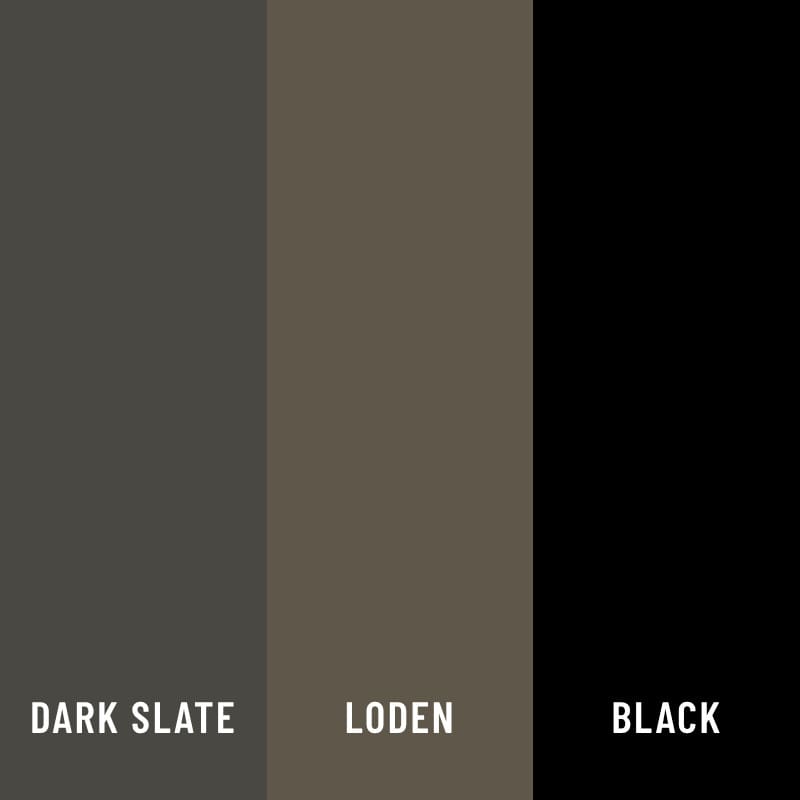
Dark Slate, Loden and Black on select Reactor Puffy and heated pieces.
Patterns vary by piece. Check each product page for what's available now.
Explore camo patternsQuality
Built for the hardest
sits of the year.

Lifetime apparel warranty
Covers manufacturer defects in workmanship, for consumer use. See full warranty details
Three decades of engineering
ScentLok has built scent control for whitetail hunters since 1992. The BE:1 Divergent is the culmination of three decades of engineering, research and in-field testing.

Bowhunting details
Concealed safety harness ports, leg zippers with storm flaps for on and off over boots, articulated knees and comfort ladder suspenders.

Sizes that fit
Tall sizes on the BE:1 Fortress Parka and Bib, and a full late-season system for women in Alpha Elite.
Field protocol
Your system
starts at home.
01
Reactivate
Run your gear through the dryer to reactivate Carbon Alloy®. Follow the care label on each piece.
02
Store it sealed
Keep gear in an airtight bag between hunts, away from household, pet and cooking odors.
03
Walk in light
Carry your insulation and outer layers. Walk in cool, slow and dry, then layer up at the tree.
04
Cover the gaps
Your hair, mouth and hands are some of the strongest odor sources on your body. A headcover, gloves and a muff close the gaps a jacket can't.
05
No cover scents
Don't use cover scents with ScentLok gear. Let Carbon Alloy® do its job.
Field tested
What hunters wear
when it gets serious.
Late Season Considerations: what to wear when the late season turns serious.
4.7
★★★★★
Verified buyer · BE:1 Fortress Parka
“Got this jacket and bibs to be able to hunt tree stands in late season in Northern Michigan.. it was immediately put to test in near whiteout conditions, 19 degrees and 20 mph gusts, and despite only wearing a couple thin base layers under it I stayed dry and warm!”
Mark B · MI
Verified buyer · BE:1 Reactor Puffy Heated Vest
“Awesome vest! It has been my go-to all winter long. It works great as a sublayer while hunting, yet it's stylish enough to wear to work or out to dinner.”
Treetopsniper13 · PA
When is the late season for whitetail deer?
In most states it runs from early December through January, after the peak of the rut and the main firearms seasons. Late archery and muzzleloader seasons fill much of it, and parts of the South run later. Dates vary by state and zone, so check your regulations.
What do deer eat in the late season?
High-energy food that's still available: standing corn and soybeans, waste grain in cut fields, brassicas like turnips and radishes, winter wheat and other cereal grains, leftover acorns and woody browse. The best food still standing near cover is where the deer will be.
What time of day is best for late-season deer hunting?
Afternoons into last light are usually best, because late-season deer feed hard late in the day, and a cold front can push them out earlier. Morning sits near food risk bumping deer on the way in.
Is the second rut real?
Yes, but it's smaller than the main rut. Does that weren't bred cycle back into estrus about 28 days later, and many doe fawns reach their first estrus in December. It can put a mature buck back on his feet in daylight, usually near food where those does feed.
What should I wear for late-season deer hunting?
Layers. Start with a moisture-wicking scent-control base layer, add a heat or insulation layer, and finish with a windproof or waterproof outer, plus a warm headcover, gloves and a muff. Walk in light and add layers at the stand so you don't sweat.
How do I stay warm in a treestand all day?
Don't sweat on the walk in, dress for the coldest hour of the sit, block the wind with a windproof outer, and keep your hands, head and core warm. Heated pieces like the BE:1 Reactor Puffy Heated Vest add warmth on demand when the sit runs long.
Does scent control still matter in cold weather?
Yes. Late-season deer are heavily pressured, sits run longer, and cold evening thermals carry scent toward the bottoms and field edges where deer feed. Carbon Alloy® adsorbs and reduces the odor you carry in. Pair it with smart wind and access choices.
Will ScentLok gear make me scent-free?
No gear can do that, and we won't tell you otherwise. Carbon Alloy® is built to adsorb and reduce the odor your body generates. Hunt the wind first.
What's the difference between BE:1 Fortress, Revenant and Divergent?
Fortress is the waterproof choice, with a DryLok® membrane and Primaloft® Silver built to keep you warm into the single digits. Revenant is the windproof, packable choice, with WindBrake® and Primaloft® Silver. Divergent is built for extreme cold, with Primaloft® Gold and Cross Core™, Precip-X™ and highly wind-resistant fleece.
Do the heated pieces come with a battery?
No. The Reactor Puffy Heated Vest uses a 7.4V/2.4A power bank and the Trek Heated Base Shirt uses a 7.4V/3A power bank, both sold separately. Keep spares close to your body, since cold drains batteries faster.
Does ScentLok make late-season gear for women?
Yes. The Women's Alpha Elite Jacket and Bib pair a DryLok® waterproof/windproof membrane, Thinsulate™ insulation and Carbon Alloy® in a women's fit. Shop Women's Alpha Elite.
How do I reactivate Carbon Alloy®?
Run your gear through the dryer, following the care label on each piece. Between hunts, store it sealed away from foreign odors, and don't use cover scents with ScentLok gear.
The last one in
the tree wins.
Cold fronts, hungry deer and fewer hunters in the woods. Build your system and finish the season on your terms.
Sources
1. Mississippi Department of Wildlife, Fisheries, and Parks, “Helping Deer Refuel After the Rut.”
2. MeatEater, “Does Temperature Affect Deer Movement?” (citing North Carolina State University research).
3. Kentucky Department of Fish and Wildlife Resources, “The Second Rut.”
4. Virginia Department of Wildlife Resources, “Deer Hunting Virginia's Late Season.”
5. Deer & Deer Hunting, “How Whitetails Weather Brutal Winter Conditions.”
6. onX, “Whitetail Report: Late Season Whitetail Tactics and Behavior.”
7. Missouri Department of Conservation, “Stand Locations.”
8. CBS News Chicago, “Why does sound travel farther in the cold?”
9. National Deer Association, via Realtree.
10. University of Georgia deer research.
11. American Hunter, “Beat Thermals and Tag More Deer.”