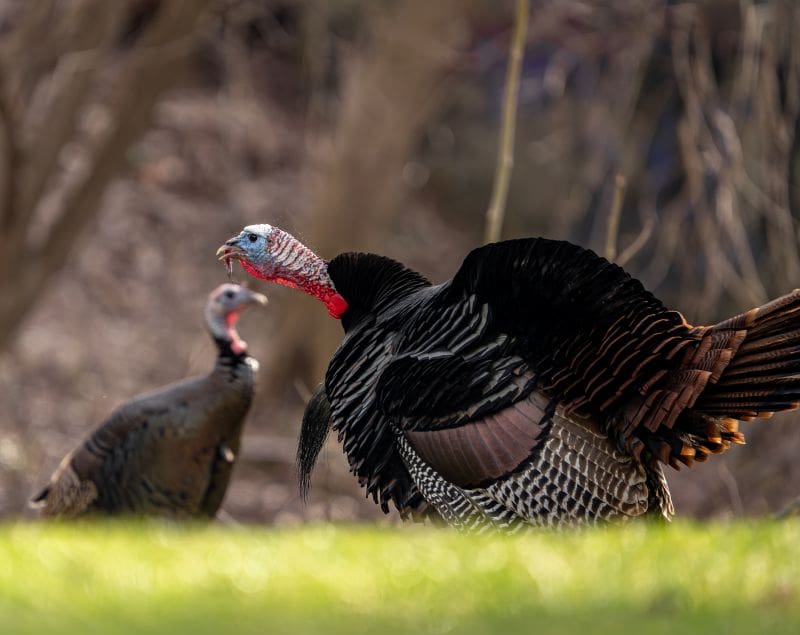

By the time late season rolls around, public land turkeys have seen it all. Every yelp, every decoy setup, every hunter leaning against the same “perfect” tree. The easy birds are long gone, many tags have been punched, and what’s left are pressured gobblers that didn’t survive by accident.
If you want to close the deal this time of year, you’ve got to take all the basics of turkey hunting and throw them out the window. It’s time to change the way you hunt.
Pay Attention To Other Hunters
Late season public land hunting isn’t just about finding turkeys, it’s about avoiding other people. Most of your public land turkey hunters gravitate toward easy access, such as spots where there is parking nearby. For example, easy pull-ins off of the main roads, small parking lots, or along field edges. Turkeys will roost or hang out close to these areas during the early part of the season, but by late season, those birds have learned exactly where the pressure comes from and are long gone.
Instead of following the crowd, you have to push deeper than you normally do. My entire life, I have lived in southern Missouri, where the number of public access hunting areas is higher than in many other parts of the state. For that reason, we also experience a high volume of hunting pressure from local and out-of-state hunters.
Go The Extra Distance
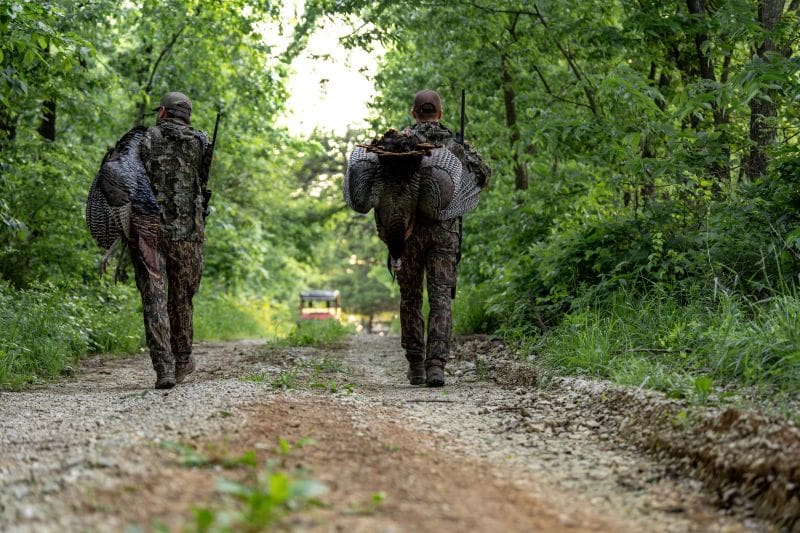
A few years back, a good friend and I hunted his family’s farm for the first hour or two of the morning. We didn’t have much luck, so we began adventuring to different parts of the Mark Twain National Forrest areas that were close by. We drove several miles in the opposite direction from what we typically traveled. It was out in the middle of nowhere and had obviously not had much traffic. We drove up on an old logging deck that left a small opening in the woods, with enough room to park our truck.
After arriving, we gathered our turkey vest and walked a few yards down the gravel road. After getting away from our vehicle, I got out a crow call and let out three quick bursts. A tom answered close. We quickly hurried next to two large trees, and got into position. Once he and I were both ready, I called softly on a slate call to let the gobbler know there was a hen close by. It was now close to 10:00 a.m., and it was likely that this tom was by himself, looking for a lone hen. The tom answered again, a mere 50 yards away. Soon, the sound of drumming and wings dragging the ground caught our attention. “I see him,” whispered my friend. As I heard the click of his safety disengage, I braced for the roar of a shotgun. Boom. Wings flapped wildly as my buddy jumped to his feet, sprinted out, and scooped up his bird. We had traveled a long way, and it was late in the morning, yet the sight of my friend holding a mature Missouri public land gobbler was well worth the extra effort.
Sometimes, late in the season, you have to go where other hunters have not been. That morning with my good friend was the prime example, turkeys are still gobbling and seeking hens late in the season, as long as you get away from the pressure of other hunters.
Tone It Down
Aggressive calling might work early in the season, but late season gobblers are call shy. They’ve been yelped at, cut at, and pressured for weeks. When you do find a gobbling tom late in the season, you must call less and keep it soft and subtle. Using calls such as soft yelps, clucks, and purrs is an excellent way to let the gobbler know there is a hen close by, and it allows him to make the next move.
In many cases, the bird already knows where hens are supposed to be. If you sound too eager, it can raise a red flag. Late in the season, especially when hunting pressured public land turkeys, patience kills more than calling ever will.
When hunting with my friend, we had not been to that area all season. I didn’t know if there would be any turkeys around, yet I still introduced my hen sounds, very subtle and soft. Thank God I did, because he was close. If I had blasted a series of excited hen yelps, he probably would have spooked and left the area.
Midday Can Be Prime Time
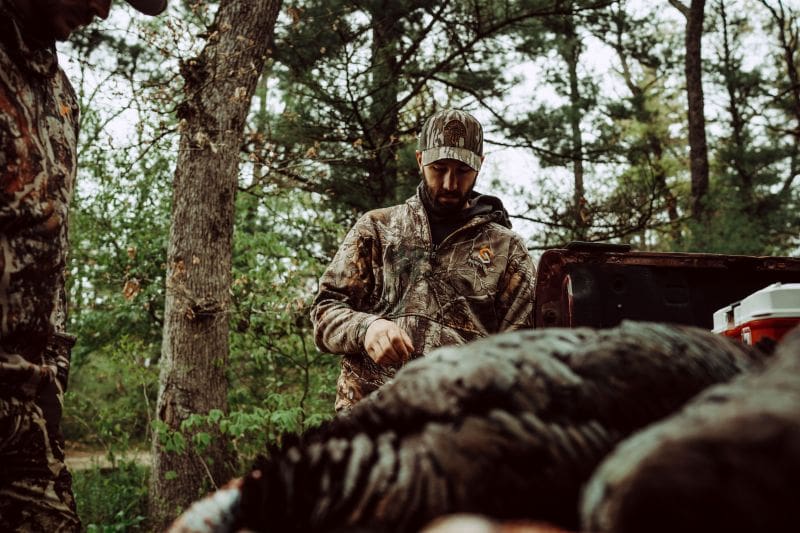
Most hunters are back at the truck by late morning, but that’s exactly why you shouldn’t be. When my friend and I left his family farm, it would have been easy to call it quits and then ride back to town for breakfast. Yet, we kept going, and it paid off.
Late season gobblers often break away from hens late in the morning. Hens then go to their nest or to a feeding area, which entices gobblers to start cruising alone midday. That 10 a.m. to 2 p.m. window can be one of the most productive times on public land. It’s quieter, less pressured, and gives you a chance to strike a bird that hasn’t heard a call in hours. Once you do locate a gobbler, remember, he is most likely alone. This means you don’t have to use a bunch of calls to call him away from other hens. Call softly, let him know you’re there, and he will come looking for you.
Ditch the Decoys (Sometimes)
Decoys can be effective, but on pressured public land, they can also do more harm than good. Typically, when hunting public and late season, my decoys stay in the truck. Late season gobblers may hang up out of range, circle downrange and never commit, or avoid anything that doesn’t feel natural.
In tight timber or rolling terrain, going decoy free often forces the bird to come looking for you. And when he does, it’s usually within range. Another factor, late season, is that most of your field areas are getting taller with grass, making it hard for gobblers to see your decoys anyway. Again, since many of the fields on public land have been hunted hard, they probably won’t be near open field areas anyway.
Patience Over Perfection
Late season success rarely looks like the highlight reels. It’s slower, quieter, and more methodical. You might sit longer than you want to, or call less than you’re comfortable with. That’s why you have to change your style of hunting at this point in the season. Public land turkeys in the late season are survivors. They’ve adapted to pressure, learned from mistakes, and avoided every hunter who came before you. To tag one now, you’ve got to adapt too.