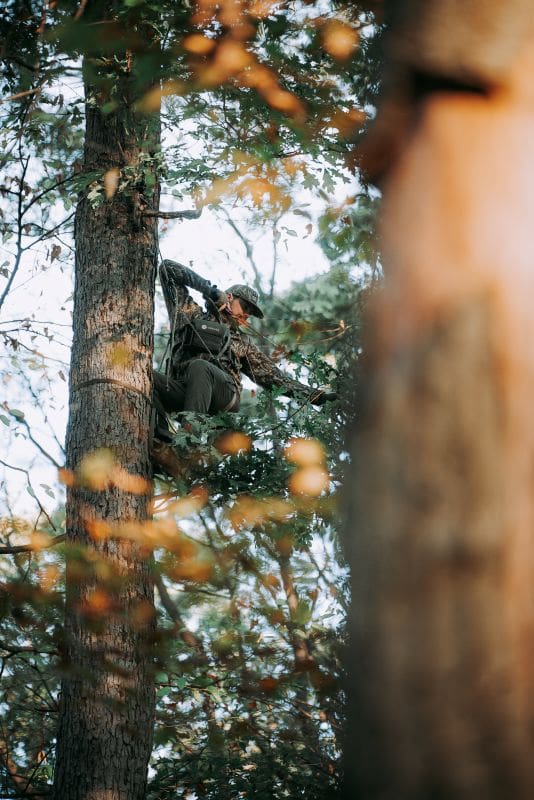
Early season deer hunting comes with a pretty predictable set of rules. As a writer, I have written countless articles about how bucks are often still in their summer patterns, food sources are plentiful, and evenings provide the best opportunities when hunting in September and early October. For bowhunters, it’s almost become an unwritten rule that you simply don’t hunt mornings at this point in the season.
I understand the reasoning. If a mature buck is feeding in a food source shortly after dark, slipping into that area before daylight can put a hunter right in the middle of his evening-to-morning movement. One mistake can ruin a pattern that might have otherwise remained predictable for weeks. But I don’t think early season morning hunts should be completely removed from the calendar.
There are times when a morning sit makes sense. The key is knowing where to hunt, how to get there, and what the deer are doing before daylight.

Hunt the Return Trip
One of the best reasons to hunt an early season morning is when you have a good idea where bucks are going after feeding. Instead of trying to intercept a buck as he heads toward a food source, look for the routes he uses to return to bedding.
A buck that spends the night visiting agricultural fields, food plots, or other feeding areas eventually has to leave them. If you can identify a staging area, travel corridor, or preferred route between the food and bedding, a morning hunt can put you in position before that buck disappears for the day. This is where summer scouting can pay off.
Trail cameras, observation sits, and studying tracks and trails can help reveal how deer are using an area. I’m not necessarily looking for the first trail coming out of a food source. I’m looking for the route a mature buck is most likely to use when he is trying to get back to security. That distinction can make a morning hunt a possibility and even a successful one, if you’re careful.
Be Careful Around Bedding Areas
There is a big difference between hunting near bedding areas and walking directly into them. Early season bucks can be extremely sensitive to intrusion, particularly when they have established a consistent bedding pattern. If getting to your stand requires walking through the area where deer are bedded, a morning hunt may do more harm than good. Instead, look for setups that allow you to approach from a direction that keeps your scent and noise away from the bedding area. Access is just as important as the stand location.
I’ve passed on plenty of potentially good morning setups simply because I couldn’t figure out a clear way to get there without alerting deer. A suitable tree isn’t a great hunting spot if getting to it blows deer out of the area.
Watch the Wind
Wind direction should probably be the deciding factor in whether you hunt a particular morning. Honestly, it should be a factor in any hunt during the season. Early season deer are often using the same areas repeatedly, which means you have an opportunity to be selective. If the wind isn’t right for your planned setup, don’t hunt it anyway. This is especially important when hunting a buck you believe is using a specific bedding area.
A mature deer doesn’t have to see you to know something is wrong. Your scent drifting into his travel route can be enough to change his behavior. I’d much rather save a good morning setup for the right wind than gamble on it because I merely want to hunt. For example, I often hear hunters say, and I’ve said it myself, that morning is the only time they can hunt because of work, family, or other obligations. Those time constraints are real, but that doesn’t mean you can afford to overlook scent control. Taking advantage of early season, scent eliminating clothing from ScentLok, along with proven scent control tactics, can help keep your presence from tipping off a deer and turning an entire season into a bust.
Don’t Overlook Cool Mornings
Temperature can also play a role. A hot, humid morning following a warm night isn’t necessarily the time I want to be sitting in the woods waiting for a buck to make his way back to bed. But when temperatures drop and conditions become more comfortable, deer movement can change.
A cool early season morning can be worth paying attention to, especially when it follows several warmer days. You don’t have to hunt every morning just because conditions improve. But when several factors line up, such as cool temperatures, the right wind, known deer movement, and a clean access route, it can be worth taking a seat.
Morning Hunts Can Be About More Than Killing a Buck
Another reason I don’t completely eliminate morning hunts is that they can provide valuable information. Sometimes the goal of a morning sit isn’t necessarily to kill a deer. It may be to watch how deer enter a property, confirm a travel route, or learn which direction bucks are moving. These are often called observation sits. After sitting and watching, that information can help you make better decisions later in the season.
The important part is knowing when you are gathering information and when you are actually hunting a specific buck. I don’t want to spend several mornings wandering around a property solely to see what happens. Every entry into the woods carries some level of risk. If I am going to hunt an early season morning, I want a reason.
Let the Deer Tell You When to Hunt
One of the biggest mistakes bowhunters make during the early season is getting locked into a hunting schedule. Even though evenings can be highly productive, deer don’t all follow the same pattern. A morning setup that worked last season may not produce the same results this year. Pay close attention to your trail cameras, scouting observations, weather conditions, and fresh sign. If a mature buck is consistently showing up in an area before daylight, that’s valuable information worth considering. On the other hand, if he’s consistently appearing after dark with little evidence of morning movement, there may be little reason to force a morning sit. Let the deer dictate when and where you hunt rather than relying on the clock or calendar.
Don’t Give Up on Mornings, Just Be Selective
Early season bowhunting is all about taking advantage of predictable deer movement while protecting that pattern at the same time. Evening hunts will often be my first choice when I can hunt a buck without disturbing his bedding area or travel route. But that doesn’t mean I am willing to completely cross mornings off the calendar.
When the wind is right, temperatures cooperate, the deer are moving in a predictable direction, and I have a clean access route, a morning hunt can be worth the effort. The key is being selective. During the early season, you don’t necessarily need to hunt more. You need to hunt smarter. And sometimes, that means getting out of bed well before daylight and being in the tree when the woods come alive.