
November is a time when whitetail hunters can spend countless hours studying rubs, scrapes, food sources, and trail camera photos, trying to predict where a mature buck might show up next. While all of those pieces of information can help put the puzzle together, one of the most overlooked places to pay attention to may be where the does are spending their time.
For several years, I spent much of my time scouting in search of mature bucks on my property. During the early season, I would find bucks consistently using one particular area, only to watch them disappear once bachelor groups began breaking up. On another piece of the property, buck activity was almost nonexistent until the rut. However, one thing remained consistent: the area held deer throughout the year.
After five or six years of hunting this property, I began to realize I might have been overlooking something simple. Instead of spending so much time trying to figure out where the bucks were going, I needed to pay closer attention to where the does were spending their days. The bucks would eventually show up. In fact, five different bucks I’ve harvested over the past eight years have come from that general area where the does consistently spend their time.
When the rut begins to heat up, bucks have one thing on their minds, finding a hot doe. That means the areas where does spend time feeding, bedding, and traveling, and pretty much living their everyday life, can become the most important locations on your hunting property. Instead of spending all your time trying to locate a particular buck, it might be time to start paying closer attention to the does. Find the does, and you may be one step closer to finding the buck you’ve been chasing.
Start With Doe Bedding Areas
One of the first things I look for when finding a November hunting hot spot is where the local doe population is spending its time. Unlike mature bucks, which often use multiple bedding locations and can be difficult to pattern, does frequently establish more predictable bedding areas. Family groups commonly bed together in thick cover, providing security and allowing multiple deer to watch, smell, and listen for danger.
These locations might be tucked into an overgrown clear cut, a thick patch of brush, a secluded ridge point, or a small section of timber that offers plenty of security cover. They don’t necessarily have to be large areas; sometimes a few acres of thick cover can hold several does throughout the day. Finding these locations takes a little scouting. Look for well used trails entering and leaving thick cover, concentrations of deer beds, and areas where multiple trails converge. Trail cameras can also help confirm which areas are receiving regular daylight activity. Once you identify a doe bedding area, mark it on your phone’s hunting map or on a paper map. Don’t immediately assume you need to hang a stand directly over it. Instead, start looking at how deer enter and exit the area and what terrain features might influence their movements. The goal isn’t necessarily to hunt the bedding area itself. It’s to figure out how to intercept a buck when he is traveling through it.
Bucks Know Where The Does Are
During November, a buck’s daily routine can change dramatically. Food and security remain important, but breeding activity begins influencing where and how often bucks travel. As bucks enter the seeking phase of the rut, they begin covering more ground, checking those doe groups that you see every time you hunt, and investigating areas where does are spending time. A mature buck might cruise the downwind side of a bedding area, scent checking the cover for a receptive doe without ever stepping directly into the bedding area. This is why wind direction becomes such an important part of hunting these locations. Rather than setting up directly over the bedding cover, consider positioning your stand or saddle setup downwind of the area where a buck can naturally travel while checking for does. A nearby ridge, brushy edge, or narrow strip of timber can provide the perfect opportunity to intercept a cruising buck.
Studies have shown how mature bucks use multiple focal areas during the breeding season and frequently travel between them. Researchers also emphasize the importance of travel corridors connecting bedding and feeding locations. For hunters, that means there may be more than one opportunity to catch a buck moving through an area. You don’t necessarily have to know exactly where he is bedding. You need to understand where he’s likely to travel while searching for does.
Connect The Bedding Areas
Once you’ve identified one or two doe bedding areas, start looking at the ground between them. This is where some of November’s best hunting opportunities can develop. Focus on how a buck might travel between doe groups. He may need to cross a ridge, follow a narrow strip of timber connecting two areas of thick cover, or use terrain features that funnel deer movement into a relatively small area. These are the places worth scouting. I really like locations where multiple trails come together near thick cover. A buck cruising through the area might not follow the same trail as the does, but he’ll often use the same general travel corridor while checking their bedding areas.
Don’t overlook small transitions, either. A brushy fence line, overgrown logging road, or narrow strip of cover between two openings can provide enough security to encourage deer movement. The key is identifying natural travel routes that allow a buck to move between doe groups without being seen himself.
Don’t Forget The Evening Food Sources
Doe bedding areas are important, but the movement that takes place after deer leave their beds can be just as valuable. Food sources provide another important piece of the November puzzle. Whether it’s an agricultural field, food plot, oak flat, or natural browse, does will eventually move toward areas offering quality food. These evening travel routes can create opportunities to find bucks traveling behind or around does. I like to pay attention to the transition between bedding cover and evening food sources. Rather than sitting directly over the food source, look for locations where deer naturally funnel through security cover before reaching their destination. This is particularly useful when hunting with a bow. A buck cruising downwind of a group of does might travel through the same staging area or transition corridor that does regularly use during the evening.
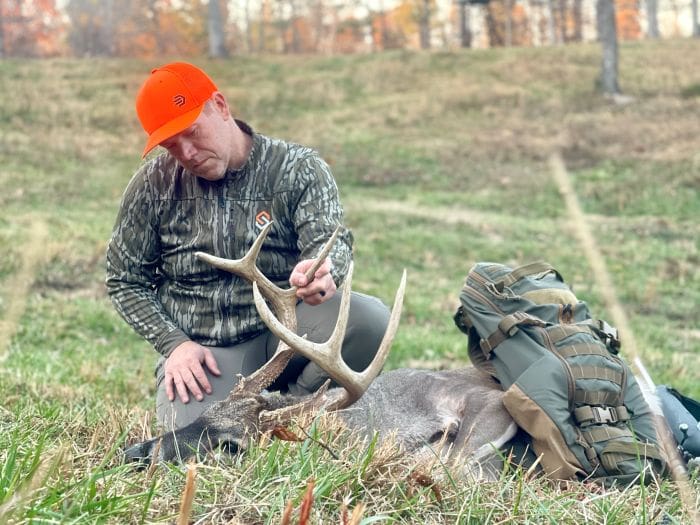
For example, last season I sat at the edge of an overgrown cattle pasture, where there is a thick ravine that comes out of a bottom, and deer naturally enter the open area. This strip of cover keeps deer hidden until they reach the pasture where they graze during the evenings. After watching four does come out of the cover and enter the field, I kept glassing from my tower blind, in hopes of a buck coming to scent check the area. Sure enough, after glassing a doe on the far hillside, a mature buck came out of the bottom below my blind. After scrambling to get my gun out the blind window, I caught the buck stopped, with his nose curled in the air to smell the does. I gently squeezed the trigger, and the buck went down within a few steps. This was the same area that always holds does year round.
Adjust Your Strategy As The Rut Progresses
Not every November hunt should look the same. Doe bedding areas can remain important throughout the month, but the way bucks use them can change depending on what stage of the rut deer are in at that time. During the early seeking phase, bucks are actively checking doe groups and covering ground in search of receptive does. This is an excellent time to hunt downwind of known bedding areas and along travel routes connecting different groups of does. As breeding activity increases, bucks may spend extended periods with individual females. This is often referred to as the lockdown phase, and it can make traditional hunting locations seem surprisingly quiet. Don’t abandon doe bedding areas during this time. Instead, consider the thickest security cover nearby and the smaller travel corridors connecting secluded bedding locations.
As the rut begins winding down, bucks may start shifting their attention back toward food and recovery. Areas connecting bedding cover with dependable food sources can become increasingly important again. The timing of these phases varies by region, so pay attention to your deer activity rather than relying entirely on dates on the calendar.
Don’t Ruin The Area You’re Trying To Hunt
One mistake hunters make when locating productive doe bedding areas is getting too aggressive with their access. Finding a good bedding area doesn’t mean you should immediately start walking through it, hanging cameras, or checking trails every few days. These areas can be extremely sensitive to hunting pressure, especially when deer are using them for daytime security. Think about your entry and exit routes before hanging a stand. Use terrain and existing cover to keep your movements away from the bedding area whenever possible. Pay close attention to the wind, too. A stand that looks perfect on a map might be worthless if your scent blows directly into the bedding cover.
Follow The Does
November is a month when hunters often become obsessed with finding a particular buck. Trail camera pictures, fresh rubs, and new scrapes can make it tempting to spend every available minute chasing the latest sign. But sometimes the better strategy is to take a step back and look at the bigger picture. Focus on doe bedding areas, the trails they use, the places they feed, and the terrain features that connect those locations. Understanding these patterns can help you identify the places where a cruising buck is most likely to show up.
You might not have a trail camera picture of the buck you’re after in that location. You might not find a giant rub or a fresh scrape hanging over the trail. But if the area consistently holds does, offers cover, and provides natural travel routes between bedding locations, it deserves your attention. The November rut is unpredictable, and no single bedding area or travel corridor guarantees a buck encounter. But understanding where the does spend their time gives you a much better starting point for putting together a hunting strategy. After all, bucks can’t breed does that they can’t find. And when November arrives, there’s a pretty good chance that somewhere in the timber, a mature buck is trying to do exactly that.