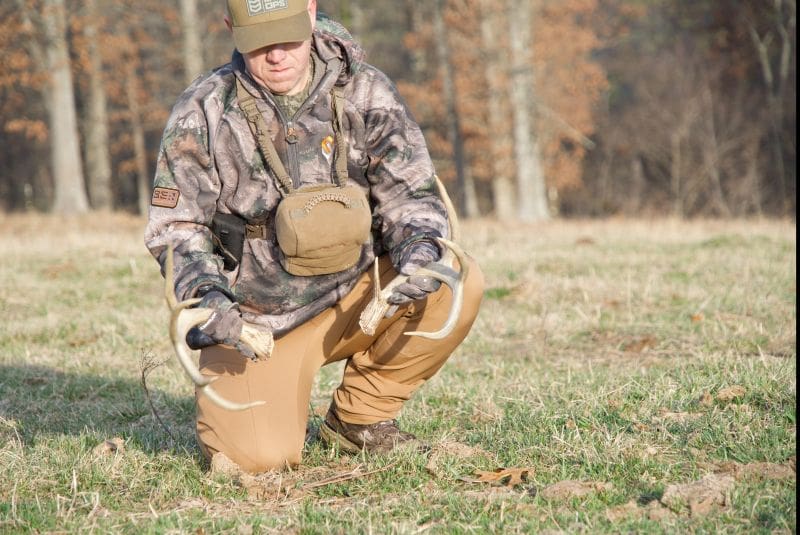
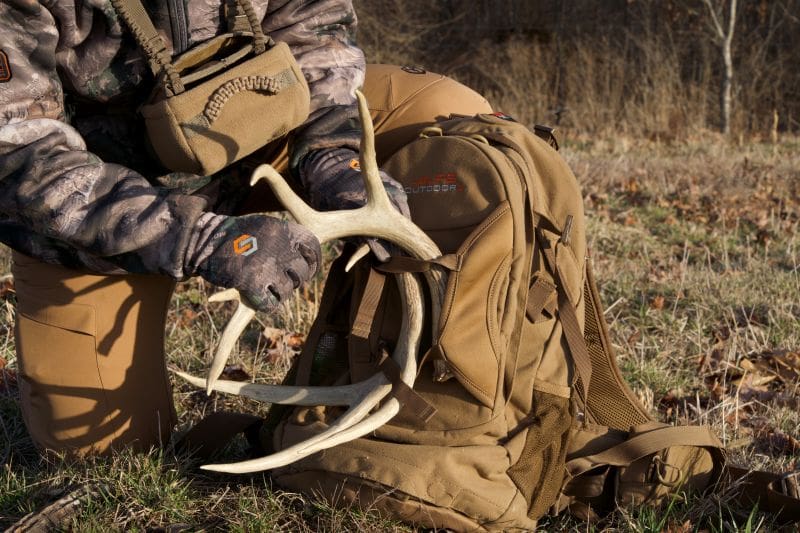
Social media can be an entertaining way to interact with friends and others with similar interests. That is, until someone posts a photo of a tailgate full of shed antlers. The jealousy then builds, often making you wonder, how do they find sheds every year, and I can’t find any.
Every spring, thousands of hunters lace up their boots and hit the woods in search of shed antlers. Some return with their arms full of every shape and size antler, while others walk mile after mile without turning up a single side. It’s not easy to admit, but consistently finding sheds isn’t usually about luck. It comes from paying attention to how deer behave, choosing the right time to be in the woods, and treating shed hunting with the same mindset you would during the hunting season.
That’s why some guys seem to turn up antlers every year while others walk for miles and find nothing. The difference often comes down to a few minor details that get overlooked.
Secret #1 – Timing is Everything
One of the biggest is timing. A lot of people start shed hunting as soon as winter shows up, thinking they need to beat everyone else to the punch. The truth is, when antlers hit the ground depends a lot on where you’re hunting, how rough the winter has been, and the condition of the local herd.
In areas with long, harsh winters, bucks often carry their antlers well into March. Where I hunt in the Midwest, winters are usually milder, and most sheds show up from late January through February, with a few lingering into early March. However, those are just general patterns. Stress from the rut, limited food, and older age can cause some bucks to drop earlier than normal.
More than anything, shed hunting rewards patience. Pair that with solid scouting, and you’ll start finding antlers where others keep walking past them.
Start checking winter food sources and bedding areas for fresh tracks, and keep your trail cameras running to gather photo evidence and intel as bucks begin to lose them. When the number of pictures of antlerless bucks increases, it’s time to shed hunt.
Secret #2 – Hunt Where Deer Survive, Not Where They Travel
One of the biggest mistakes shed hunters make is focusing on trails and random timber instead of survival zones. It is important to think of where deer are going to be in January, February, and March, not where they were in October and November when you were hunting.
Some of the best areas to start searching for sheds are south facing slopes that absorb winter sun, where bucks hang out to stay warmer in colder temps. Thick thermal bedding cover is another area where bucks stay to maintain higher body heat. A more common area is wherever the food is. Bucks are shoveling the calories again to stay warm. Focus on standing crops, food plots, and late season browse, and you will often find several antlers in one location. In states where it is legal, supplemental feeding areas become gold mines for finding antlers in one concentrated area.
Winter is about energy conservation. Bucks bed close to food and move very little. Again, find where deer spend the winter, not where you hunted them in November.
Secret #3 – Move Slow and Train Your Eyes
Shed hunting is not hiking. It’s a controlled art of glassing while walking a pace that feels painfully slow. I have often compared shed hunting to finding morel mushrooms in the spring. A trained eye will find the prize. Antlers rarely glow in plain sight. Many times, you’ll see a single tine, the curve of a main beam, or the white edge against leaves or snow.
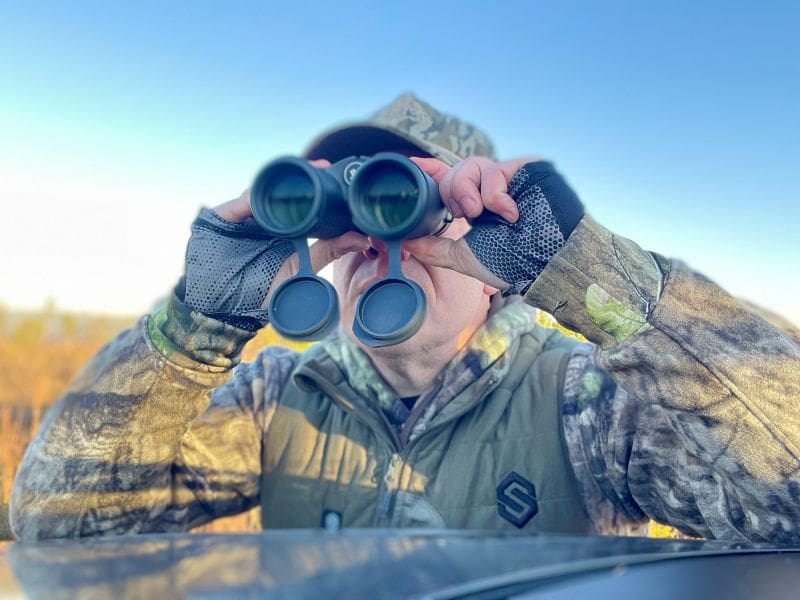
When shed hunting, stop often, glass ahead with a quality pair of optics, and change angles to gain a better view. Many sheds are missed simply because hunters move too fast rather than truly taking the time to search for them. For example, while turkey hunting in the spring, I was walking behind a good friend while running and gunning for a gobbler. While my buddy was walking at a fast pace to reach the next point where we would try to locate a turkey, I walked behind at a slower pace, scanning my eyes back and forth, looking for any remaining sheds that might have been missed. Sure enough, I found a matching set that my friend had literally stepped over, without seeing.
Secret #4 – Scent Still Matters After the Season
It’s easy to think scent control doesn’t matter once tags are filled, but pressured deer don’t suddenly forget danger.Spooking deer off winter food and bedding areas can push bucks onto neighboring properties, which could be why you’re not finding any antlers on your own property.
Instead, take the same precautions when shed hunting as you would when hunting in October or November. Using scent elimination sprays, wearing ScentLok activated carbon clothing, and using the wind to your advantage allows you to move through key areas without blowing deer out of the core zones where antlers are most likely to be found. Less disturbance means more opportunities to find antlers.
Secret #5 – Hunt After Snow Melt, but Before Green Up
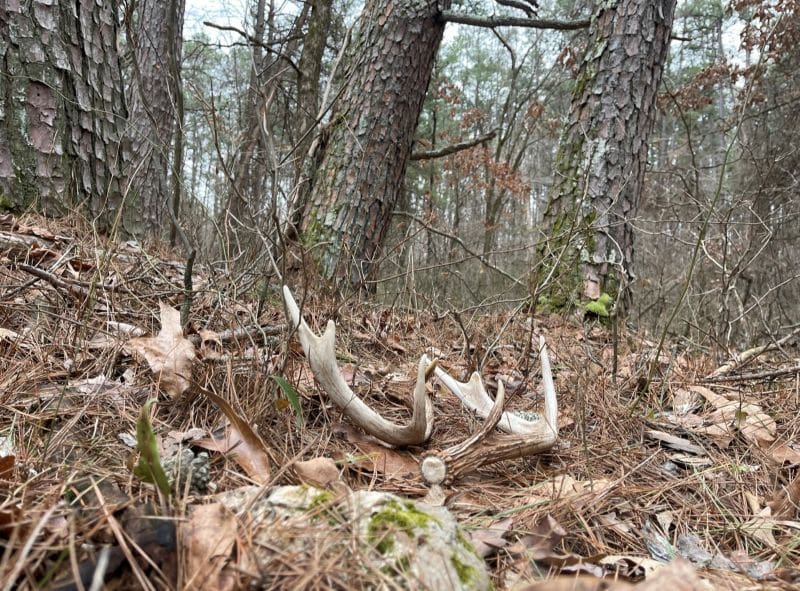
The best shed hunters look for that short window when snow is melting, leaves are smashed down, and green grass hasn’t yet exploded. Antlers stand out better against bare ground, and visibility is at its peak. Once spring green up hits, sheds disappear fast, even if they’re still there.
As many hunters do during the hunting season, watch your local weather forecast for significant weather changes. When a snowstorm is forecasted, plan to spend the two days before the snow melts searching for antlers to sparkle in the sunlight for an easier find.
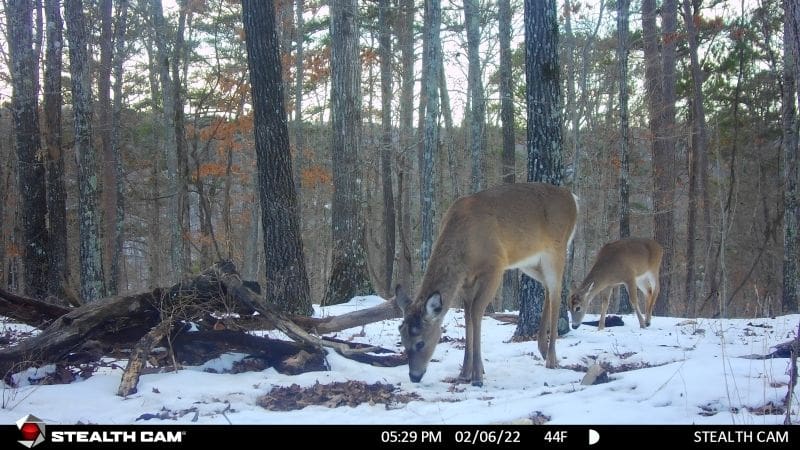
Secret #6: – Think Like a Post Season Whitetail Hunter
Shed hunting isn’t just about the antler itself; it’s about the information you can gain as a hunter.
Each shed tells a story, where a buck survived winter, how he entered and exited bedding cover, and which food sources mattered the most.
Try to shed hunt the same way you approach post season scouting. Take notes of trails, rub lines, and bedding locations that have been discovered, and use them year after year to further your success.
Why Some Find More Sheds
Some people always seem to turn up antlers, but it’s usually not because they’re lucky. They go about it differently. They wait until the time feels right, spend more time in the areas where deer hole up during winter, and don’t rush through the woods. They’re careful not to push deer out. To them, shed hunting isn’t a side activity; they treat it like part of the season.
When you start looking at it that way, things change. You stop wasting time and start finding antlers, along with sign and patterns that matter later on. By the time spring rolls around and people are wondering where all the sheds went, you’ve already hauled a few out because you knew how and where to look.