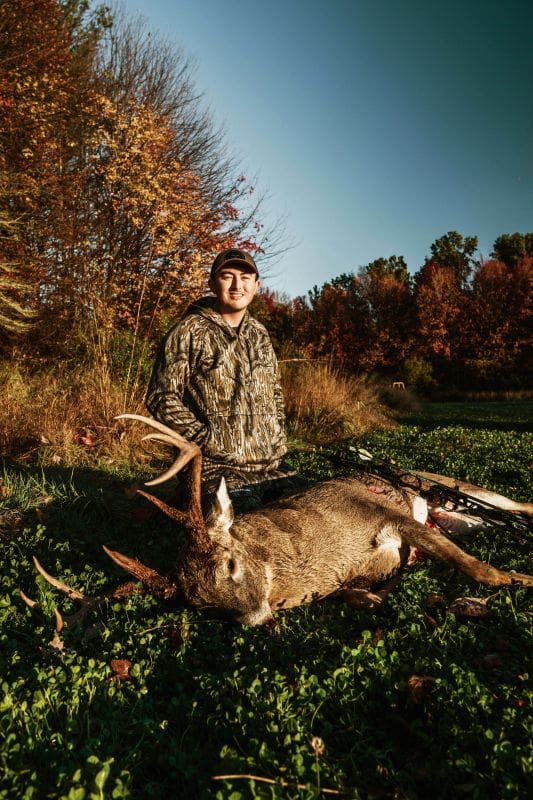
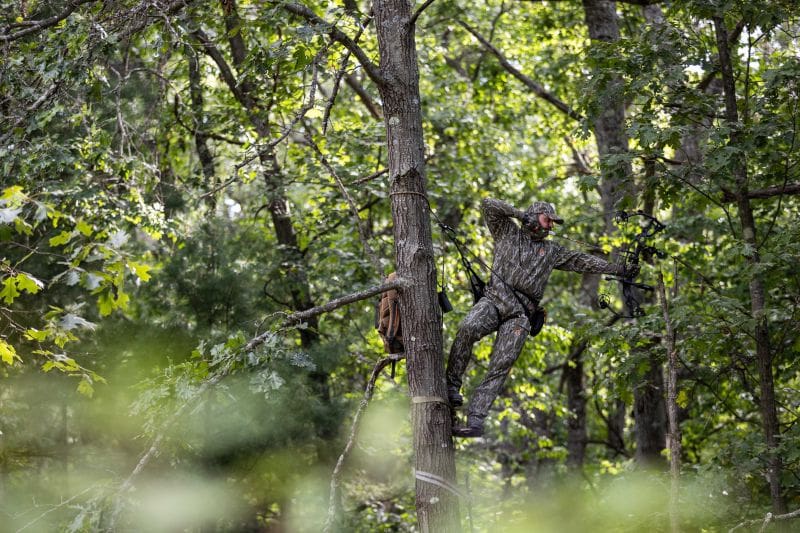
Fine-tuning your playbook: stand placement, shooting lanes and scent control with ScentLok’s Carbon Alloy technology
Every good drive down the field eventually reaches the red zone, where the margin for error shrinks and execution matters more than yardage. Whitetail season works the same way. The scouting, the trail cameras, the months of gathering intel, that’s the long drive down the field. Now it’s time to cross that goal line.
For a lot of hunters, that moment has already arrived. California opened back in July, Florida’s Zone A followed on August 1, and Arkansas hunters step into an early buck-only window on August 29. The rest of the country’s core whitetail range isn’t far behind, either, with most states opening archery throughout September, well ahead of firearms seasons.
The trail cam photos are sorted. The rubs are mapped. That one buck everyone’s been watching has a pattern. Your preliminary scouting for a general area is likely in the rearview mirror too, or should be.
It’s now time to fine-tune the hunt, and that’s where most hunters lose ground without realizing it. A property can have everything going for it – mature deer, good cover, a reliable food source – and still produce nothing if the last 100 yards of planning gets rushed. “This is the stage where hunters win or lose their season,” said Steve Allie, Marketing Director at ScentLok. “You can have the right property and the right buck on camera, but if your entry route pushes scent through his bedding area, or your stand is hung where the wind swirls, none of that scouting matters. Refining the details is what separates a good spot from a spot that actually produces.”
Wind Doesn’t Move in Straight Lines
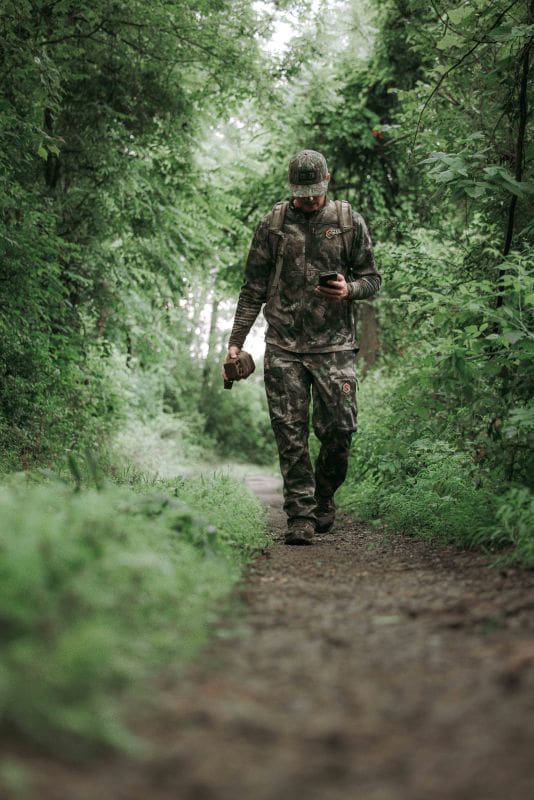
A weather app tells a hunter which direction the wind is blowing at the nearest airport. It, however, says nothing about what that wind does once it hits a ridge, funnels through a creek bottom, or curls around a stand of timber. Terrain bends and redirects air constantly, and a stand that reads downwind on paper can still be swirling scent straight into a bedding area.
Allie recommends hunters physically stand in prospective locations at the times they’ll actually hunt them, not just check conditions from the truck. Morning thermals rise as the ground warms, carrying scent uphill even on days when the prevailing wind says otherwise. Evening thermals do the opposite, sinking into low ground as temperatures drop. A stand set for a morning sit and used for an evening hunt, or vice versa, can put a hunter directly upwind of the deer he’s trying to kill without him ever realizing it. Pinch points and funnels deserve the same scrutiny. A field edge, saddle, or fence crossing might look like an obvious high-percentage spot, but if the only practical stand tree puts a hunter on the wrong side of the wind for that pinch, the location is a liability, not an asset. Sometimes the better move is a stand 15 yards off the perfect tree, sacrificing a little shot geometry for a wind that holds.
Cover Is Still Up. Camo Should Account for It.
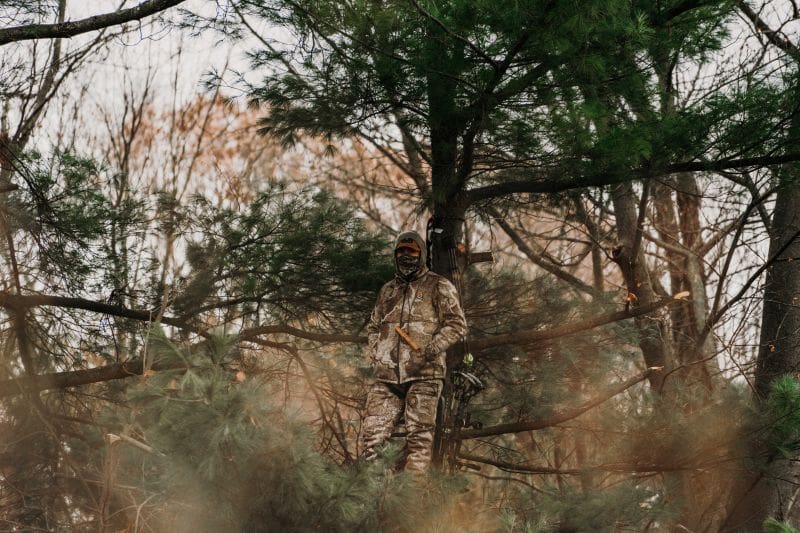
Late summer and early season timber isn’t the same visual environment as November. Leaves are on, canopy is thick, and the light filtering through is dappled and green rather than gray and open. A camo pattern that reads perfectly against bare branches and leaf litter can stand out badly against full foliage, especially at close bow range where fine detail matters.
ScentLok’s signature Realtree XT-3 is built for exactly that kind of shift. The pattern uses an abstract foundation of geometric lines, layered textures and strategically placed color breaks that disrupt the human outline across a range of cover types and light conditions, from full-leaf timber right now to bare hardwoods later in the fall. It’s backed by a wide-ranging lineup that also includes Realtree APX, Mossy Oak Terra Gila, Mossy Oak Original Treestand and Mossy Oak Bottomland, so hunters have a pattern suited to whatever cover they’re sitting. That adaptability is what matters most through this stretch, when a hunter might hunt heavy green cover one morning and a thinning field edge the next.
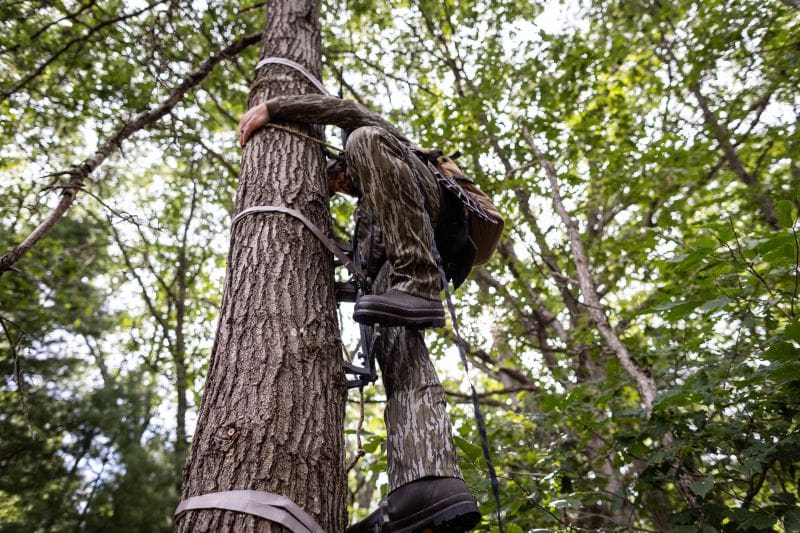
Building the Shot, Not Just the Lane
Shooting lanes often get treated as an afterthought. They shouldn’t be. A lane cut for convenience, the first clear gap in the brush, often forces a shot angle a hunter never actually practiced.
The better approach is to identify the two or three most likely travel paths first, based on trail sign, terrain funnels, and food or bedding proximity, and then clear lanes specifically for those paths. That means accounting for shot angle from the actual stand height, not from ground level. It means clearing wide enough to allow for a follow-through, not just a narrow window a deer has to stop dead-center in. And it means leaving enough cover around the lane itself, so the setup doesn’t stand out to a deer that’s walked that trail a hundred times before. Foliage still full this early in the season complicates lane-cutting, since a gap that looks clear in August can fill in or, conversely, open up as leaves drop later in the fall. Reassessing lanes as the season progresses, not just once in late summer, is part of staying sharp through opening day and beyond.
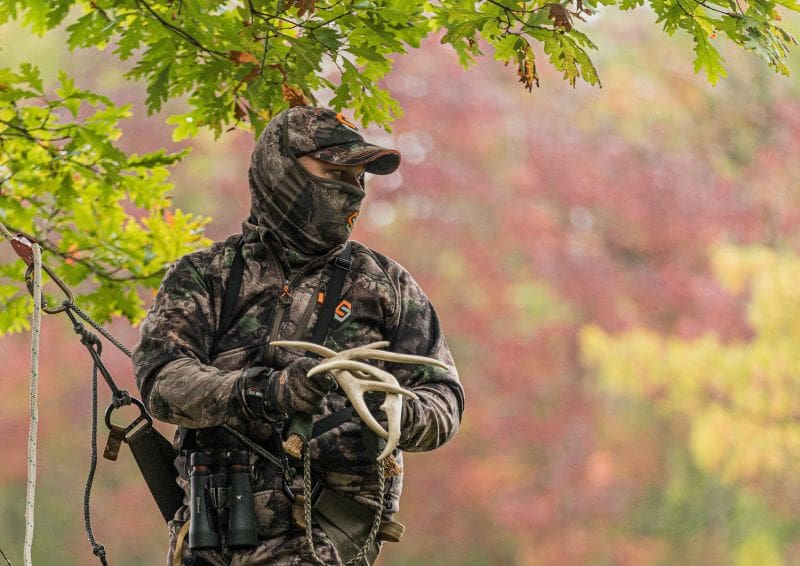
Scent Control Is Part of the Setup, Not an Afterthought
Even a well-placed stand with clean shooting lanes can’t overcome carelessness with scent. That’s where ScentLok’s Carbon Alloy technology comes in.
Carbon Alloy is a fabric-integrated activated carbon system built to adsorb human odor at the molecular level rather than mask it. Activated carbon works by trapping odor-causing compounds within a porous structure as air passes through the fabric, rather than covering scent with a competing fragrance. Built into ScentLok’s full line of hunting apparel, the technology works continuously through a sit, whether a hunter is moving into position, sitting still for hours, or sweating through an unseasonably warm afternoon.
“Scent control is what actually makes good scouting and smart stand placement pay off,” Allie said. “You do the work to put yourself in the right spot. Carbon Alloy is what keeps you invisible once you’re there, even when the wind isn’t perfect or a thermal shifts on you mid-sit.”
Maintaining the technology matters, too. Activated carbon garments perform best when reactivated periodically, typically through a dryer cycle per the care instructions, which helps release trapped odor and restore the carbon’s adsorption capacity for the next hunt.
The Body’s Epicenter of Scent
Not every part of the body gives off odor equally, either. The head is one of the biggest hot spots, right alongside the groin and armpits, both from a heavy concentration of sweat glands and, in the head’s case, hours of breath passing through it during a sit.
“A head cover and something over your mouth are two of the simplest things a hunter can add,” Allie said. “That’s scent-heavy real estate. Leave it uncovered and you’re still broadcasting, no matter how dialed in the rest of the setup is.”
It all comes back to the fundamentals, too. Wind still dictates where a stand goes, but it’s only one of many variables working against a hunter on any given sit. “Playing the wind is crucial, but carbon clothing gives you another advantage that shrinks those variables,” Allie said. “Put those two together, and that’s when the odds start tipping toward success in the woods.”
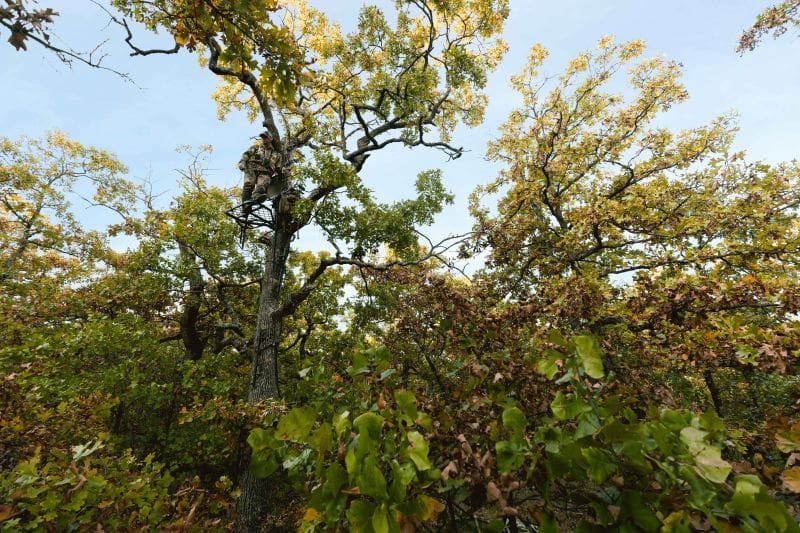
Small Adjustments, Bigger Odds
Refining a location for archery season comes down to layering. A scent-managed entry and exit route that avoids bedding and feeding areas. A stand height and angle that accounts for foliage thinning as fall progresses. A shooting lane cleared with intention, built around actual travel paths and shot angles rather than the easiest gap in the brush. And apparel that keeps scent in check through the sit itself, not just on the walk in. None of it is complicated. But it’s the difference between a whitetail walking a predictable pattern into range, and that same buck hanging up 60 yards out, head up, like a drive stalled on the doorstep instead of punched in for six.