
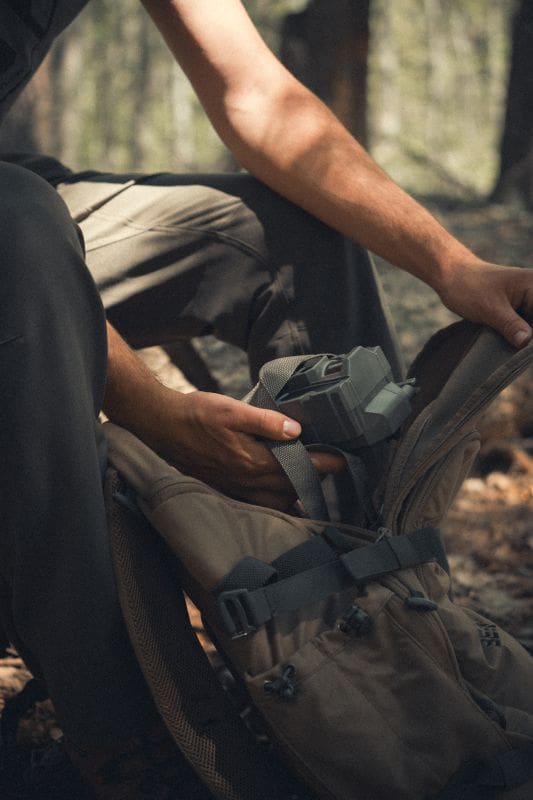
“There is a tree stand over there!” my wife said as we scouted a piece of private property bordering some leased ground. Along the fence line stood a tall, tripod-style stand overlooking a large CRP field. I told her to watch where she was walking because there was a good chance a game camera was nearby. Sure enough, tucked against a small oak on the fence line was a brand new cellular camera. “How did you know there would be a camera hanging nearby?” she asked.“Because everybody has a camera these days,” I replied.
And it’s true. Walk onto almost any deer hunting property, or spend enough time exploring public land, and you’re likely to find game cameras scattered across the landscape. Some hunters run just a few, while others have cameras covering nearly every trail, food plot, funnel, and pinch point they can find. There’s no denying that cameras have become one of the most valuable scouting tools available to deer hunters. But with cameras becoming easier and more affordable than ever, it raises an important question: How many cameras do you actually need?
The answer isn’t as simple as buying as many cameras as your budget allows. A dozen cameras scattered randomly across a property may provide less useful information than four or five strategically placed cameras, each serving a specific purpose. The goal isn’t to photograph every deer that passes through. It’s to gather meaningful information that helps you understand where deer are moving, what areas they are using, when they are using them, and how those patterns change throughout the season, all while minimizing unnecessary pressure.
So, how do you determine the right number of cameras for your property? There are several factors every deer hunter should consider.
Start With the Size of Your Property
The first factor is acreage. A small 40-acre property obviously doesn’t require the same camera strategy as a 500-acre farm. On smaller properties, too many cameras can actually become counterproductive. Every trip to check batteries, swap cards, or reposition cameras creates another opportunity to disturb deer.
As a starting point, one to two cameras for every 20 to 40 acres can provide good coverage. But that isn’t a hard rule. A 40-acre property with four strategically positioned cameras may give you everything you need. Meanwhile, a 200-acre property with five cameras might leave major portions of the property completely unmonitored. Think about coverage rather than simply counting cameras.
Identify What You Want to Learn
Before hanging a camera, ask yourself one simple question: What am I trying to learn from this camera? One of the biggest mistakes hunters make is putting a camera over a good looking trail, scrape, or other promising spot simply because it looks like a place deer might use. Instead, every camera should have a specific purpose and help answer a question about the deer on your property.
One camera might be used to monitor a major travel route, while another watches a food source such as a food plot or crop field. You might place another over a mineral site or supplemental feed, where legal, or position one near the exit of a suspected bedding area. When each camera has a job, you can quickly identify what information you’re missing and determine whether adding another camera will actually provide something useful.

Cameras for Summer Scouting
Food plots and agricultural fields are obvious places to hang a trail camera, but some of the most valuable information can come from cameras positioned between bedding and feeding areas. When choosing a location for a new camera, look for well used trails, creek crossings, fence crossings, ridge saddles, timber funnels, field corners, and other natural pinch points. These locations can provide valuable insight into how deer are moving across the property. Whereas a camera over a feeding site or minerals simply shows you where they are feeding. That distinction becomes especially important when you’re trying to pattern a mature buck, because understanding his travel routes can be far more valuable than knowing where he goes to eat.
The Number of Cameras Needed for a Small Property
For a property under 100 acres, I’d rather have four to six strategically placed cameras than a dozen cameras scattered randomly across the property. The goal isn’t to have a camera on every trail or food source, but to place them in locations that help you understand how deer are using the property as a whole. That might mean positioning cameras near a primary food source, along a major travel corridor, between bedding and feeding areas, or at a natural funnel or pinch point. On properties with multiple distinct sections, it can also be helpful to monitor a secondary food source, staging area, or one of the main places deer enter or exit the property. By spreading your cameras across these key areas, you can build a much clearer picture of deer movement without turning your property into a full blown surveillance project.
Larger Properties Require a Different Strategy
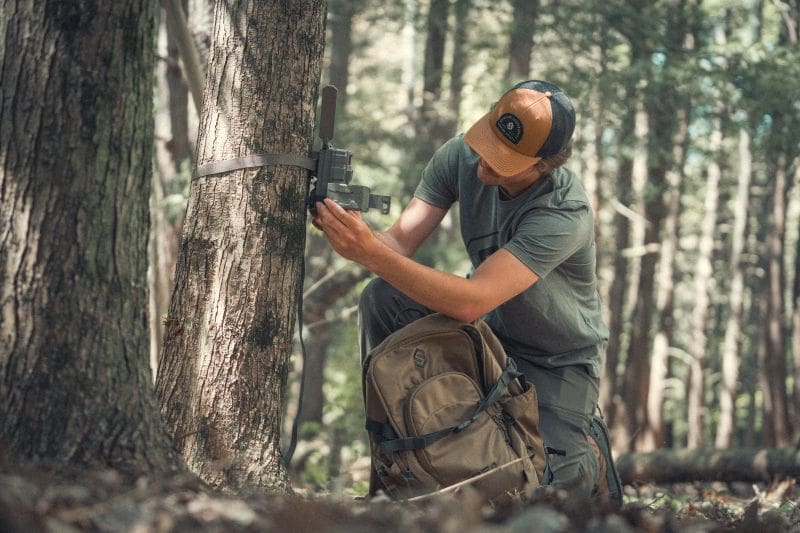
Once you get into larger properties, camera placement and density become increasingly important. On a 200 to 500 acre property, you may need cameras spread across different habitat types, travel corridors, feeding areas, and other key locations to get a complete picture of how deer are using the property. That doesn’t mean you should simply hang a camera every 50 yards. Instead, think of the property in sections and place cameras strategically based on the information you’re trying to gather. You want your camera to help identify where deer are bedding and feeding, how they travel between those areas, which parts of the property are being used by mature bucks, where deer are entering and exiting the property, and how their movement changes as summer transitions into fall. The goal isn’t to have the most cameras possible; it’s to have enough cameras in the right places to answer the questions that matter most.
Quality Over Quantity
A common misconception is that more pictures automatically mean better scouting, but that isn’t necessarily the case. A camera that captures 10,000 pictures of does walking past a food plot may provide far less useful information than one that captures 500 pictures along a key travel corridor. The goal isn’t to collect thousands of photos just for the sake of having them. It’s to collect the right photos that actually tell you something about the deer using your property. A good camera strategy should help you identify individual bucks, understand when and where deer are moving, recognize changes in movement patterns, and determine which areas are worth focusing your hunting pressure on. Ultimately, the value of your trail cameras comes from the information they provide, not the number of pictures they take.
Don’t Turn Your Cameras Into Pressure
This may be the most important part of the entire strategy. Every time you walk into the woods, you have the potential to affect the deer you’re trying to hunt. Checking a dozen or more cameras every weekend might seem productive and fun, but each visit leaves scent, creates noise, disturbs vegetation, and can put you across the very travel routes you’re trying to monitor. This is one reason cellular trail cameras can be so valuable. They allow you to gather information remotely, reducing the number of times you need to physically enter the property. Even with cellular cameras, however, it’s important not to fall into the trap of checking them constantly. More information isn’t always better information. The goal is to collect enough useful data to make smarter decisions while keeping your presence in the woods to a minimum.
The Right Number Is the Number That Gives You Confidence
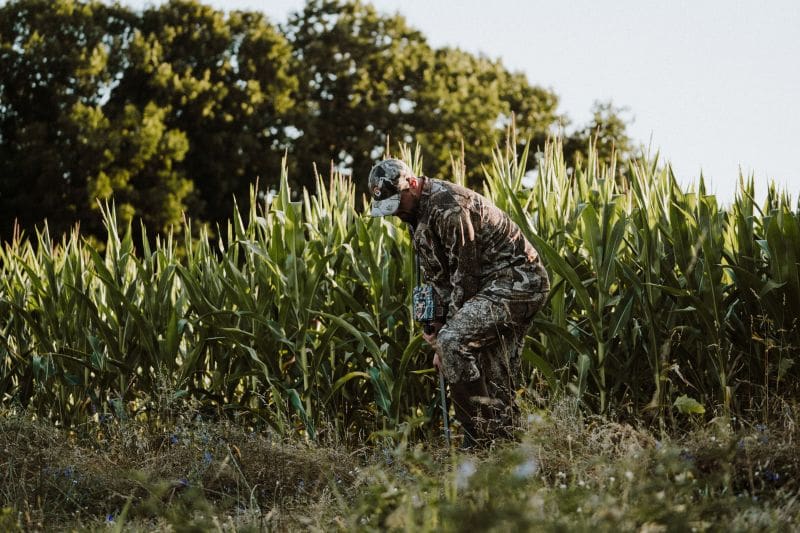
There isn’t a magic number of game cameras a deer hunter needs. Some properties may be adequately covered with four cameras, while others may require 10, 15, or even more. The key is to build your camera strategy around the size of the property, the habitat, deer movement, and what you’re trying to learn. I’d much rather run six cameras that each serve a specific purpose than 15 cameras that simply collect pictures. After all, the goal of a game camera isn’t to fill your phone with thousands of deer photos. It’s to gather useful information that helps you understand what’s happening on your property and, ultimately, make better hunting decisions.