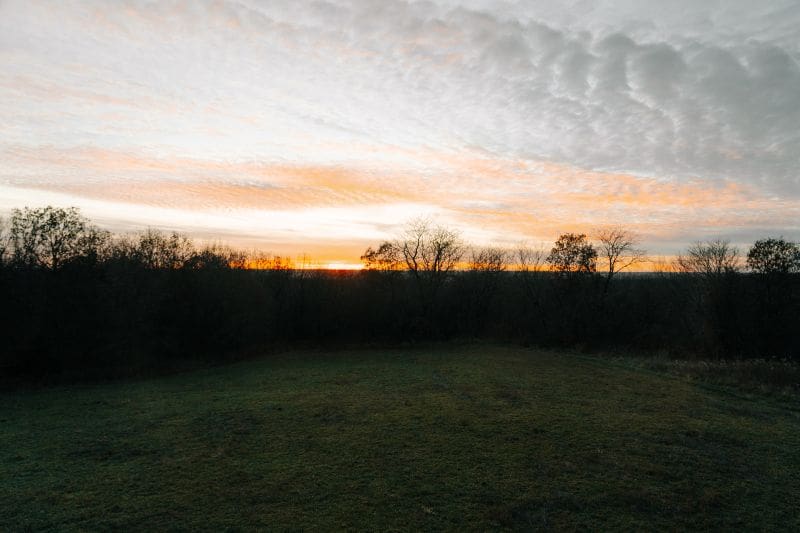
Ask any seasoned whitetail hunter when they’ve taken their most mature bucks, and you’ll receive a common answer: the last few minutes of legal light. While mornings attract the most attention, the evening window, especially late in the year, has become increasingly dependable.
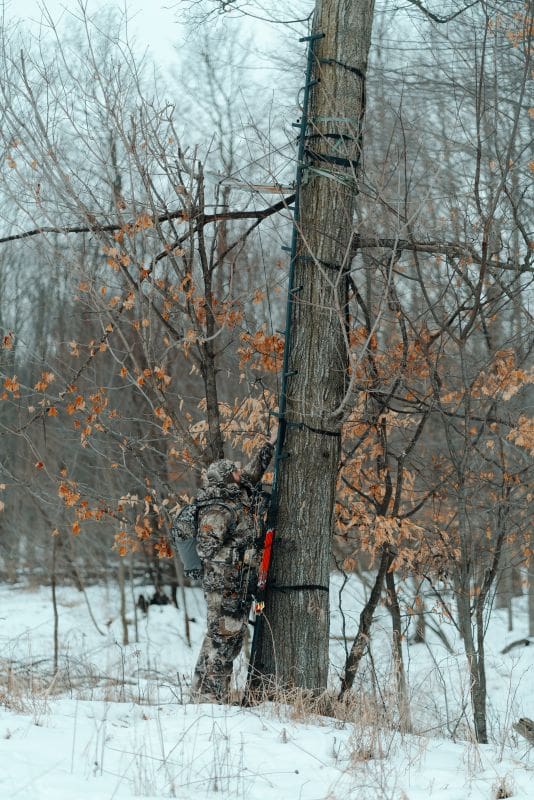
When trying one last time to shoot a buck with a crossbow, I braved the cold during an early January evening hunt. After nearly three hours in the stand, I only saw one doe feeding through the leaves, searching for any remaining acorns still good enough to eat. As the sun slipped toward the horizon, I felt that familiar pull, like pond fishing on a warm summer evening. What starts as “one more cast” slowly becomes the quiet certainty that if I just stay a few more minutes, something is about to happen.
With only minutes remaining of legal shooting light, I heard the constant footstep in the leaves, coming my way. I saw four legs approaching along the trail that led under my stand. It stopped at a mere twelve yards, and I aimed my crossbow, then pulled the trigger. The familiar thwack of the arrow hitting its mark echoed through the woods. The buck ran forty yards before expiring at the bottom of a dry creek bed. That feeling is why many hunters spend the last thirty minutes of the hunt on the edge of their seats. You never know when a buck is going to show. And with low light, you’d better be ready, or your chance at getting a shot will fade away with the sun.
As the seasons progress, the pressure to shoot a buck increases, and food becomes the primary focus. Deer movement tightens into a short, dependable pattern that benefits hunters who understand it. Late season evenings aren’t about luck; they’re about figuring out patterns, timing, and having discipline.
Pressure Shrinks Daylight Movement
By the end of the year, deer have been hunted for weeks, sometimes months. Gun seasons, archery pressure, and constant human intrusion have trained mature bucks to move cautiously and efficiently. Random daylight cruising has almost disappeared.
Instead, deer adopt a survival first mindset. They spend most of the daylight hours bedded in thick cover and rise only when movement poses the least risk. Remember, in many parts of the country, the rut wraps up around the middle of December. This means the bucks are worn out, and they are restoring as much energy as possible before it gets even colder. Buck movement is going to be scarce, period. The moment often comes during the final sliver of daylight, when human activity declines, and darkness provides security.
Unlike the rut, where movement can happen at any hour, late season deer operate on a strict schedule. When they stand up, they’re going somewhere specific, and they do it with purpose.
Food Creates a Predictable Destination
Cold weather changes everything. As temperatures fall, deer must replenish calories daily to survive. That biological need drives one of the season’s strongest movements: evening food access. In farm country, this could mean standing corn, cut bean fields, or winter wheat. In extensive woods or pressured public land, it might be thick cover oak flats, green browse, or a hidden food plot deep in cover. No matter the region, deer are leaving their beds with one goal: to eat before nightfall.
Because they’re conserving energy, deer prefer the shortest, safest routes from bedding to food. These routes don’t change often. Once identified, the evening window becomes highly predictable.
Bedding to Feed Travel Corridors Tighten
One reason last light is more reliable now than earlier in the season is the way deer move across the landscape. Rather than roaming aimlessly, they stick to defined travel routes using edges, ditches, fence lines, timber fingers, and transition zones to stay covered as they move.
Mature bucks almost never do what you expect them to do. They choose travel routes that let them use the wind and stay tucked into cover for as long as they can. Rather than heading straight to a food source, they’ll often stop short, hanging just inside the cover and waiting until darkness gives them the advantage. By the time they finally step out, legal shooting light is usually slipping away.
Those small staging areas are easy to overlook, but they can be absolute money for an evening hunt. I was reminded of that during a late season crossbow sit. After the hunt, I went back the next day to take a closer look, and everything finally clicked. It was obvious why that buck felt comfortable there and why those quiet, in between edges can be such deadly ambush spots.
My stand was set along a wooded road leading to a hayfield where deer regularly fed overnight. Just behind me, no more than a hundred yards away, was thicker cover where the buck was likely bedded. Between that bedding area and the field sat a stretch of mature timber, loaded with acorns and offering deer one last stop before stepping out to feed after last light.
That setup gave me a clear advantage. From the moment the buck stood up from his bed and began moving toward the field, I was able to see him, proving just how effective those overlooked staging areas can be when the timing is right.
Hunting closer to bedding in the evening is risky earlier in the year, but now, deer movement is so limited that a well planned entry can pay off, especially when you can slip in undetected and let the deer come to you.
Weather Amplifies the Evening Advantage
Cold fronts, dropping temperatures, and high winds amplify evening movement more now than at any other time. After spending frigid days conserving energy, deer often rise earlier than expected on bitter evenings.
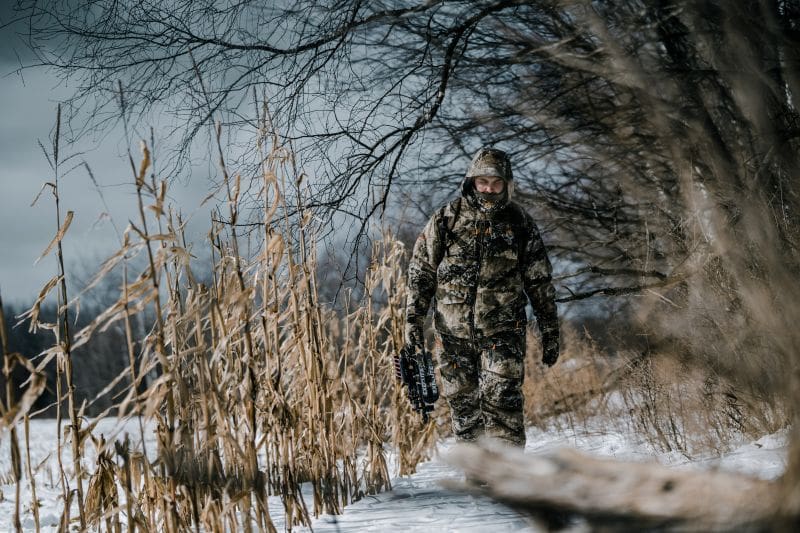
Snow cover can make movement even more visible and predictable. Deer prefer packed trails and known crossings, often entering from the same direction at night to feed. When the forecast predicts the coldest temperatures of the week, the last hour of daylight offers the highest chance to sit undetected. Sitting in a stand or tree saddle at this time can be miserable, but the last light can be very rewarding. It is essential to wear quality late season or heated gear, such as the ScentLok BE:1 Reactor Puffy Heated Vest, to stay warm.
Less Human Activity, More Deer Confidence
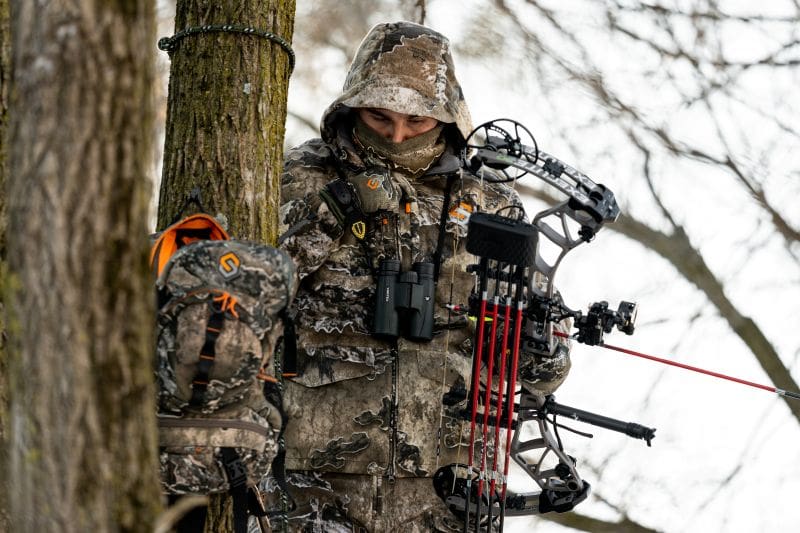
One reason late season evenings can be so productive has less to do with the deer and more to do with people. As the days get shorter and seasons start wrapping up, most hunters fade out. Farm equipment isn’t running from daylight to dark, side-by-sides and four-wheelers disappear, and the woods get quieter. Deer notice that change quickly.
With fewer people around, their guard drops slightly. They’re still cautious, but that constant nervousness they carry during peak season starts to soften. That’s often enough to get them on their feet earlier in the evening, sometimes only five or ten minutes sooner. But in late season, those few minutes can be the difference between watching a buck step out at last light and having a shot opportunity you’ll remember for years.
Capitalizing on the Evening Window
To make the most of last light right now, focus on precision over coverage:
- Hunt the downwind edge of food sources or staging cover.
- Choose access routes that keep you hidden and scent-free.
- Stay still until the very end, many deer appear in the final five minutes.
- Wait for the right conditions, especially cold, calm evenings.
Trail camera data can help confirm timing, but boots on the ground observation matters just as much. Once a pattern emerges, it often persists until weather or pressure disrupts it.
Late in the season, food drives everything. Pressure has taught deer hard lessons, and survival is the only thing on their mind. That combination makes last light the most predictable movement you’ll see all year. If you’re debating a morning hunt versus an evening sit this time of year, put your money on the final minutes of daylight.
Those moments reward patience and discipline. As the woods settle down and long shadows start creeping across the ground, that’s when late season whitetails finally feel safe enough to move. And more often than not, that’s when everything comes together.