
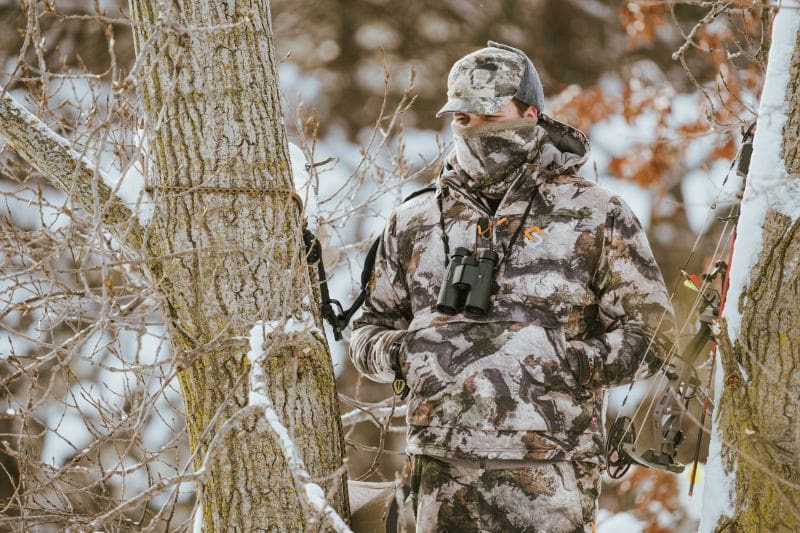
For many deer hunters, December and January feel like the final lap of a long, grinding season. The rut is over, pressure is high, and the woods seem empty. Yet for hunters who stay in the game, the late season may be the single best window to tag a fully mature buck. When temperatures plummet, and food becomes scarce, deer patterns simplify, survival becomes priority number one, and the oldest bucks in the timber begin making mistakes they wouldn’t dream of making in November.
Recently, a great friend of mine finally got his moment on a mature buck. For the past two seasons, this friend has put more hours into preparation and time in the stand than anyone I know. He had never taken a mature buck, yet he was determined to hunt ninety percent of the time with his bow. On December 6th, while hunting an afternoon sit, a mature buck walked in. When reaching for his bow from the hanger, two does bolted away. He thought he had ruined his chances until he saw the tip of the buck’s nose peeking from behind a large oak tree. The buck was frozen, trying to figure out what had spooked the does. With one narrow, V-shaped opening, he ranged it at forty yards and sent an arrow toward the buck’s vitals. It ran fifty yards, then crashed. The buck had been following the does, most likely because one of them had entered her second estrus cycle, due to not getting bred during the initial rut. A prime late season tactic that gave my friend his first mature buck with his bow.
Late season doesn’t always have to be a consolation prize, and does not mean you have to settle for whatever gives you a shot opportunity. Staying after it, like my friend on his late season hunt, can reveal opportunities that result in mature bucks.
Cold Weather Creates Daylight Movement
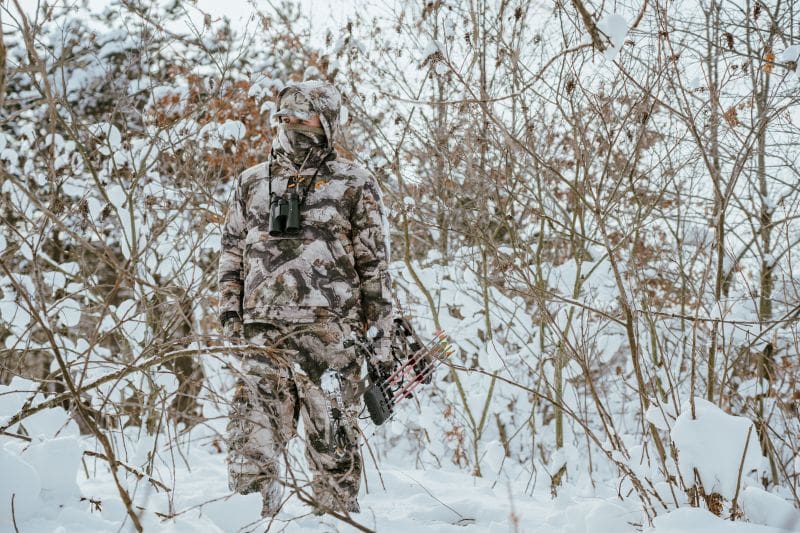
Extreme cold can make hunting difficult and zap motivation when deciding whether to sit for hours in a treestand or in a saddle. However, colder weather can be a late season blessing for hunters. A 10–20 degree drop in temperature, as well as a snowstorm, sleet, or a stiff north wind, can cause mature bucks to move earlier in the afternoon. Their bodies must stay warm, and feeding is the easiest way to fulfill that need.
Cold weather doesn’t just drive deer to food; this time of year can also trigger a small but powerful surge of rut activity. Any doe that wasn’t bred in November will cycle back into a second estrus roughly 28 days later, and mature bucks understand this. This “second rut” is never as intense or widespread as the main event, but it does create pockets of daylight movement that can catch even old bucks on their feet. A lone doe coming back into heat is often enough to pull a bruiser buck, who hasn’t been seen for weeks, out of thick cover, especially when paired with brutally cold weather.
Many of the biggest late season bucks are taken just before a winter storm, the day after a cold front, during extended cold periods, or on the first clear day after heavy snow. Weather is often a more dependable trigger than rut behavior, but when cold weather coincides with a hot doe, movement can become very active. If you can align harsh cold with a prime food source, you’re likely to see the most daylight activity of the entire season.
The Hunger Factor: Food Rules Everything
When winter arrives, the landscape changes significantly. Natural browse decreases, mast is cleared away, and green forage vanishes under frost and snow. A mature buck that once moved on instinct and adrenaline during the rut, except for a slight boost when a doe enters a second estrus, now moves solely for one reason: calories.
This creates some of the most reliable patterns throughout the season. In late season, the best way to kill a mature buck is to focus on the hottest food source available, such as standing or cut corn, late cut soybeans, winter wheat, and brassicas and leafy greens, which are all late season favorites for hungry deer.
Even the oldest, most nocturnal bucks cannot ignore the need to refuel. They may not be seen during the morning hours, but on the coldest afternoons, especially when a major front approaches, mature bucks often move early and head straight to the food sources.
Predictable Bedding and Conserved Movement
During the rut, bucks roam miles, burning energy, checking doe groups, and falling into uncharacteristic travel loops. By the late season, they revert back to efficiency mode. This is where savvy hunters gain the advantage.
Mature bucks often migrate to winter bedding sanctuaries, which are typically cedar thickets, south facing hillsides, or overgrown clearcuts. Another factor is the presence of areas with less hunting pressure. Once a buck establishes a winter pattern, he tends to follow a simple, predictable loop: bed to food, then back to bed. Unlike the chaos of November, these routes change very little unless disturbed. If you know where the best bedding and feeding spots are, you’re essentially hunting from a blueprint.
Reduced Hunting Pressure
When discussing predictable movement areas, you may think it’s odd also to include areas with less hunting pressure. Let me clarify further. By December, the woods are quieter. Firearms seasons have ended; many hunters have filled their tags or lost interest, and pressure drops significantly. This offers a significant advantage for hunters.
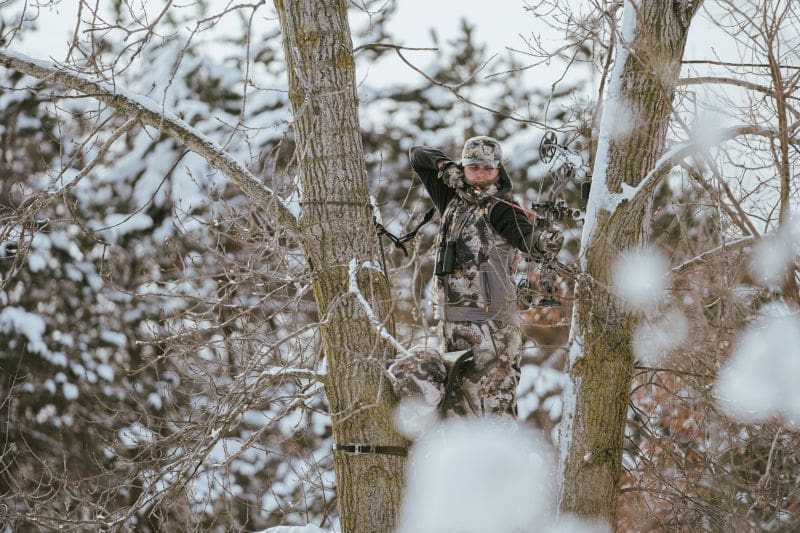
With fewer hunters pushing through bedding cover, walking along field edges, or hunting in the mornings, mature bucks settle back into a comfortable routine. They feel less threatened and are much more likely to move during shooting light. Often, hunters notice a decrease in deer movement in late November, only to see it pick up again a few weeks later. If you have ever found yourself wondering where all the deer go, the answer is that they go nowhere. They have been pressured too many times, leading them to stay in bed longer and remain confined to one area to stay hidden. When the pressure lets up, it’s game on again. For the hunter willing to grind it out, the “post-season” lull from other hunters increases the odds dramatically.