

Early spring turkey season is one of the most exciting times in the woods. Gobblers are vocal, flocks are still grouped, and every sunrise feels like it could produce a fired-up longbeard. But one of the most frustrating challenges hunters face early in the season is dealing with henned-up gobblers.
After a successful youth season, where I called five different longbeards into shotgun range, my confidence was high for the opening morning of Missouri’s spring season. After enjoying a cup of piping hot black coffee, I stepped out of my truck to see if any nearby roosting toms were gobbling to greet the day. Just as I was about to get out of sight of my truck, a thunderous gobble stopped me in my tracks. I was perched on a grassy ridge with several large oak trees stretching across a few hundred yards. The tom was roosting slightly from the edge of the hill. I eased another fifty yards forward, then sat next to a large oak and settled in to wait for the fly-down.
I began my calling sequence with soft tree yelps on a slate call, mixed with subtle yelps on my diaphragm call. When I anticipated the toms were ready to fly down, I increased the excitement of my calling by conducting a fly-down cackle, followed by excited hen yelps. However, instead of the tom continuing his morning gobbling, he went silent for several minutes before flying down. Minutes continued to tick by, and the only gobbling activity was a hundred yards or more behind where the tom had been roosted earlier. After thirty minutes of wondering where the birds had disappeared to, my question was answered; he was henned up! I saw six different hens chasing each other around, while a big black blob followed a few yards behind. The blob was my tom from earlier, strutting his dominance for the ladies.
To continue the excitement, while watching the strutting tom and his hens at eighty yards, five jakes split the distance between me and the longbeard. In my mind, this was exactly what I needed to cause the tom to break away from his hens. Yet, after letting the jakes walk within a few yards of my setup, the longbeard was held hostage, just out of range by hens who weren’t going to let my persuasive calling take their man away. Instead, after several minutes of hanging out in one spot, the hens began walking in the opposite direction, with ol’ tom right behind them. My opening daydreams were crushed by another case of a henned up tom.
When a tom already has several hens around him, convincing him to leave the flock and come to your setup can feel nearly impossible. The truth is, sometimes you must regroup and keep trying. However, by understanding turkey behavior and adjusting your calling strategy, you can tip the odds back in your favor. Mimicking the sounds of other hens and knowing when to stay aggressive or go silent can pull a dominant gobbler away from his hens and into range.
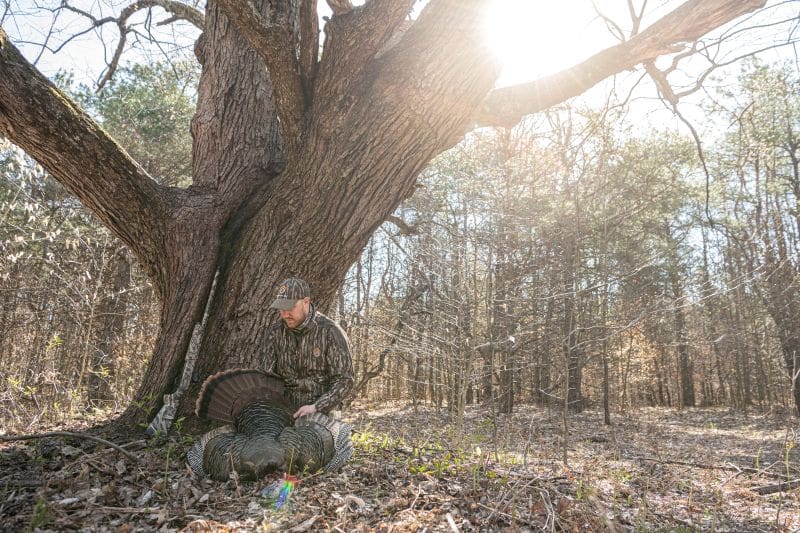
Understanding the Early Season Dynamic
Before discussing calling techniques, it’s important to understand what is happening in the turkey woods early in the season.
In many areas, the opening weeks of turkey season coincide with peak breeding activity. As in my experience, during the youth season, a week before the regular season, toms were grouped and responded to the call quickly. However, a week made all the difference, because in that length of time, the gobblers had established dominance and gathered hens. Because of this, they didn’t feel the need to search for additional hens, especially since they already had several following them around.
The sudden change of breeding activity creates a common scenario. You strike a gobbler at daylight. He answers every call you make, but he refuses to come closer. Instead, he gobbles from the same ridge or slowly drifts away with his hens. This isn’t because your calling is bad, it’s because the gobbler expects the hen to come to him, which is the way Mother Nature intended.
A hen in the wild almost always goes to the gobbler. When a hunter calls from one spot and waits, the tom may stand there gobbling while his real hens keep him occupied. To beat this situation, you need to sound like a hen he can’t ignore.
The Excited Hen Strategy
One of the most effective ways to break a gobbler away from hens is by sounding like a fired-up, excited hen that wants attention. Use a series of aggressive yelps and cuts to create urgency. A typical sequence should have several excited yelps in a row, followed by cutting (fast, irregular clucks), then a brief pause. If nothing happens, wait a few minutes, then repeat with enthusiasm.
An example cadence might sound like yelp-yelp-yelp-yelp-yelp… CUTT-CUTT-CUTT-CUTT… yelp-yelp-yelp. This strategy works because dominant gobblers often cannot tolerate another hen sounding overly excited nearby. Even if he already has hens with him, curiosity or jealousy may pull him away from the flock. The key is emotion in the call, not perfection.
Calling to the Hens Instead of the Gobbler
One of my favorite techniques, yet it is one of the most overlooked strategies for henned-up gobblers, is calling to the hens themselves. If you hear hens yelping or clucking around the gobbler, try mimicking them and even talking over them. When a hen yelps, cut her off with louder yelps, mimic her rhythm, and challenge her with excited calling.
Turkeys are social birds, and hens often come to investigate another hen in their territory. On many occasions, I have hens so worked up, you can almost visualize them saying, “Oh no, she didn’t, this is my man, and you need to shut your mouth.” When a hen comes to check out who has been yelping and cutting, there’s a good chance the gobbler will follow right behind her. This tactic can turn the gobbler’s own flock into your best decoy.
The “Shut Up” Method
Sometimes the best call is no call at all. If you’re like me, you love to call, and you love to get a gobbler fired up by gobbling his head off. Yet, the key to breaking a tom away from natural competition is to go silent and pique his curiosity.
Many hunters make the mistake of calling too often when a gobbler is henned up. If the tom answers but refuses to move, try something different: go completely silent. This works because the gobbler expects the hen to come to him. When the calling suddenly stops, curiosity can take over. The tom may come looking for the hen he thought was nearby. To make this tactic effective, call aggressively for a few minutes. Once the gobbler answers strongly, stop calling entirely. Stay ready, he will often get curious and slip in silently.
Many experienced turkey hunters have watched stubborn gobblers suddenly appear after twenty or thirty minutes of silence. Be patient!
Mid-Morning Patience
The silent treatment requires patience, and so does hunting gobblers during mid-mornings. Early season hens will eventually leave gobblers to go lay eggs or sit on their nest. When that happens, the dynamic in the woods changes dramatically.
A gobbler that ignored you at sunrise may become very receptive later in the morning once his hens wander off and he quickly becomes lonely. If you know where a flock is spending the morning, stay nearby, call sparingly, and most importantly, be patient.
Late morning is one of the best times to hunt a henned-up gobbler. While most hunters say, “I give up for the day,” others stay persistent, waiting for the tom to get more active and start coming to the call again.
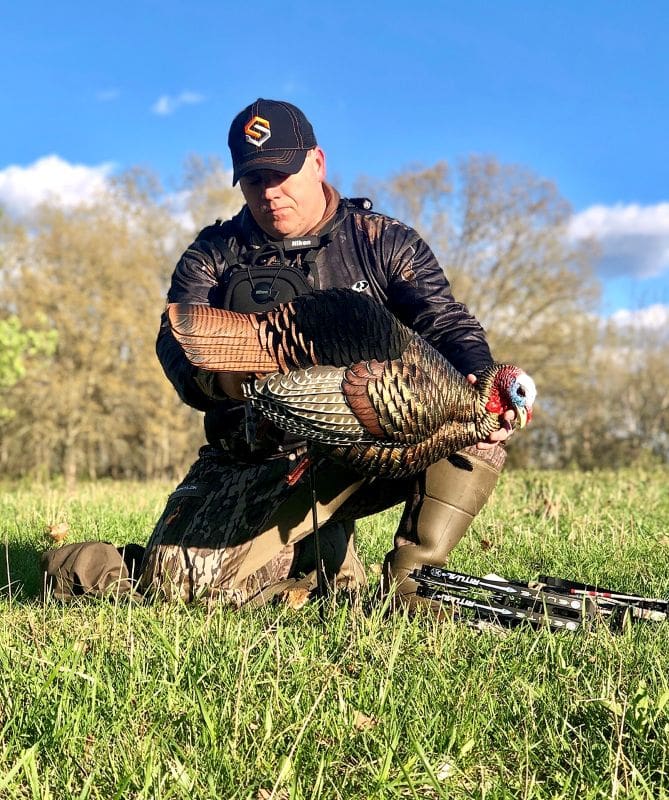
Using Decoys to Your Advantage
While calling is important, early season setups often benefit from the right decoy combination.
Two setups tend to work best during the early season.
The Breeding Pair Setup: One half-strut jake and a submissive hen. This can trigger jealousy from a dominant tom and break him away, even when he has hens close by.
A Feeding Hen Setup: Often made by using two relaxed hens. This creates a natural, non-threatening scene that may attract hens and, eventually, the gobbler. Position decoys within 20–25 yards of your setup so an approaching gobbler commits fully. This setup is much like your calling sequences and is a step back and more relaxed.
When to Move
If a gobbler stays locked down with hens and refuses to budge, sometimes the best strategy is mobility. When this happens, circle ahead of the flock’s direction of travel by using terrain like ridges and creek bottoms. Set up quietly in a different location and call again. Sometimes the slightest difference in a setup can make all the difference. Early season turkeys often travel predictable routes between feeding areas and strutting zones. Getting in front of them can turn a frustrating hunt into a quick opportunity.
Hunting henned-up gobblers early in the season is one of the toughest and most rewarding challenges in turkey hunting. Success often depends on understanding turkey behavior and adjusting your tactics, rather than just calling louder or more often, or giving up and heading back home.
By sounding like an excited hen, challenging real hens, knowing when to go silent, and staying patient through the morning hours, you can turn even the most stubborn longbeard into a workable bird. The next time you have a gobbler hammering on the roost but refusing to leave his hens, remember this: You don’t always need to call the gobbler away from the flock; sometimes, you need to pull the entire flock to you. And when that happens, things in the turkey woods can get exciting in a hurry.